
 Algeria
 Egypt
 Libya
 Morocco
 Sudan
 Tunisia
 Benin
 Burkina Faso
 Cabo Verde
 Côte d'Ivoire
 Ghana
 Guinea
 Guinea-Bissau
 Liberia
 Mali
 Mauritania
 Niger
 Nigeria
 Senegal
 Sierra Leone
 The Gambia
 Togo
 Cameroon
 Central African Republic
 Chad
 DR Congo
 Equatorial Guinea
 Gabon
 Republic of the Congo
 São Tomé and Príncipe
 Burundi
 Comoros
 Djibouti
 Eritrea
 Ethiopia
 Kenya
 Madagascar
 Malawi
 Mauritius
 Mozambique
 Rwanda
 Seychelles
 Somalia
 South Sudan
 Tanzania
 Uganda
 Angola
 Botswana
 Eswatini
 Lesotho
 Namibia
 Zambia
 Zimbabwe
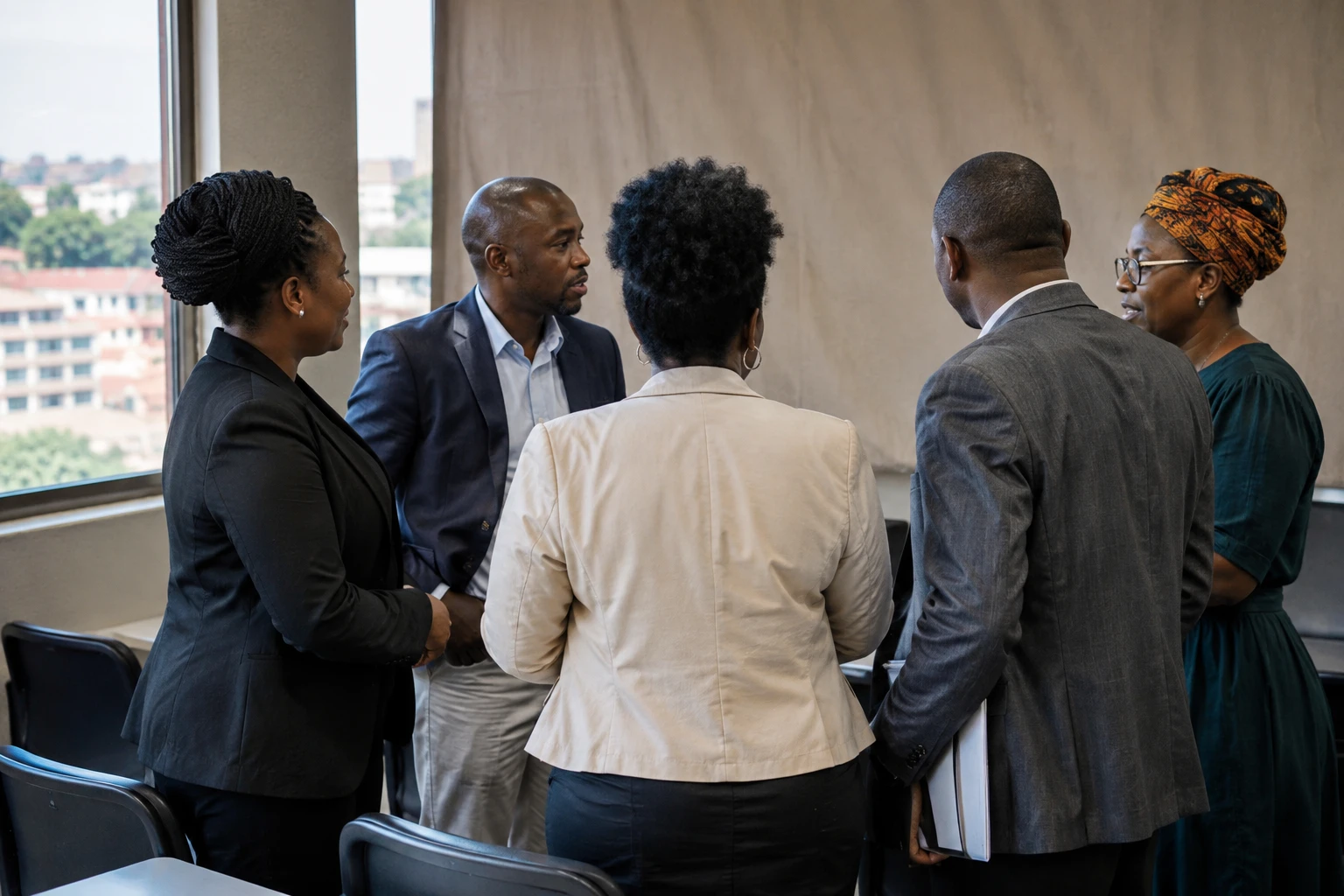
Two days before the municipal vote, debate on immigration in South Africa extends well beyond the remit of local councils. Yet it is a prominent issue on the streets and at campaign rallies. Civic organisations are trying to make a different message heard: defending the rights of foreign nationals does not mean denying the difficulties facing local residents.
A local election amid national tensions
South Africans will vote on Wednesday 4 November 2026 to elect their municipal councils. These elections determine, among other things, how local services such as water, waste collection and urban planning are managed. President Cyril Ramaphosa confirmed the date in April. The vote comes after the 2024 national elections, which cost the African National Congress (ANC) its majority in Parliament and led to the formation of a government of national unity.
The political climate has also hardened around immigration. In recent months, the March and March movement has organised protests calling, among other things, for the deportation of people without legal status. Its demonstrations have at times been accompanied by incidents and reported violence in Durban. The movement rejects accusations of xenophobia and presents its actions as a protest against migration policies. The authorities, meanwhile, have cited risks to public order.
The issue extends beyond South Africa’s borders. The country hosts people from several states in the region and remains a major economic hub in southern Africa. Within the Southern African Development Community (SADC), a regional co-operation organisation, population movements and relations between neighbouring countries have a tangible impact on communities, trade and diplomatic ties.
Less visible solidarity initiatives
In response to anti-immigration rallies, associations and activists are organising actions against hostile rhetoric towards foreign nationals. The Siyafana Sonke campaign, which brings together civil society organisations, has taken part in local mobilisations. In Yeoville, a Johannesburg neighbourhood home to communities from different countries, activists have also gone door to door to counter intimidation campaigns and defend access to services.
Activist Shelley-Anne Abrahamse recalls that her family found refuge in Zambia during apartheid, before she was born. Her testimony highlights a memory of exile and welcome that current rhetoric tends to erase. Zintle Tyuku, of the Amandla.mobi organisation, is calling for persecution to be challenged and for people to show that not all South Africans support campaigns targeting migrants.
These initiatives receive less attention than large rallies. Their reach is difficult to measure nationally, but they show that civil society is not a monolithic bloc. Trade unions, neighbourhood associations and rights groups have also taken part in protests against xenophobia, sometimes linking the issue to unemployment, housing and the deterioration of some public services.
Election campaign puts municipalities under pressure
Migration is primarily the responsibility of national authorities, notably the Department of Home Affairs. Municipalities, however, manage services and facilities used by all residents. This proximity fuels tensions when access to a clinic, housing or a job is presented as competition between South Africans and foreign nationals. Many residents face genuine difficulties accessing these resources, but attributing them to a single cause does nothing to address management failures or the inequalities that fuel them.
The election campaign creates a further political incentive to simplify the debate. Researcher Loren Landau, of the African Centre for Migration and Society, says few parties openly support a pro-migrant position. Several parties criticise violence while describing immigration as a problem. This distinction may seem moderate, but it sometimes leaves unanswered the question of how to protect people targeted by the protests.
Events in Durban illustrate the immediate stakes. On 27 October, the presidency announced the deployment of 510 soldiers in KwaZulu-Natal, where Durban is located, in response to recent violence. The authorities say the deployment is intended to support the security forces. The move comes as the election approaches and raises a sensitive question: how can residents and foreign nationals be protected without turning the security response into an election spectacle or unduly restricting the right to protest?
On 30 October, the Durban High Court authorised March and March protests subject to interim conditions: they must take place between 9am and 4pm, and participants may not carry weapons or conceal their faces. The judge specified that the order does not constitute a final finding on the allegations against the movement or its leaders. The case is due to return to court in January 2027.
An issue that goes beyond the ballot
For foreign nationals, the debate translates into direct concerns about their safety, businesses and access to services. For residents of the neighbourhoods concerned, housing, jobs and public facilities remain pressing issues. Local authorities will have to address these needs, even though they do not control borders or national asylum rules.
At regional level, violence and political rhetoric also carry a diplomatic cost. Nationals of neighbouring countries make up part of the communities settled in South Africa, and attacks against them can strain relations within SADC. How South African institutions protect rights and enforce the law will therefore be watched beyond the election.
The 4 November vote will determine which parties run the municipalities, but it will not by itself settle national migration policy. In the short term, the next key developments will be how protests are handled in Durban, how the court order is applied and the case’s return to the High Court. Against this backdrop, solidarity organisations are seeking to advance a political response that addresses local difficulties without making migrants scapegoats.



