
 Algeria
 Egypt
 Libya
 Morocco
 Sudan
 Tunisia
 Benin
 Burkina Faso
 Cabo Verde
 Côte d'Ivoire
 Ghana
 Guinea
 Guinea-Bissau
 Liberia
 Mali
 Mauritania
 Niger
 Nigeria
 Sierra Leone
 The Gambia
 Togo
 Cameroon
 Central African Republic
 Chad
 DR Congo
 Equatorial Guinea
 Gabon
 Republic of the Congo
 São Tomé and Príncipe
 Burundi
 Comoros
 Djibouti
 Eritrea
 Ethiopia
 Kenya
 Madagascar
 Malawi
 Mauritius
 Mozambique
 Rwanda
 Seychelles
 Somalia
 South Sudan
 Tanzania
 Uganda
 Angola
 Botswana
 Eswatini
 Lesotho
 Namibia
 South Africa
 Zambia
 Zimbabwe
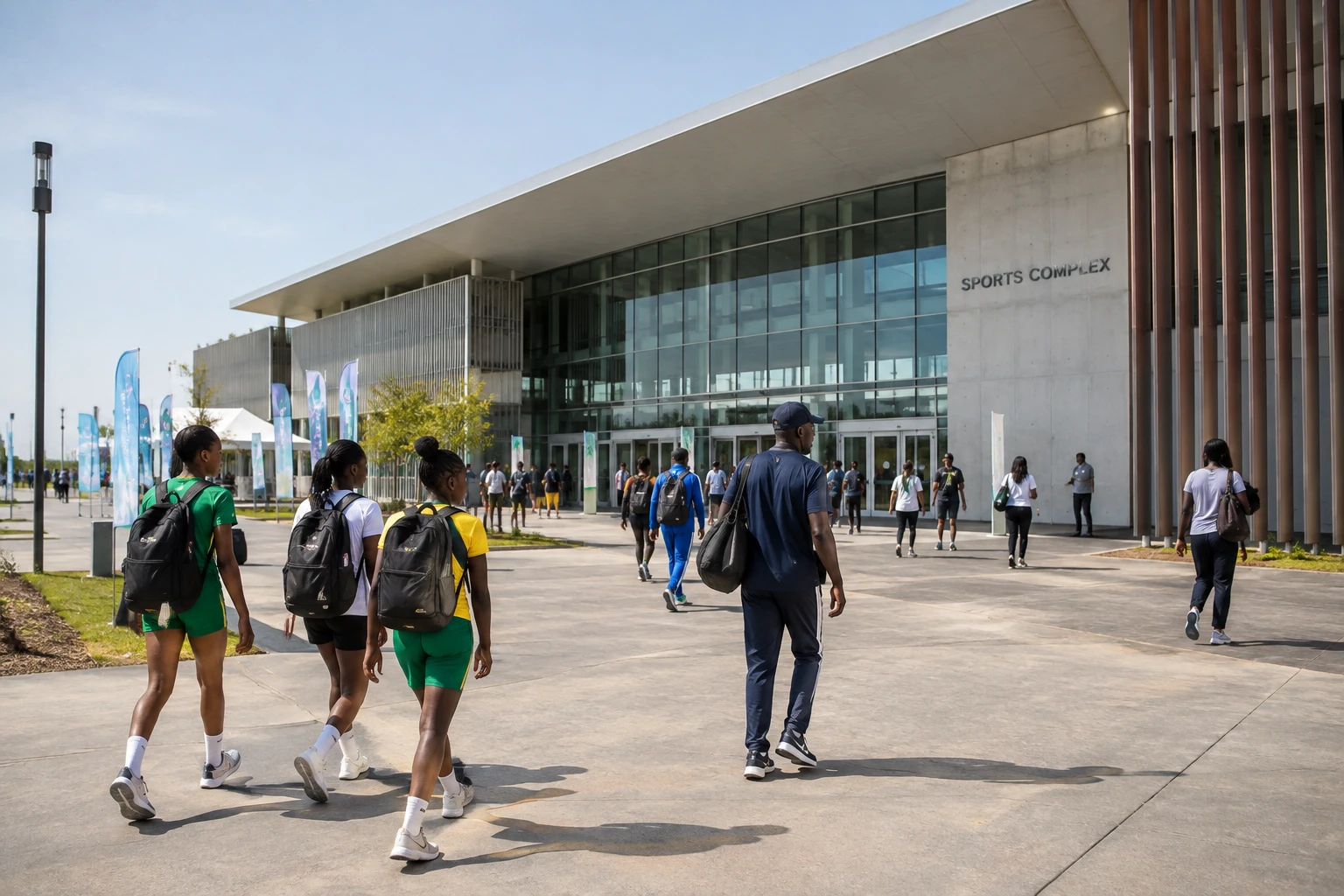
In Dakar, the first Youth Olympic Games (YOG) podiums are being contested on home soil. But the stakes go beyond medals: Senegal is hosting an Olympic sporting event on the continent for the first time. The young athletes’ results and the organisation of the competitions thus offer an early glimpse of what this edition means for the country and for Africa.
A historic edition spread across three cities
The YOG began on 31 October and are due to run until 13 November 2026. Events are being held in Dakar, Diamniadio and Saly. Around 2,700 young athletes are expected to compete in 153 medal events across 25 sports, according to information from the International Olympic Committee (IOC). It is the first Olympic sporting event to be held on African soil.
The event was initially scheduled for 2022, before being postponed by four years during the Covid-19 pandemic. The change to the calendar extended Senegal’s preparations, but also prolonged anticipation around an event that puts the country at the centre of the Olympic movement. There had been no previous event of this scale on the continent.
The competition is not confined to the capital. Diamniadio and Saly are also hosting events, in an arrangement linking different venues across the country. This choice could spread the benefits beyond Dakar, while also creating practical demands for transport, hospitality and coordination. Events, ceremonies and delegations’ movements all need to work together.
Senegal’s first judo podium
Senegal secured its first medal of the edition through Matar Diop, who won bronze in judo, the Senegalese Radio and Television Broadcasting Corporation (RTS) reports. The information is confirmed by the account of the event published by the Senegalese public broadcaster. It gives Senegalese supporters a first concrete sporting result, beyond the symbolism of hosting the Games.
A medal on home soil naturally attracts attention. However, the YOG remain a competition for young athletes, and their significance cannot be reduced to the host country’s position in the standings. They provide an international stage for athletes at the start of their careers. For African delegations, the Games are also an opportunity to measure their performances against opponents from many parts of the world.
The edition includes disciplines that are new or still unfamiliar to some members of the public. Baseball5, wushu and coastal rowing are on the programme. Beach wrestling is also making its debut. In Senegal, where wrestling plays an important role in sporting culture, this discipline could bring the Olympic programme closer to a practice already familiar to the public, without conflating traditional wrestling with an international event.
Benefits will depend on what happens after the Games
Infrastructure, jobs linked to the organisation and opportunities for local businesses are among the issues highlighted by the Senegalese authorities. These effects, however, are not automatic. Their scale will depend in particular on how the facilities are used after 13 November, how they are maintained and whether sporting or cultural activities can be held there regularly.
The benefits may also vary between stakeholders and locations. Contractors, traders and workers engaged near the venues may benefit from the activity generated by the event. For residents living far from the venues, the direct effect may be smaller, while travel or access restrictions may affect neighbourhoods differently. Public access to the competitions and the role given to local young people will therefore matter as much as international visibility.
The question of spending is also fuelling debate. Senegal faces economic constraints and strong public expectations over the cost of living and public services. President Bassirou Diomaye Faye has defended investment in the Games, emphasising facilities, training and contracts available to Senegalese businesses. The success of that promise will be judged over time: by the use of the venues, the skills acquired and the benefits genuinely accessible to the population.
A signal for African sport
At regional level, Dakar 2026 places Senegal in a period in which several African countries are seeking to host international competitions and develop their sporting capacity. For West Africa, the event highlights opportunities for cooperation on transport, hosting delegations and training young athletes. ECOWAS, the organisation for the integration of West African countries, is not organising the Games, but the region’s proximity makes their benefits and visibility relevant beyond Senegal’s borders.
A successful event could strengthen the continent’s capacity to host major competitions. But its significance will not be measured solely by the opening ceremony. It also depends on the quality of the organisation, the visibility of African athletes and the legacy left to clubs, federations and young participants.
The television news bulletin announced for Sunday 1 November was due to review the medals and highlights, with a broadcast listed at 21:42 in Paris and 20:42 in Dakar. At this stage of the Games, Matar Diop’s bronze already provides an early sporting benchmark. The coming days will show how Senegal’s performances shape the record of an edition whose historic significance is already assured.
The dates, host cities and general programme are set out in the official Dakar 2026 YOG press kit. Matar Diop’s result was reported by RTS.



