Algeria
 Egypt
 Libya
 Morocco
 Sudan
 Tunisia
 Benin
 Burkina Faso
 Cabo Verde
 Côte d'Ivoire
 Ghana
 Guinea
 Guinea-Bissau
 Liberia
 Mali
 Mauritania
 Niger
 Nigeria
 Senegal
 Sierra Leone
 The Gambia
 Togo
 Cameroon
 Central African Republic
 Chad
 DR Congo
 Equatorial Guinea
 Gabon
 Republic of the Congo
 São Tomé and Príncipe
 Burundi
 Comoros
 Djibouti
 Eritrea
 Ethiopia
 Kenya
 Malawi
 Mauritius
 Mozambique
 Rwanda
 Seychelles
 Somalia
 South Sudan
 Tanzania
 Uganda
 Angola
 Botswana
 Eswatini
 Lesotho
 Namibia
 South Africa
 Zambia
 Zimbabwe
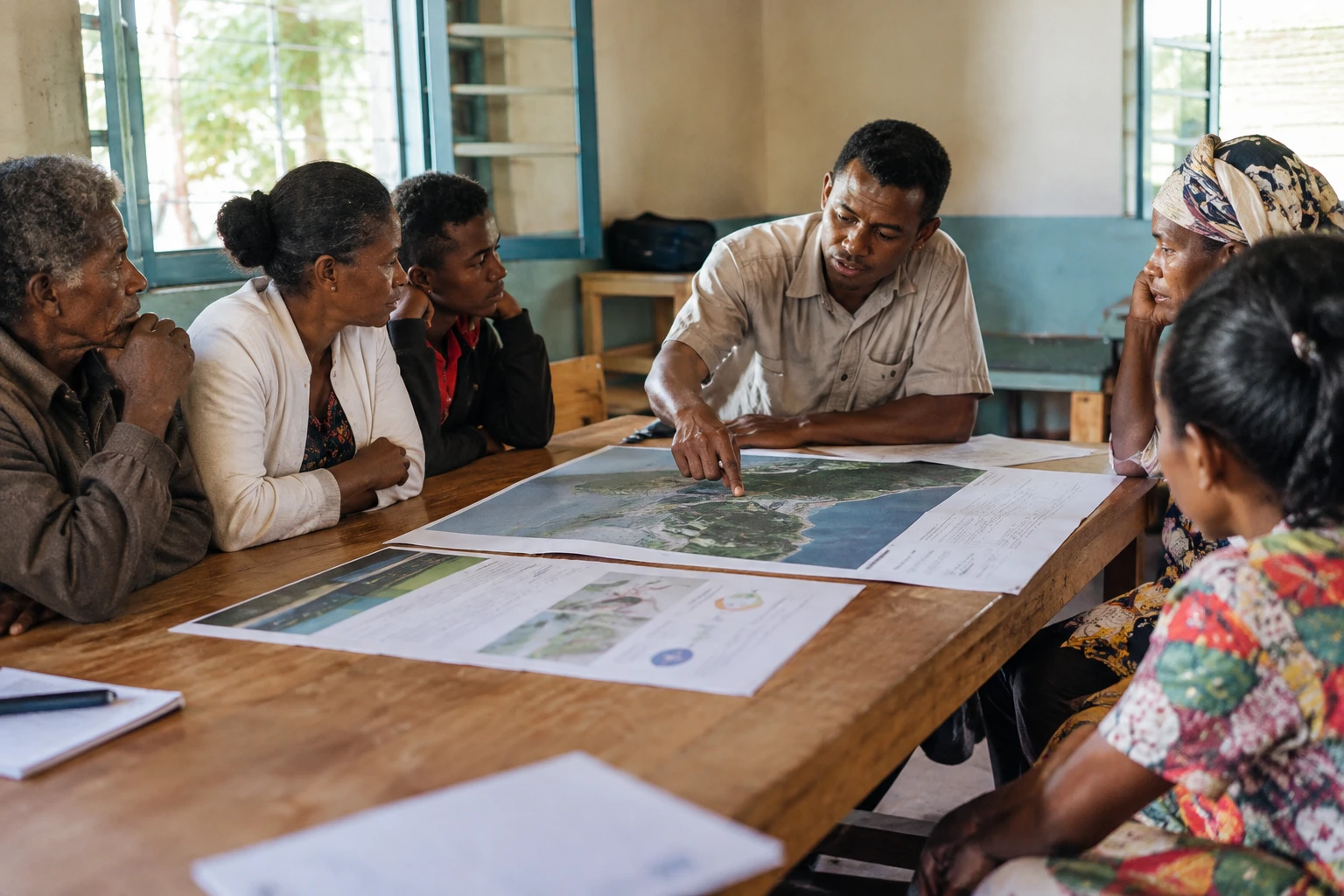
At Ampasindava, US funding is not yet bringing a mine into production. It is advancing a rare earths project whose next steps — studies, technical testing and environmental permits — will matter as much as the promise of industrial markets. For communities on this peninsula in north-west Madagascar, the central question remains concrete: what effects will there be on land, water and local activities, and what role will they have in decisions?
A project still far from commercial extraction
On 8 October 2026, the Malagasy authorities formalised an operating permit for Harena Rare Earths, a company linked to the Ampasindava project. This authorisation is an important administrative step, but does not on its own amount to a green light for construction or production. The company must still obtain an environmental permit and complete the required studies and management plans, according to information published by Malagasy media outlet Moov Madagascar and by the company itself.
The US International Development Finance Corporation (DFC) has announced US$4.8 million to support the development of the project. This is support for studies and preparatory work, not full financing for an operating mine. The DFC says its support is intended to help Harena move from pre-feasibility to a feasibility study, including through proof-of-concept work and social and environmental studies. A pilot plant and laboratory are being considered to test the process before any decision on large-scale production.
The deposit is described by the company as an estimated resource of 699 million tonnes of ionic clays. This figure describes the estimated volume of material, not an equivalent quantity of recoverable rare earths. The DFC refers to several elements used in permanent magnets, including neodymium, praseodymium, dysprosium and terbium. Harena is targeting production of an intermediate concentrate, which would have to be processed elsewhere. The stages of processing and the share of added value retained in Madagascar therefore remain decisive issues.
Supply rivalry, differing interests
Washington presents its support as a way to diversify critical mineral supplies and reduce the dependence of its industrial supply chains on China, which dominates rare earths extraction and, especially, processing. For the US, the project serves an industrial and strategic objective. For Madagascar, its value will depend more on public revenues, jobs, benefits for local businesses and safeguards against environmental consequences.
These interests do not automatically coincide. Foreign financing intended to secure a raw material guarantees neither refining locally, nor the creation of lasting jobs, nor an equitable sharing of revenues. The DFC says the proposed product would be shipped off-site for further processing. Contracts, the tax regime, local-content commitments and the distribution of risks and benefits will therefore need to be monitored.
The project is part of a mining trajectory already marked by major investments, particularly in nickel and mineral sands. The new mining code adopted in 2023 was intended to update the rules governing a strategic sector. But the existence of a legal framework does not settle every question: transparency of commitments, oversight of operations and the ability of institutions to enforce standards will matter over time. In Antananarivo, the authorities will also need to make decisions concerning a site far from the capital understandable.
Consultation and risks at the heart of local debate
At Ampasindava, the mining project has for several years prompted concern among residents and civil society organisations. Concerns include water, soils, livelihoods and biodiversity. Residents and civil society groups have challenged the quality of information and the role given to communities in decision-making. These should be reported as concerns and positions expressed, not as proof that industrial mining has already caused harm.
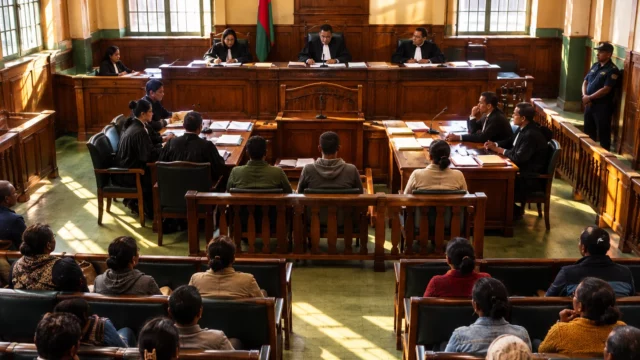
In October 2026, the TANY Collective condemned the granting of the permit before, it said, the environmental assessment and public consultations had been completed. This position contrasts with the company’s communications, which describe the permit as validation of its technical, social and environmental commitments. The environmental permit, impact documents and arrangements for upcoming consultations will therefore be essential to establish what has actually been assessed, what responses have been provided and how communities will be able to influence the project.
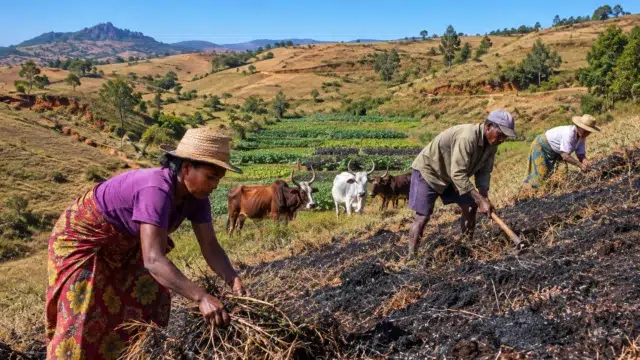
Any potential consequences would not be distributed equally. Mining revenues and regulatory decisions concern the state and investors, while changes in land use and risks to natural resources would affect residents near the site first. Farming, fishing, tourism and small local businesses could also be affected. Temporary construction jobs would not necessarily compensate for lasting damage to these livelihoods: the assessment will need to compare expected effects and make its assumptions public.
An issue for Madagascar and the region
Madagascar is a member of the Southern African Development Community (SADC), a regional co-operation organisation that includes countries neighbouring the Indian Ocean. The way the project combines foreign investment, environmental requirements and national benefits may interest other states in the region facing growing demand for critical minerals. The challenge is not only to attract capital, but to negotiate the terms on which resources will be extracted and processed.
The timeline remains conditional. Commercial production is being discussed for around 2028, but will depend on the results of studies, outstanding permits, financing and the development of the pilot process. The next steps to watch are publication of the environmental and social studies, consultation with communities, and then decisions on facilities and ore processing. At Ampasindava, the permit opens a new phase; it settles neither the project’s industrial feasibility nor its local acceptability.