Algeria
 Egypt
 Libya
 Morocco
 Sudan
 Tunisia
 Benin
 Burkina Faso
 Cabo Verde
 Côte d'Ivoire
 Guinea
 Guinea-Bissau
 Liberia
 Mali
 Mauritania
 Niger
 Nigeria
 Senegal
 Sierra Leone
 The Gambia
 Togo
 Cameroon
 Central African Republic
 Chad
 DR Congo
 Equatorial Guinea
 Gabon
 Republic of the Congo
 São Tomé and Príncipe
 Burundi
 Comoros
 Djibouti
 Eritrea
 Ethiopia
 Kenya
 Madagascar
 Malawi
 Mauritius
 Mozambique
 Rwanda
 Seychelles
 Somalia
 South Sudan
 Tanzania
 Uganda
 Angola
 Botswana
 Eswatini
 Lesotho
 Namibia
 South Africa
 Zambia
 Zimbabwe
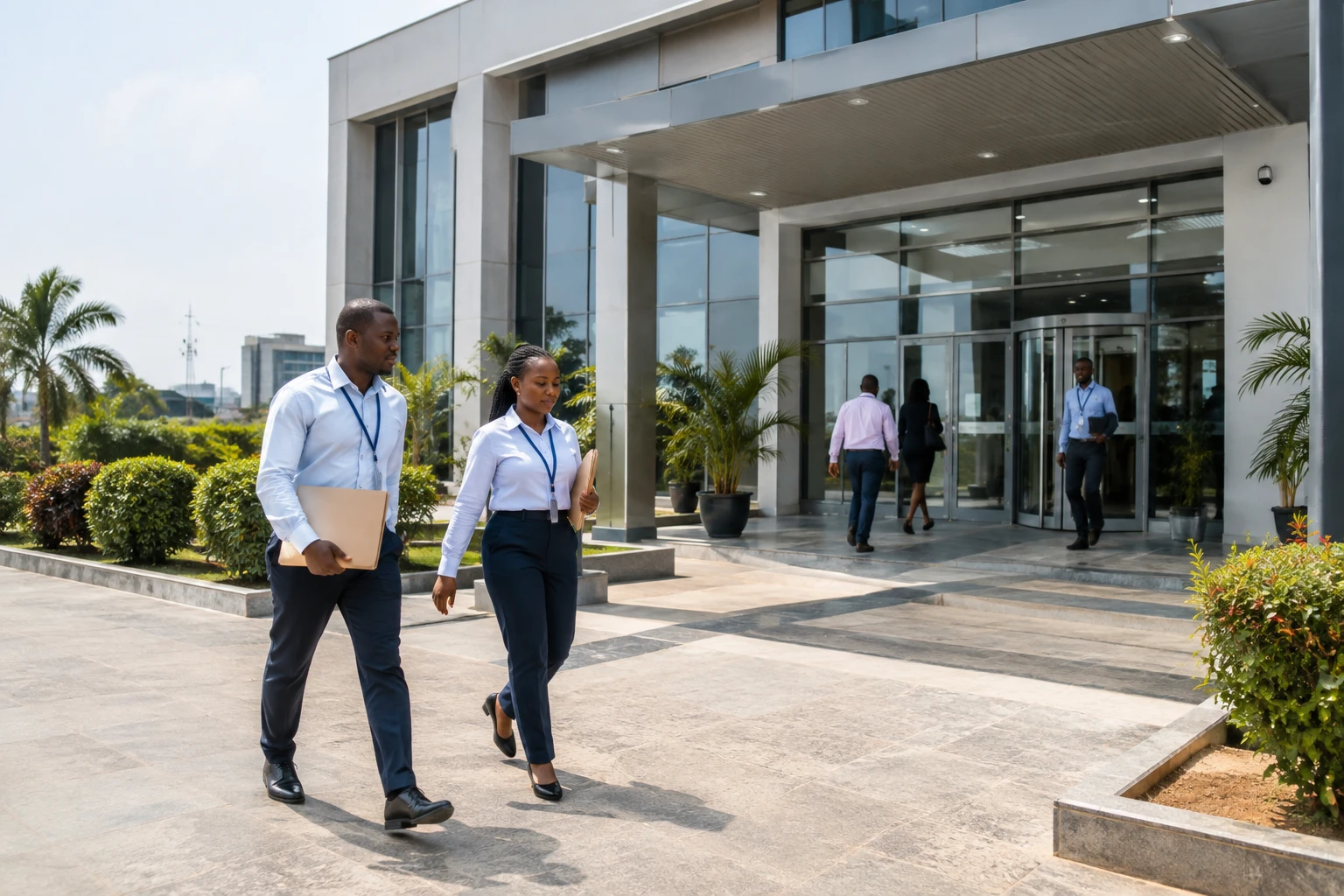
For Ghana, the challenge is not just to produce more electricity. It is also to power industrialisation without relying on a single technology or partner. In Moscow, President John Dramani Mahama opened up a new option: talks with Rosatom, Russia’s state-owned nuclear company, about a possible power plant in Ghana.
A programme under way for several years
Ghana’s nuclear project did not begin with this announcement. The country has been studying the option since the 1960s and has experience in nuclear research. Its research reactor, located in Accra, is used for scientific purposes and does not produce electricity for the national grid.
The civilian programme passed a preparatory milestone in 2022, when Ghana entered the second phase of the International Atomic Energy Agency’s framework. This phase includes preparing the institutions, safety rules, financing and expertise needed before any construction. The Ghanaian Nuclear Regulatory Authority oversees the process with the national bodies responsible for the programme. Ghana’s Nuclear Regulatory Authority sets out the preparation stages.
The timetable remains subject to this work. In September 2026, the Ghana News Agency reported that preparations were continuing on the proposed sites, regulations and training. A power plant cannot therefore be inferred from the opening of commercial talks alone.
A new option, but not yet a contract
On 29 October 2026, at the third Russia-Africa Summit in Moscow, Mahama said his government had “initiated discussions with Rosatom” to establish a first nuclear power plant. The announcement was reported by Ghanaian daily Graphic and the Ghana Broadcasting Corporation. No timetable, cost, final site or construction agreement has been publicly announced. Graphic Online reports the president’s statement in Moscow.
The distinction matters: Ghana had already selected other partners for its programme. In March 2025, Nuclear Power Ghana told the Ghana News Agency that US and Chinese companies had been selected to study small modular reactor projects and a large-power reactor. The agency said at the time that no formal contract had been signed. Talks with Rosatom therefore add another interlocutor to the process, without establishing that it is replacing the previous options. The Ghana News Agency looks back at the selection of US and Chinese partners.
Rosatom’s head, for his part, said on 30 October that the company was examining the possibility of a large-power plant with Ghana. The statement confirms that exchanges are taking place, but it remains the view of a potential supplier: it is neither an investment decision nor approval by the Ghanaian authorities. Interfax reports Rosatom’s head’s remarks after the summit.
Electricity, industry and financing choices
Accra presents nuclear power as part of a more diverse energy mix, alongside renewables and existing generation. The political aim is to secure stable production to support industry, particularly the local processing of minerals. The expected benefits will nevertheless have to be weighed against construction costs, long lead times, training needs and the requirements for managing fuel and waste.
Financing choices will matter as much as technology. The models discussed in Ghana’s programme include partnerships with foreign operators. They can mobilise capital and expertise, but lending terms, the allocation of risk and the final cost of electricity will determine who pays: the state, businesses or consumers. The terms of any possible co-operation with Rosatom have not been made public.
Safety is another central challenge. Ghana must strengthen the independence and resources of its regulator, train teams able to assess facilities and prepare the electricity grid to accommodate high-capacity generation. These responsibilities fall to national institutions and to the populations living near the proposed sites, who must be able to access clear information on environmental assessments and protective measures.
The West African context to consider
The debate also concerns Ghana’s neighbours. The country belongs to ECOWAS, the Economic Community of West African States, and participates in the West African Power Pool, which aims to link national grids and facilitate cross-border electricity trading. Depending on its capacity and the infrastructure available, a power plant could affect markets beyond Ghana. But this prospect will depend on interconnection, grid stability and regional agreements; it is not automatic.
Across the region, interest in nuclear power is growing as several governments also seek to develop solar power, hydropower and electricity grids. Ghana is moving forward in an environment of real competition among international suppliers. The decision will therefore have to balance price, reliability, skills transfer, safety assurances and the state’s ability to oversee a project over several decades.
In Moscow, Mahama also called for trade between Africa and Russia to be made easier, particularly through payments in local currencies and digital tools. He cited agribusiness, fertilisers, medicines and transport as sectors likely to attract investment. These proposals broaden the diplomatic agenda, but their translation into concrete contracts remains to be seen.
For Ghana, the next step is therefore not simply to choose a supplier. It will need to clarify whether talks with Rosatom lead to a formal offer, how that offer fits with the partners already selected and what financial, regulatory and environmental guarantees accompany it. It is these decisions, more than summit announcements, that will measure progress on the programme.