Algeria
 Egypt
 Libya
 Morocco
 Sudan
 Tunisia
 Benin
 Burkina Faso
 Cabo Verde
 Côte d'Ivoire
 Ghana
 Guinea
 Guinea-Bissau
 Liberia
 Mali
 Mauritania
 Niger
 Senegal
 Sierra Leone
 The Gambia
 Togo
 Cameroon
 Central African Republic
 Chad
 DR Congo
 Equatorial Guinea
 Gabon
 Republic of the Congo
 São Tomé and Príncipe
 Burundi
 Comoros
 Djibouti
 Eritrea
 Ethiopia
 Kenya
 Madagascar
 Malawi
 Mauritius
 Mozambique
 Rwanda
 Seychelles
 Somalia
 South Sudan
 Tanzania
 Uganda
 Angola
 Botswana
 Eswatini
 Lesotho
 Namibia
 South Africa
 Zambia
 Zimbabwe
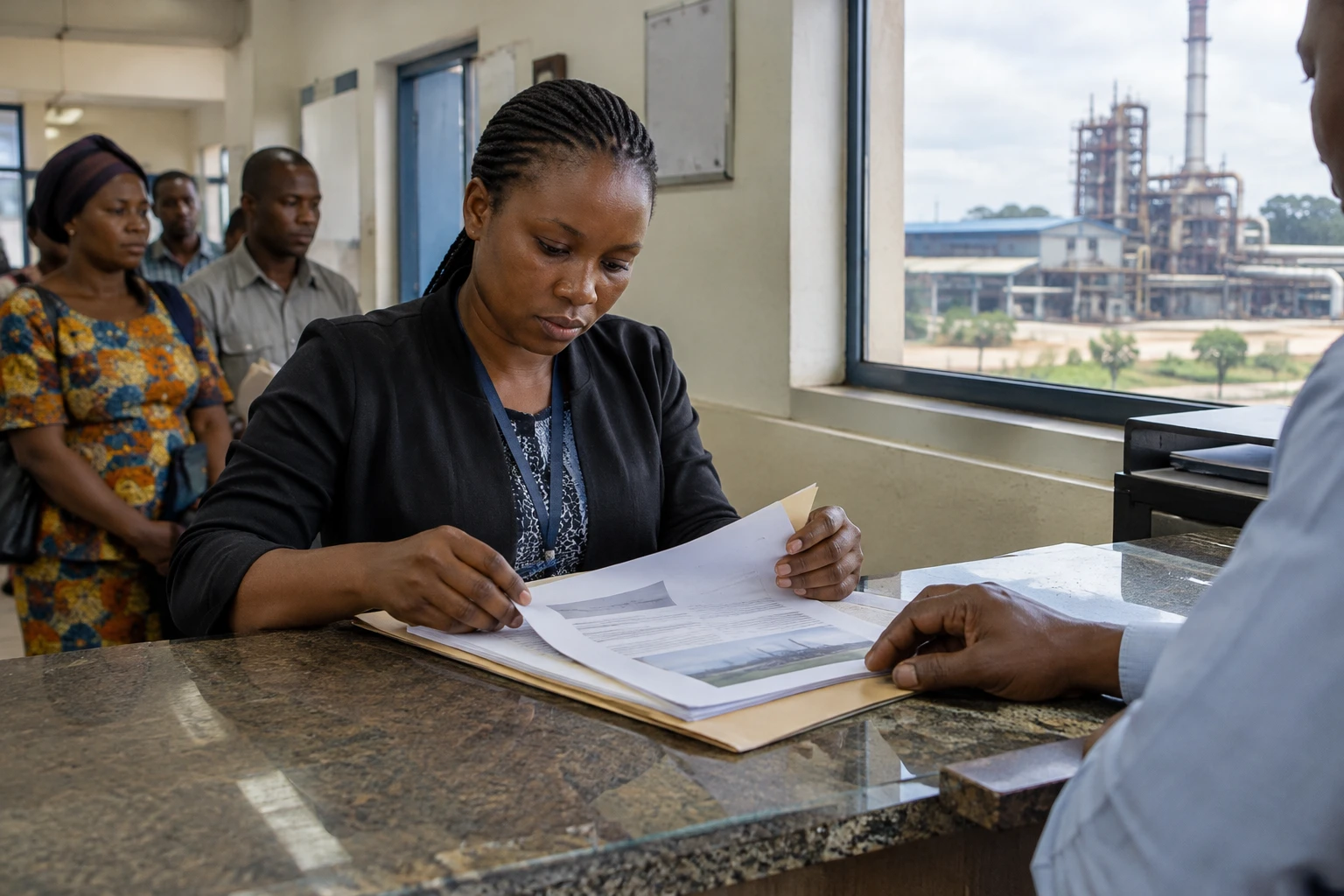
In Ikot Abasi, in Akwa Ibom State, a plant designed to produce aluminium on a large scale remains idle. Its future highlights a practical challenge for Nigeria: turning its energy resources and infrastructure into sustainable industrial capacity.
A strategic smelter, but still inactive
The Aluminium Smelter Company of Nigeria (ALSCON) has a nominal capacity of 193,000 tonnes of aluminium a year. The site also includes a gas-fired power station and a port on the Imo River. The Russian company Rusal owns 85%; the Nigerian state holds the remaining 15%, according to the group’s own account.
ALSCON began operating in 1997, then halted production in 2000. After Rusal took over the site in 2007 and refurbishment work was carried out, the plant restarted in 2008. But unreliable gas supplies, financial losses and disagreements over its privatisation once again undermined operations. Rusal announced the suspension of production in March 2013, citing, among other things, the lack of a continuous gas supply.
The stated capacity should therefore not be confused with actual production. Rusal now says operations are suspended and reports that 150 people are employed at the site. On its ALSCON page, the company does not publish detailed recent figures on output or restart costs.
A legal dispute weighing on the revival
The legal case dates back to the plant’s privatisation. BFI Group, a US consortium, contests the process that led to Rusal taking over. Nigeria’s Supreme Court issued a ruling on 26 January 2024 in the dispute between BFI Group and the Bureau of Public Enterprises (BPE), the federal body responsible for privatisations. The ruling concerns the enforcement of an earlier judgment linked to the sale; it is not simply a new international award definitively assigning the plant to one side.
This distinction matters. Rusal relies on an earlier international arbitration process, which it presents as supporting the validity of its acquisition. BFI Group, for its part, cites Nigerian court decisions concerning the privatisation. The conflict between these legal avenues complicates discussions about control of the asset and the investments required.
The case has also moved into the financial sphere. On 12 October 2026, the Nigerian Economic and Financial Crimes Commission (EFCC) charged ALSCON and its director, Dmitry Zavyalov, in a case involving alleged undeclared transfers of 582.43 million naira. The company pleaded not guilty. The trial was adjourned to 27 January 2027. These allegations remain to be established in court: they do not amount to a conviction.
In Abuja, the federal authorities are also seeking to create the conditions for a possible restart, including by examining a connection between the facility and the national electricity grid. However, a grid connection alone would not be enough: energy supplies would also need to be secured, ownership rights clarified and the refurbishment of equipment financed.
Local benefits extend beyond the plant’s balance sheet
For Akwa Ibom, a restart would have different effects for different groups. Employees and local businesses could benefit from jobs and subcontracting contracts. Port activity and service providers could also find new demand. But these benefits would depend on actual output, procurement in Nigeria and the plant’s ability to operate without interruptions.
The ambitions announced when the plant was taken over were considerable: Rusal cited about 1,900 direct jobs at full capacity, as well as thousands of indirect jobs. These projections do not describe the current situation. With 150 employees reported by the group and production suspended, the gap between the industrial promise and actual activity remains substantial.
At national level, ALSCON could help reduce reliance on aluminium imports and diversify an economy still heavily exposed to hydrocarbons. But such a contribution requires more than capacity on paper: it depends on energy, transport infrastructure, legal certainty and sufficient demand to absorb production.
Ghana’s bet, a contrast to watch
On 29 October 2026, Rusal and the Ghana Integrated Aluminium Development Corporation (GIADEC), the state-owned company tasked with developing the industry, announced an agreement to prepare bauxite and alumina projects. The plan includes a mine with capacity of up to 5 million tonnes a year and, at a later stage, an alumina refinery with capacity of 1.2 million tonnes a year. The investment amounts and implementation timetable were not specified in the announcement.
These are target capacities, not facilities already in production. Ghana aims to process more of its bauxite locally, while Rusal is seeking to strengthen its raw-material supplies. The group is already present in Guinea, notably in bauxite and alumina production. It also announced a smelter project in Ethiopia in 2025, which has yet to be realised.
For Nigeria, these regional announcements underscore a fundamental question: can industrial projects move beyond agreements and announced capacity to become operational production chains? At ALSCON, the next steps will be legal, energy-related and financial. The trial’s adjournment to January 2027 is a near-term milestone; resolving the privatisation dispute and securing energy supplies will determine whether the smelter can emerge from its shutdown on a lasting basis.
Sources consulted: ALSCON profile by Rusal, announcement of the production suspension in 2013, Premium Times report on the EFCC proceedings, Nigeria’s Supreme Court ruling of 26 January 2024, Reuters report on the agreement in Ghana.