Algeria
 Egypt
 Libya
 Morocco
 Tunisia
 Benin
 Burkina Faso
 Cabo Verde
 Côte d'Ivoire
 Ghana
 Guinea
 Guinea-Bissau
 Liberia
 Mali
 Mauritania
 Niger
 Nigeria
 Senegal
 Sierra Leone
 The Gambia
 Togo
 Cameroon
 Central African Republic
 Chad
 DR Congo
 Equatorial Guinea
 Gabon
 Republic of the Congo
 São Tomé and Príncipe
 Burundi
 Comoros
 Djibouti
 Eritrea
 Ethiopia
 Kenya
 Madagascar
 Malawi
 Mauritius
 Mozambique
 Rwanda
 Seychelles
 Somalia
 South Sudan
 Tanzania
 Uganda
 Angola
 Botswana
 Eswatini
 Lesotho
 Namibia
 South Africa
 Zambia
 Zimbabwe
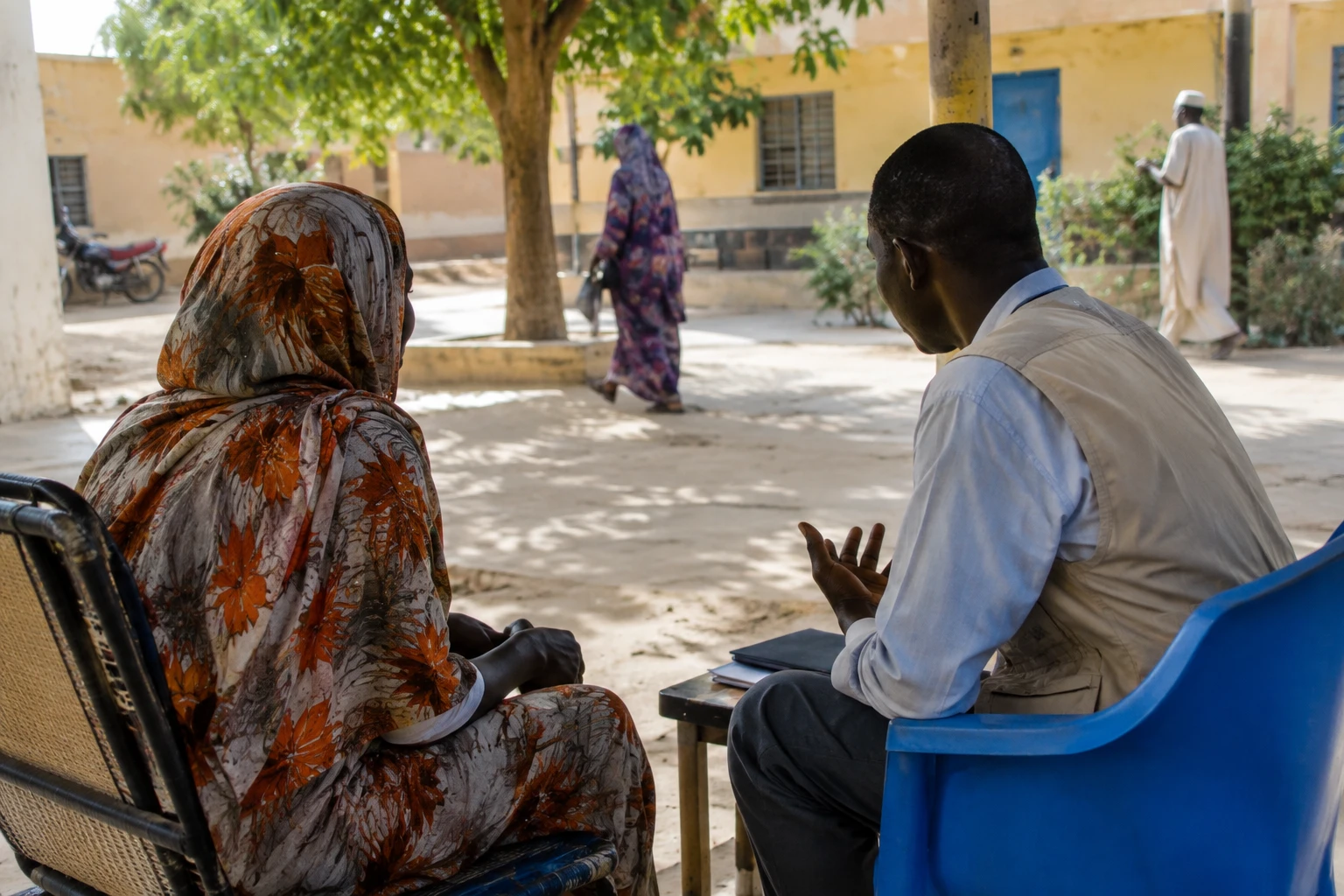
In eastern Chad, Sudanese refugees are still searching for missing relatives and trying to rebuild their lives far from their towns. For those who fled El-Fasher, the challenge is not only to find refuge: accounts of the violence must also be gathered, protected and examined by the courts.
The issue has taken on particular significance since N’Djamena began its withdrawal from the International Criminal Court (ICC), the tribunal responsible for prosecuting people accused of the gravest crimes. Chad remains bound by the Rome Statute until 27 July 2027. Until then, investigations concerning Darfur can continue, and the withdrawal does not end proceedings already under way.
A city under siege, then captured in October 2025
El-Fasher, the capital of North Darfur, was captured by the Rapid Support Forces (RSF), a paramilitary group fighting the Sudanese army, on 26 and 27 October 2025. The city had endured about 18 months of siege. Access to food, water and healthcare had deteriorated sharply before the final offensive.
Accounts from survivors gathered after the city fell describe executions, sexual violence, looting and attacks on civilians fleeing the area. These testimonies are essential, but must be examined with care: the circumstances of each act and the individual responsibility of those who committed them are matters for investigations and, where appropriate, judicial decisions.
In February 2026, the United Nations Human Rights Office published an investigation based on testimony from more than 140 victims and witnesses, interviewed notably in eastern Chad. The report documents more than 6,000 deaths during the first three days of the offensive. The UN says the documented acts could constitute war crimes and, in some cases, crimes against humanity. This figure is the finding of the UN investigation, not a definitive count of all victims.
The Independent International Fact-Finding Mission for the Sudan has also gathered testimony from survivors in Chad. The country’s proximity to the border and the presence of people who fled the violence give it a practical role in documenting alleged crimes: investigators can meet witnesses there who have left the areas where the acts are said to have taken place.
Chad’s withdrawal will not close Darfur investigations
The Chadian government notified its withdrawal from the Rome Statute on 27 July 2026. According to the United Nations Treaty Collection, the decision will take effect one year later, on 27 July 2027. Chad therefore remains an ICC member state until then and retains its treaty obligations to co-operate.
The timetable matters, but it does not mean the Court will automatically lose all jurisdiction on the day of withdrawal. The Rome Statute provides that leaving does not release a state from its obligations concerning investigations or proceedings begun before the effective date. In addition, the ICC’s jurisdiction over Darfur stems from a 2005 UN Security Council decision referring the situation to the Court. Sudan is not itself a party to the Rome Statute.
The ICC Office of the Prosecutor has said it is investigating alleged crimes committed in Darfur since the war began in April 2023. It has also said it is working to preserve evidence related to the events in El-Fasher. The Court therefore has a legal basis, separate from Chad’s membership, to examine crimes committed on Sudanese territory. However, depending on the circumstances, the withdrawal could complicate future access to witnesses and documents, or co-operation from the Chadian authorities.
The ICC has already tried crimes committed in Darfur. On 6 October 2025, it found Ali Muhammad Ali Abd-Al-Rahman guilty on 27 counts of war crimes and crimes against humanity linked to violence committed between 2003 and 2004. The case shows that prosecutions can succeed, but also that gathering evidence and protecting witnesses require time and sustained co-operation.
For survivors, documenting violence without exposing them
People who have taken refuge in Chad are not only potential witnesses. They also need safety, healthcare and long-term support. Sexual violence, reported by survivors and documented by international investigators, raises specific concerns: confidentiality, consent, access to care, and the risk of reprisals or stigma.
Associations and humanitarian organisations must be able to provide services regardless of whether people participate in an investigation. Judicial documentation cannot replace these immediate needs. It must also avoid turning survivors’ accounts into a public spectacle: gathering evidence requires appropriate protocols and protection of the identities of those concerned.
Chad’s withdrawal decision comes as several Sahelian countries have also begun their departure from the ICC in 2026. The Chadian government has justified its decision by denouncing a form of justice it considers selective. This criticism echoes a longstanding debate about the representation of African states in international institutions and the fairness of how they operate. It does not, however, change the facts to be established in El-Fasher or victims’ right to obtain justice.
Chad belongs to the Central African Economic and Monetary Community (CEMAC), while Sudan and Darfur are part of a different regional space. But population movements and cross-border investigations make co-operation between neighbouring countries a practical concern. At continental level, the case highlights the tension between two demands: addressing African criticism of international justice and preserving mechanisms capable of prosecuting grave crimes, including when suspects and witnesses are in different countries.
The legal date to watch is 27 July 2027, when Chad’s withdrawal is due to take effect. Until then, the ICC retains jurisdiction over Darfur, and proceedings already under way will not automatically disappear after that date. For El-Fasher survivors living in Chad, the central issue remains continuity of investigations, practical co-operation and protection of their testimony.