Algeria
 Egypt
 Libya
 Morocco
 Sudan
 Tunisia
 Benin
 Burkina Faso
 Cabo Verde
 Ghana
 Guinea
 Guinea-Bissau
 Liberia
 Mali
 Mauritania
 Niger
 Nigeria
 Senegal
 Sierra Leone
 The Gambia
 Togo
 Cameroon
 Central African Republic
 Chad
 DR Congo
 Equatorial Guinea
 Gabon
 Republic of the Congo
 São Tomé and Príncipe
 Burundi
 Comoros
 Djibouti
 Eritrea
 Ethiopia
 Kenya
 Madagascar
 Malawi
 Mauritius
 Mozambique
 Rwanda
 Seychelles
 Somalia
 South Sudan
 Tanzania
 Uganda
 Angola
 Botswana
 Eswatini
 Lesotho
 Namibia
 South Africa
 Zambia
 Zimbabwe
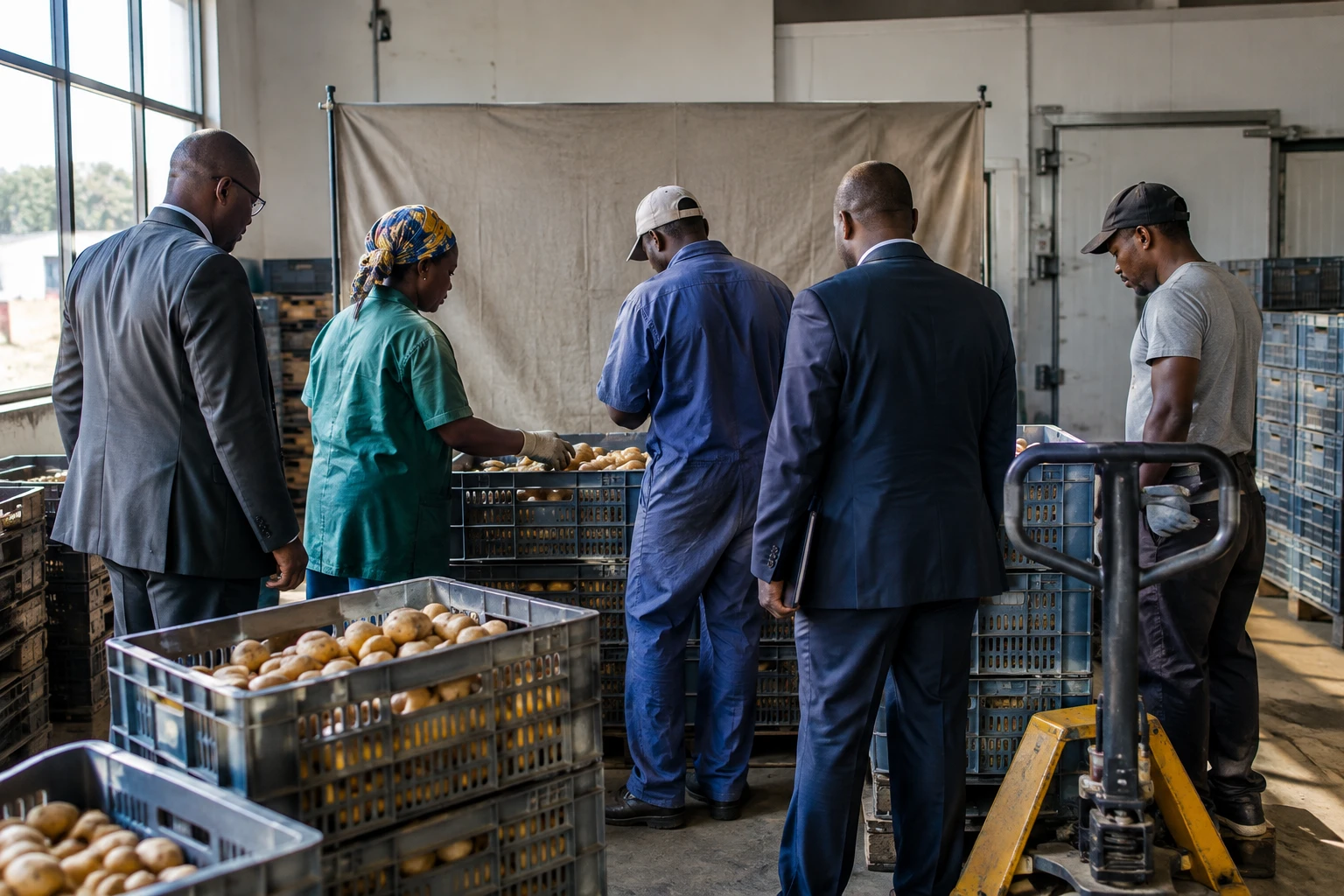
In Abidjan’s markets, almost all the potatoes sold to households and restaurants come from abroad. This dependence creates an opening for African producers. But seizing it takes more than harvesting larger volumes: they must deliver at the right time, with consistent quality and at a competitive price.
A regional market under intense import pressure
Côte d’Ivoire is a major commercial hub in West Africa and the largest economy in WAEMU, the West African Economic and Monetary Union. Its food market is connected to ports, wholesale networks and urban demand. Yet potatoes remain a secondary food in the country, where yams and cassava play a more important role among tubers.
The picture is changing with urbanisation and the growth of fast food, delivery services and processed products. These trends are expanding outlets for both fresh potatoes and frozen chips. They do not mean that all Ivorian consumers are adopting the same habits: demand from restaurants and urban retailers exists alongside highly diverse diets across regions and income groups.
According to a report by the US Department of Agriculture’s Foreign Agricultural Service, published in October 2026, Ivorian requirements are estimated at between 60,000 and 80,000 tonnes a year. Average imports are estimated at about 62,000 tonnes, while local production remains below 100 tonnes. These ballpark figures are also cited in a specialist market overview. They highlight the gap between established demand and a still very limited domestic industry.
Rising import bill dominated by European suppliers
Between January and September 2026, Côte d’Ivoire’s purchases of fresh or chilled potatoes, excluding seed potatoes, reached $12.5m, up from $8.64m over the same period in 2025. The increase, close to 45%, brought the nine-month bill close to the total for all of 2025, estimated at $12.58m. The figures come from the USDA report and are cited by a specialist agricultural markets publication.
The Netherlands remains by far the leading supplier. Its sales amounted to $9.18m in the first nine months of 2026, up from $5.43m a year earlier. Belgium also increased its sales, to $1.25m. This presence reflects a well-established competitive supply chain capable of serving the market at scale. For African exporters, the price at harvest is therefore not enough: transport costs, losses and the regularity of shipments also determine the price delivered to Ivorian wholesalers.
The market for processed products is following a different trajectory. Between 2020 and 2025, the value of imports of frozen preparations, including chips, rose from $1.52m to $2.70m, an increase of about 78%. In the first nine months of 2026, however, purchases fell to $1.6m, from $2.1m over the comparable period in 2025. Processing brings another challenge: meeting restaurants’ and distributors’ requirements for size, shelf life and consistency.
Senegal has supply, while Mali must turn proximity into trade
Senegal is seeking to turn its output into regional sales. On 24 January 2026, the Senegalese Press Agency reported that the agriculture minister expected production to exceed 255,000 tonnes, against estimated requirements of about 210,000 tonnes over 14 months. He named Côte d’Ivoire and Burkina Faso as potential markets. This was a forecast announced by the minister, not a final assessment of the season.
A potential surplus does not, however, guarantee sales or income. In May 2025, Senegal’s national broadcaster RTS reported difficulties selling produce and weaker farm-gate prices due to abundant supply, as well as storage constraints for some producers. Cold storage and co-ordinated marketing are therefore essential: without them, a harvest intended for export can lose value before it even reaches the border.
Mali, for its part, benefits from its geographical proximity and a production basin around Sikasso. Yet customs data cited in the US report show a sharp recent contraction in its sales to Côte d’Ivoire: about $462,000 in 2025, then $37,000 in the first nine months of 2026, compared with $461,000 over the same period in 2025. The contrast with the overall rise in Ivorian imports shows that proximity alone is not enough. The available data do not specify the reasons for the decline.
Logistics will matter as much as harvests
Egypt illustrates another route into the market. Its fresh potato shipments to Côte d’Ivoire rose from about $14,000 in 2020 to $1.68m in 2025, according to the USDA report. Beyond production volumes, the industry relies on irrigation, grading, packaging, phytosanitary checks and refrigerated transport. This organisation helps ensure regular deliveries over long distances.
For Ivorian producers and traders, the rise in purchases is both a sign of demand and evidence that local production still does not meet requirements. For households, the import bill alone does not show how retail prices have changed: these also depend on transport costs, margins and sales channels. Wholesalers and restaurateurs, meanwhile, weigh up price, availability and quality.
The issue ultimately goes beyond relations between two countries. Within ECOWAS, the Economic Community of West African States, regional agricultural trade can link surplus areas with markets in deficit. But the example of potatoes is a reminder that trade integration is also built in warehouses, cold chains and transport infrastructure. The next indicators to watch will be whether Senegalese exports materialise, whether Malian volumes return and whether African operators can supply the Ivorian market reliably.