Algeria
 Egypt
 Libya
 Morocco
 Sudan
 Tunisia
 Benin
 Burkina Faso
 Cabo Verde
 Côte d'Ivoire
 Ghana
 Guinea
 Guinea-Bissau
 Liberia
 Mali
 Mauritania
 Niger
 Nigeria
 Senegal
 Sierra Leone
 The Gambia
 Togo
 Cameroon
 Central African Republic
 Chad
 Equatorial Guinea
 Gabon
 Republic of the Congo
 São Tomé and Príncipe
 Burundi
 Comoros
 Djibouti
 Eritrea
 Ethiopia
 Kenya
 Madagascar
 Malawi
 Mauritius
 Mozambique
 Rwanda
 Seychelles
 Somalia
 South Sudan
 Tanzania
 Uganda
 Angola
 Botswana
 Eswatini
 Lesotho
 Namibia
 South Africa
 Zambia
 Zimbabwe
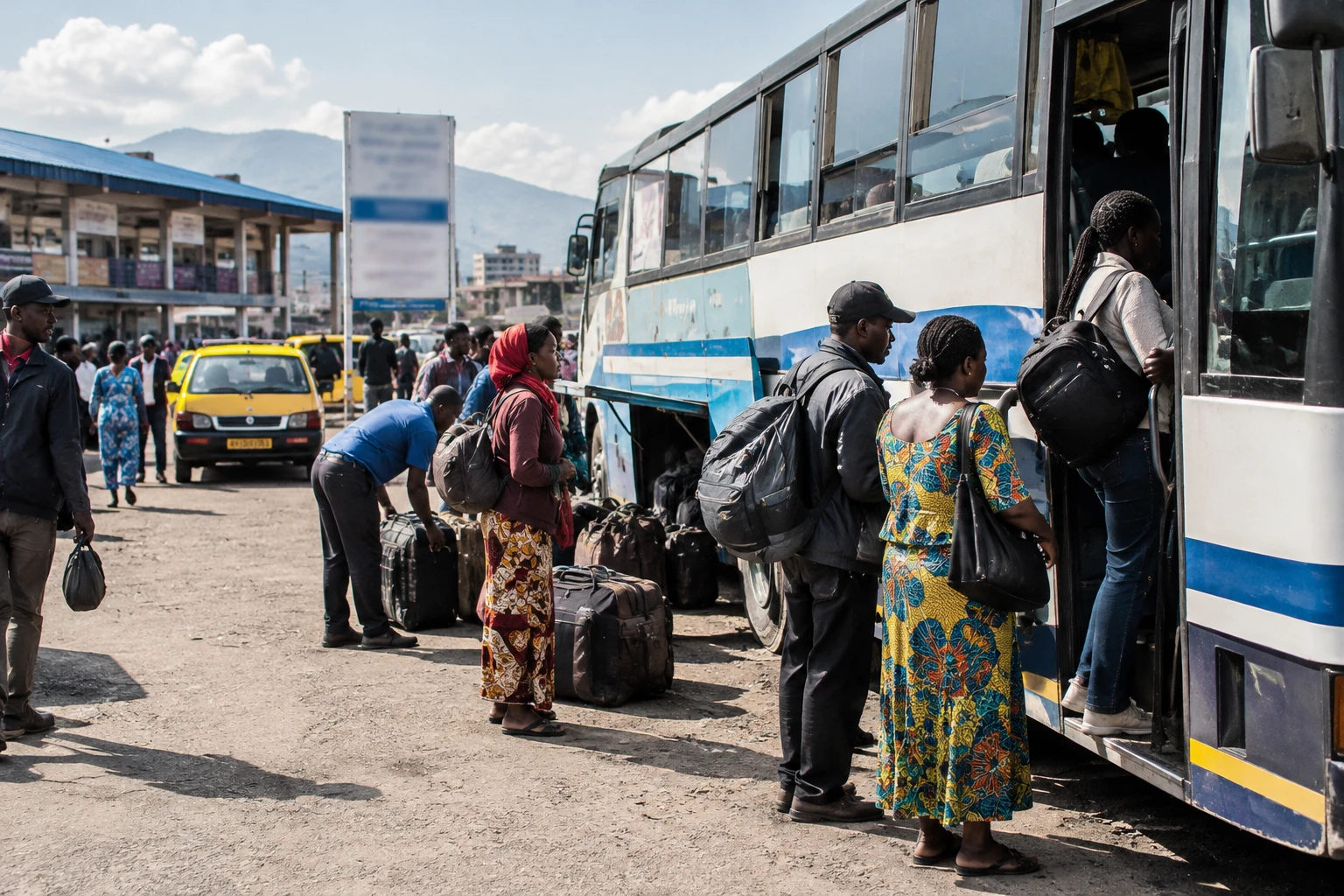
For Rwanda, the sanctions announced by the United States at the end of October sound like another warning shot. After targeting the Rwandan army in the spring, Washington is now targeting the Defence Ministry and Zigama, the military’s financial arm. Can these new sanctions change the course of the conflict in eastern DR Congo?
Washington targets Rwanda’s financial lifeline
On 28 October 2026, the United States announced sanctions against Rwanda’s Defence Ministry and Zigama Credit and Savings Society, a Rwandan financial institution.
The US Treasury Department accuses the ministry of deploying thousands of soldiers in eastern DR Congo and providing M23 with equipment, logistical support and training. Kigali rejects these accusations; Rwanda has always denied supporting Congolese armed groups.
Washington is also targeting Zigama bank for the first time, accusing it of facilitating financial support for Rwanda’s military apparatus, M23 and its political branch, the Congo River Alliance (AFC). According to the US Treasury, the institution is alleged to have taken part in payments for weapons and equipment. It is also suspected of having transported gold from areas controlled by M23.
The sanctions target the Rwandan army’s financial arm. Freezing Zigama’s assets under US jurisdiction will certainly have limited effects. However, any foreign bank that does business with Zigama or Rwanda’s Defence Ministry risks secondary sanctions. US sanctions will inevitably isolate Zigama and make its international banking operations more complex.
Opposing positions on peace commitments
US Treasury Secretary Scott Bessent has called on Rwanda to stop supporting M23 and withdraw its troops from eastern DR Congo. For her part, Rwandan government spokesperson Yolande Makolo told the Associated Press that Kigali remained ready to implement the Washington Accords. She accuses Kinshasa of failing to honour its commitments to neutralise the Democratic Forces for the Liberation of Rwanda (FDLR), an armed group active in eastern DR Congo.
The US decision is part of a stepped-up campaign by Washington. In March 2026, the United States had sanctioned the Rwanda Defence Force and four of its senior officials. The latest decision extends the targets to ministerial and financial structures that the United States considers linked to support for M23. It comes as mediation efforts have failed to end the fighting.
The impact is felt first in eastern DR Congo
For people in affected areas, the immediate concerns remain security, the continuity of activities and access to essential services. Financial sanctions can increase the cost of cross-border operations and complicate some transactions. But they do not guarantee an end to the clashes or the return of the Congolese administration to territories controlled by M23.
The consequences also vary for different actors. Kinshasa can present the decision as support for its diplomatic demands. For Kigali, it increases external pressure and strengthens its argument that the DRC’s obligations must also be fulfilled. Financial institutions and companies involved in regional trade will have to assess their exposure to US restrictions, without conflating political accusations with judicial decisions.
Minerals add a major economic dimension. The US Treasury says smuggling networks help finance the conflict. This accusation is part of a broader debate about the traceability of gold and strategic minerals mined in eastern DR Congo. Supply-chain transparency concerns local populations, the Congolese authorities and regional or international companies that buy or process these resources.
A test for African and international mediation
The US decision provides a new instrument of pressure, but it does not replace African negotiating mechanisms. Initiatives by the EAC and SADC, the role of the African Union and talks between Kinshasa, Kigali and M23 remain crucial. Their effectiveness will depend in particular on verifiable monitoring of the ceasefire, troop movements and commitments made by each party.
What happens next will therefore depend as much on the implementation of sanctions as on the mediators’ ability to secure concrete steps. It will be necessary to see whether the restrictions change the financial and logistical support denounced by Washington, and whether they help revive dialogue. For people in eastern Congo, the decisive measure will not be the number of measures announced, but their effect on security and daily life.
A crisis at the heart of the Great Lakes
The war in the eastern Democratic Republic of the Congo is rooted in a complex regional history. It involves armed groups, political rivalries and security concerns between Kinshasa and Kigali. M23, a Congolese armed movement, controls vast territories in the provinces of North Kivu and South Kivu, according to information reported this week by several media outlets.
The crisis has brought several diplomatic frameworks into play. The East African Community (EAC) and the Southern African Development Community (SADC), in particular, held a joint summit in February 2025 in Dar es Salaam, Tanzania, to address the situation. The two organisations bring together countries in East and Southern Africa. The African Union and the United Nations are also involved in regional efforts.
Meanwhile, the DRC and Rwanda signed the Washington Accords on 4 December 2025, under US mediation. The text was intended to support de-escalation and open a path to regional cooperation. But continuing clashes show the gap between diplomatic commitments and their implementation on the ground. The Congolese presidency had announced the signing of the accords.