Algeria
 Egypt
 Libya
 Morocco
 Sudan
 Tunisia
 Benin
 Burkina Faso
 Cabo Verde
 Côte d'Ivoire
 Ghana
 Guinea
 Guinea-Bissau
 Liberia
 Mali
 Mauritania
 Niger
 Nigeria
 Sierra Leone
 The Gambia
 Togo
 Cameroon
 Central African Republic
 Chad
 DR Congo
 Equatorial Guinea
 Gabon
 Republic of the Congo
 São Tomé and Príncipe
 Burundi
 Comoros
 Djibouti
 Eritrea
 Ethiopia
 Kenya
 Madagascar
 Malawi
 Mauritius
 Mozambique
 Rwanda
 Seychelles
 Somalia
 South Sudan
 Tanzania
 Uganda
 Angola
 Botswana
 Eswatini
 Lesotho
 Namibia
 South Africa
 Zambia
 Zimbabwe
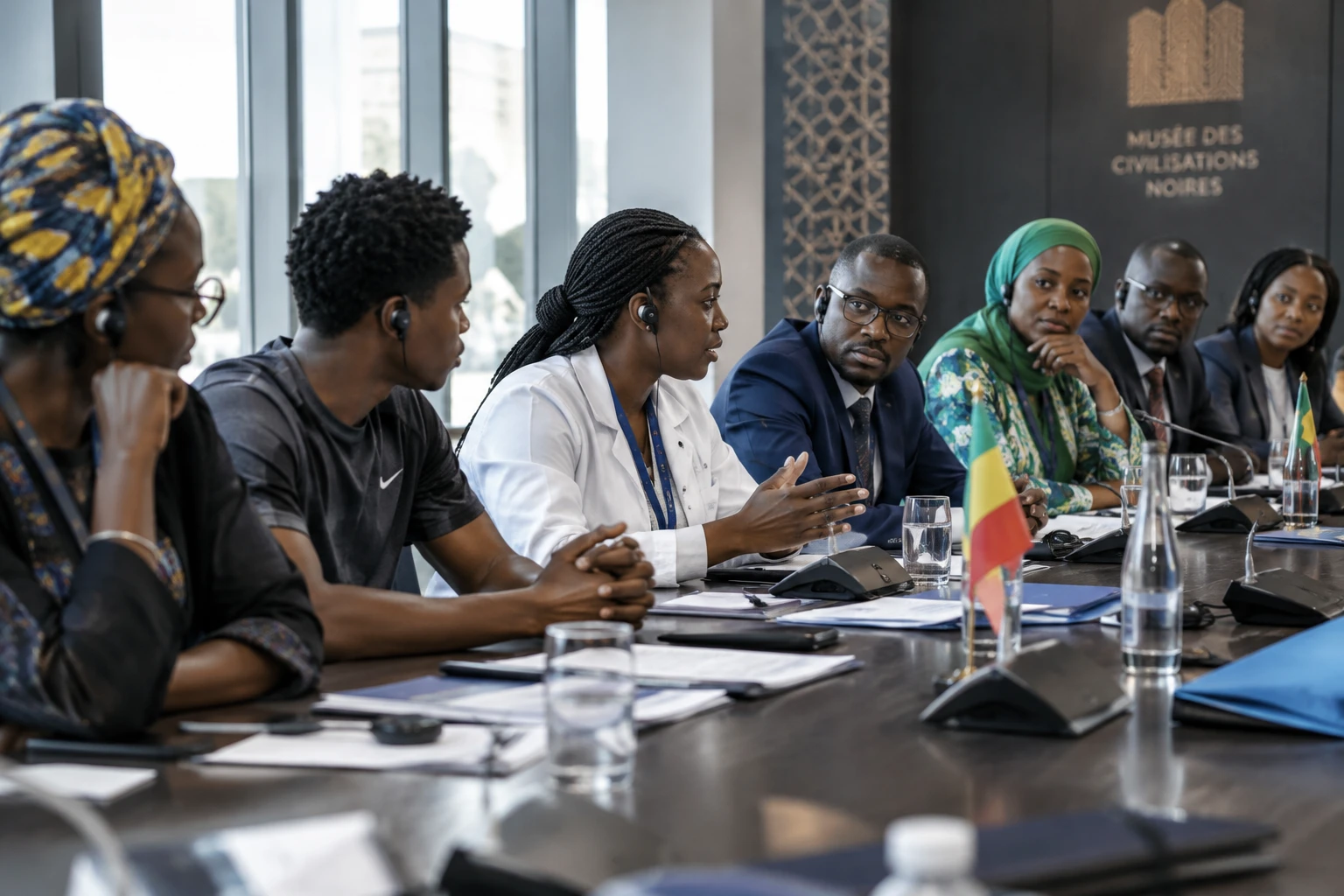
In Dakar, the Youth Olympic Games will not be played out only on the fields. On the eve of their opening, a meeting announced around maternal and child health raises a practical question: how can the attention paid to young athletes also benefit Senegal’s children and families in a lasting way?
A sporting event, a public health challenge
Senegal is preparing to host the Youth Olympic Games from 31 October to 13 November 2026. Dakar, Diamniadio and Saly are expected to welcome about 2,700 young athletes. It will be the first Olympic event held on the African continent. The Senegalese News Agency and the International Olympic Committee confirm the dates and host cities.
In this context, organisers have announced a forum entitled “Health, Youth and Sport” for Friday 30 October at the Museum of Black Civilisations in Dakar. The meeting is presented as an initiative of the African Food Systems Forum, with the Gates Foundation, AGRA, SEED Academy and For Hope Africa. More than 200 participants are expected, including public officials, athletes, entrepreneurs and partners.
<pThe announced programme aims to link maternal health, nutrition, child development and participation in sport. The idea is simple: a young person’s ability to learn, grow and play sport also depends on conditions established long before they join a club or take part in a competition.
An indicator that points beyond the podium
In Senegal, 18% of children under five are stunted, according to the 2023 Continuous Demographic and Health Survey. The final report of the National Agency of Statistics and Demography specifies that this indicator reflects chronic malnutrition. The government budget document based on the same data gives a similar estimate of 17.5%.
These figures describe the national situation, but do not mean that all families face the same difficulties. Access to healthcare and a varied diet depends, among other things, on where people live, their income and the availability of services. National averages alone cannot detail the differences between Dakar and other regions. They do, however, serve as a reminder that children’s health requires continuous investment, not just a single campaign linked to a major event.
Maternal and neonatal health is central to this continuity. Pregnancy monitoring, care at birth, young children’s diets and prevention all influence their growth and development. A forum can draw attention to these issues. To have an impact, discussions must then translate into accessible services, identifiable funding and monitoring of results.
Innovations to fund, young people to mobilise
Organisers plan for eight innovators to present solutions related to nutrition and the health of mothers and children. They aim to support their funding and roll-out. But the information available does not detail the projects selected, their costs or the expected financial commitments. It is therefore too early to assess the tangible impact of this part of the programme.
Another announced initiative is the launch of a “Young Health Champions” network. Athletes and young sportspeople would be mobilised to promote nutrition and healthy lifestyles in schools, clubs and communities.
This approach could give sportspeople a role as advocates among their peers. It cannot, however, replace health professionals, teachers or public services. Its usefulness will depend on the training of the young ambassadors, the quality of the messages and the ability of clubs and schools to continue their work after the Games.
The meeting is also expected to bring together public bodies, the sports sector, investors and partners to discuss collaboration. This dialogue will be all the more useful if responsibilities are clear: who will fund the initiatives, who will implement them and how will their results be assessed? Sharing these details would make it possible to distinguish one-off announcements from programmes sustained over time.
Making the legacy last beyond November
For Senegal, the Youth Olympic Games are both an international competition and a major public organisational undertaking. Preparations involve several regions, government departments and sports organisations. The forum adds a social dimension to this period, linking the hosting of delegations to everyday concerns for Senegalese people.
The benefits will not necessarily be the same for everyone. Athletes and visitors will benefit from the facilities and activities associated with the Games. For families, particularly those outside the capital, the legacy will depend more on continuity of care, access to information and the presence of programmes in schools, health facilities and local clubs.
The issue also extends beyond Senegal’s borders. ECOWAS, the Economic Community of West African States, brings countries in the region together through economic and political cooperation. Discussions on nutrition, child health and sport could inform regional initiatives, but the announced forum is not in itself an ECOWAS commitment. Any progress will have to be driven by clearly identified institutions and partners.
The next milestones will therefore be concrete: whether the meeting takes place on 30 October, which projects are presented, what funding is announced and what becomes of the young sportspeople’s network. The Games will end on 13 November. Only after that date will it be possible to judge whether the mobilisation in Dakar has helped establish lasting initiatives for the health of mothers, children and young people.
Sources for verification: ANSD’s 2023 report on health and nutrition, budget document from the Ministry of Finance, Senegalese News Agency report on the Youth Olympic Games schedule and International Olympic Committee information on Dakar 2026.