
 Algeria
 Egypt
 Libya
 Morocco
 Sudan
 Tunisia
 Benin
 Burkina Faso
 Cabo Verde
 Côte d'Ivoire
 Ghana
 Guinea
 Guinea-Bissau
 Liberia
 Mali
 Mauritania
 Niger
 Nigeria
 Senegal
 Sierra Leone
 The Gambia
 Togo
 Cameroon
 Central African Republic
 Chad
 Equatorial Guinea
 Gabon
 Republic of the Congo
 São Tomé and Príncipe
 Burundi
 Comoros
 Djibouti
 Eritrea
 Ethiopia
 Kenya
 Madagascar
 Malawi
 Mauritius
 Mozambique
 Rwanda
 Seychelles
 Somalia
 South Sudan
 Tanzania
 Uganda
 Angola
 Botswana
 Eswatini
 Lesotho
 Namibia
 South Africa
 Zambia
 Zimbabwe
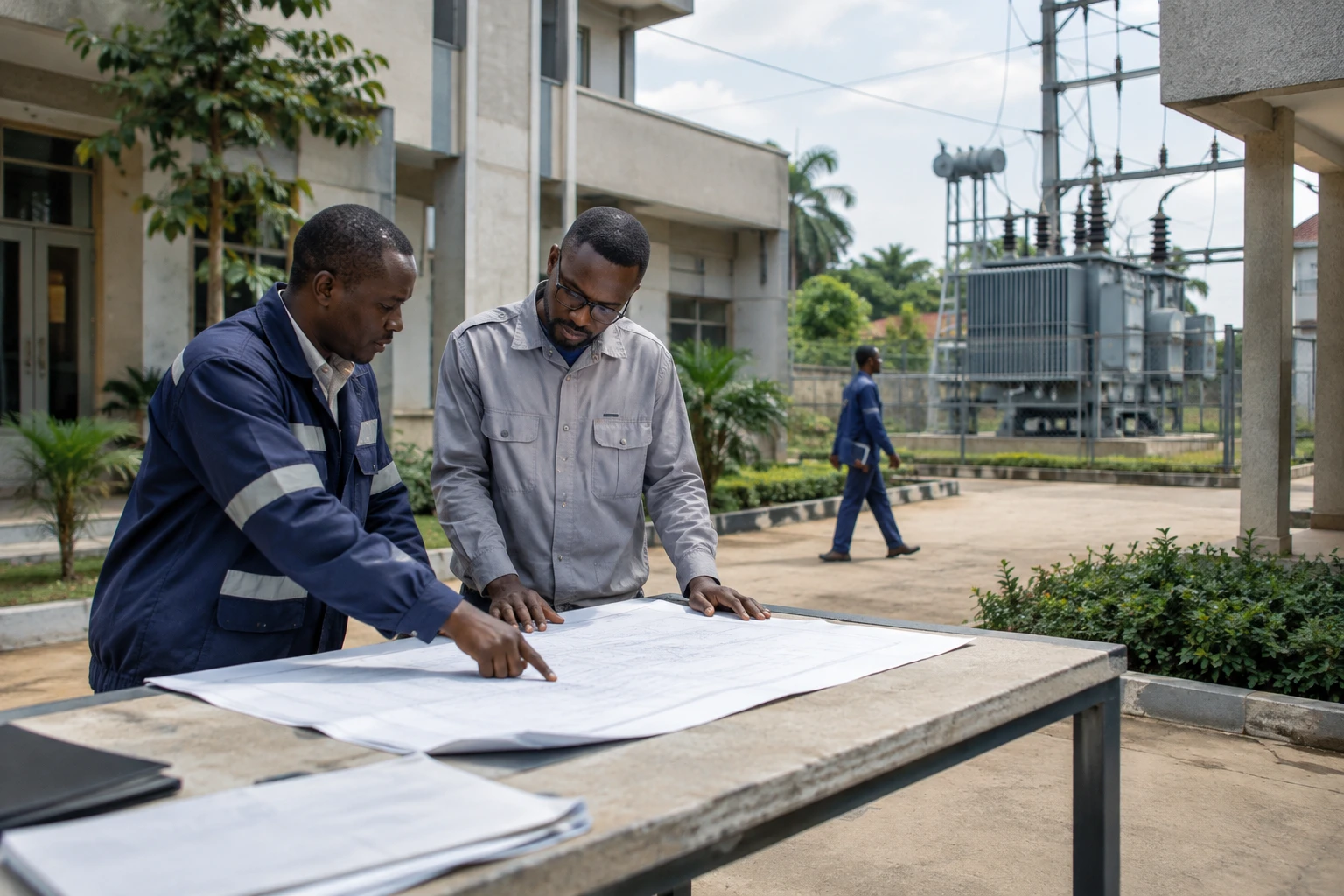
Financing new power plants is not enough if the national operator lacks the means to maintain its lines and meet its commitments. In the Democratic Republic of the Congo (DRC), SNEL is seeking to ease this financial squeeze while attracting capital to increase electricity supply.
Old debt, a network under pressure
The Société nationale d’électricité (SNEL), the state-owned company responsible for generating, transmitting and distributing much of the country’s electricity, carries historic debt estimated at just over $3 billion. This figure appears in the National Energy Compact and is not an up-to-date statement of its debt as of October 2026.
The document describes debt made up mainly of financial obligations, as well as commercial, tax and social liabilities. It links the company’s difficulties to low collections, payment arrears by some public-sector customers and underinvestment in maintenance. Technical and commercial losses, put at 46% in SNEL’s 2022 annual report, also weigh on its resources. The DRC’s National Energy Compact presents these factors as structural obstacles to the sector’s recovery.
The pressure affects both the company’s finances and users. In Kinshasa, as in urban centres and areas far from the network, maintenance needs and new capacity affect the continuity of service. Mining activities, which consume large amounts of electricity, are also affected. In June 2025, SNEL’s managing director said the company was supplying 1,100 megawatts out of the 2,200 megawatts it had contracted to deliver. Congolese news agency ACP has also reported that a significant share of the energy produced was neither billed nor collected.
Discussions in Dubai, no deal announced
On 21 October 2026, SNEL and Invest Africa brought together representatives from the financial, energy and infrastructure sectors of the United Arab Emirates in Dubai. Invest Africa’s statement confirms the meeting and the presentation of a project portfolio covering hydropower, solar power, battery storage, transmission networks and regional interconnections.
SNEL said it wanted to explore options for restructuring its debt with six financial institutions, including JPMorgan, HSBC and Standard Chartered. The other institutions named in available reports are Absa Group, Dubai Islamic Bank and EXIM Bank of India. Managing director Teddy Lwamba referred to four major generation and transmission projects, without listing them in his communication. So far, no restructuring agreement, quantified financing or banking mandate has been announced.
Invest Africa presented three hydropower projects as investment opportunities: Luapula, with a planned capacity of 800 megawatts and a cost of $1.68 billion; Kibombo, 246 megawatts for $662 million; and Wanie Rukula, 688 megawatts for $3.4 billion. Together, they would represent 1,734 megawatts and nearly $5.75 billion in estimated investment. A solar portfolio worth about $4 billion was also mentioned. These figures are project forecasts, not financing secured.
The challenge: turning announcements into electricity supply
Restructuring could reduce the burden of repayments and free up resources for operations, maintenance and investment. But debt rescheduling alone will not solve collection problems or network losses. The National Compact also provides for work on financial and commercial debt, as well as a target for SNEL to cover its operating costs by 2029.
Implementing the projects will require studies, financing agreements and guarantees on governance. Public-private partnerships, discussed at the meeting, can mobilise private capital, but require clarity on who bears the risks, how revenues will be secured and on what terms electricity will be sold. These decisions matter particularly for households and small businesses, whose ability to pay differs from that of large industrial customers.
The regional context adds to the stakes. The DRC is a member of the Southern African Development Community (SADC), a framework for economic and energy cooperation in Southern Africa, and shares electricity networks with several neighbouring countries. The National Compact says better-planned interconnections could support regional trade. However, electricity exports will deliver lasting benefits only if accompanied by investment in the domestic network and improved access for Congolese people.
In 2025, the Electricity Sector Regulatory Authority reported an increase in national consumption between 2020 and 2024, while sector players flagged production shortfalls and power cuts. The next test will therefore be tangible: finalise restructuring studies, identify priority projects and publish the financial terms of any potential agreements. The Dubai meeting opens a period of talks; it does not yet guarantee either the announced power plants or a rapid improvement in supply in Kinshasa and the provinces.



