
 Algeria
 Egypt
 Libya
 Morocco
 Sudan
 Tunisia
 Benin
 Burkina Faso
 Cabo Verde
 Ghana
 Guinea
 Guinea-Bissau
 Liberia
 Mali
 Mauritania
 Niger
 Nigeria
 Senegal
 Sierra Leone
 The Gambia
 Togo
 Cameroon
 Central African Republic
 Chad
 DR Congo
 Equatorial Guinea
 Gabon
 Republic of the Congo
 São Tomé and Príncipe
 Burundi
 Comoros
 Djibouti
 Eritrea
 Ethiopia
 Kenya
 Madagascar
 Malawi
 Mauritius
 Mozambique
 Rwanda
 Seychelles
 Somalia
 South Sudan
 Tanzania
 Uganda
 Angola
 Botswana
 Eswatini
 Lesotho
 Namibia
 South Africa
 Zambia
 Zimbabwe
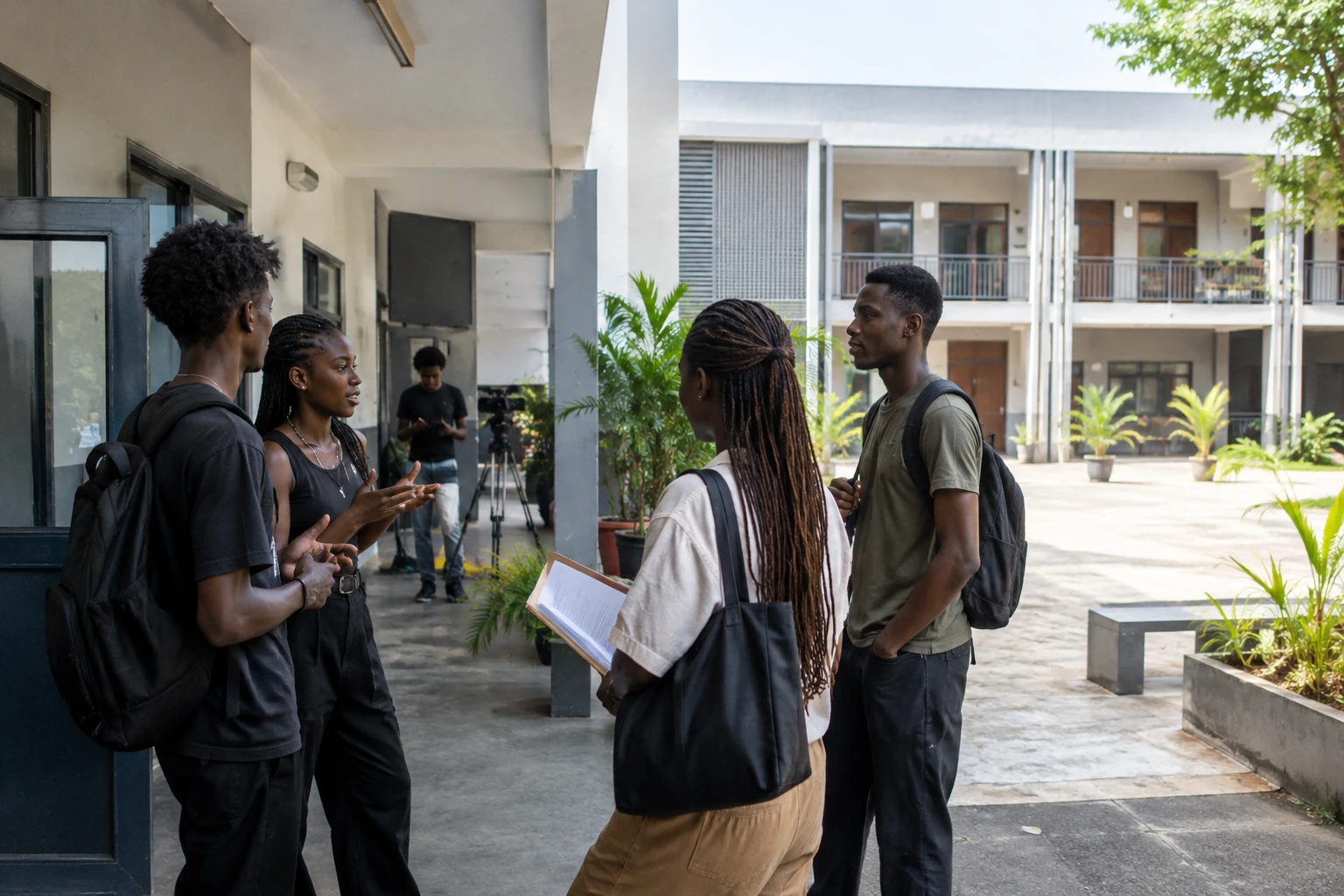
In Abidjan, the stakes of a new film project can also be measured by what happens after the final clap: who trains actors, who finances films and where can audiences watch them? “Premier Continent” aims to address some of these questions with a pan-African school of theatre and cinema, as well as an international festival.
An initiative at a time when the industry is taking shape
Côte d’Ivoire already has training programmes and schemes for the screen industries. In November 2025, 150 young people, including 45 women, began training in 13 film and audiovisual professions through the FIMCA programme, run with public partners and the association Africadoc Côte d’Ivoire. The challenge, then, is not to start from scratch, but to consolidate lasting career paths and connect training, film shoots and job opportunities.
The public framework has also evolved. In September 2025, the National Film Office became Côte d’Ivoire Cinéma, an institution tasked in particular with developing and regulating the sector, supporting continuing training and encouraging the creation of cinemas. The change accompanies a broader ambition: to grow a local industry, beyond one-off productions or international visibility alone.
This evolution is taking place in a West African environment where talent, crews and works circulate. FESPACO, held in Burkina Faso, remains one of the major events in African cinema. For Ivorian professionals, strengthening training and regional co-productions could make it possible to work more across the continent, without depending on a single market.
Training actors and creating an event in Abidjan
Ivorian actor Isaach de Bankolé and director and producer Philippe Lacôte are behind “Premier Continent”. The project was presented in Abidjan in October 2026. It includes a school specialising in theatre and film acting, as well as training courses and masterclasses. The proposed site is in Riviera Golf, in Côte d’Ivoire’s economic capital.
The festival’s first edition is scheduled for late November or early December 2027. The programme is expected to combine screenings, professional meetings and a showcase for African films. Open-air screenings in several Abidjan neighbourhoods are also being considered. They could broaden access to films beyond audiences accustomed to cinemas, subject to their implementation.
At the launch on 26 October, Thierry Frémaux, general delegate of the Cannes Film Festival, expressed his support for the idea of an annual event. His presence may attract the attention of foreign professionals. But the project’s success will depend above all on its ability to serve Ivorian and African creators and establish itself in the local cultural landscape.
For Isaach de Bankolé, the initiative also touches on urban memory. He recalled his beginnings in Treichville, where several large cinemas were once located close to one another. This recollection does not sum up the history of cinema-going in Côte d’Ivoire, but it highlights a current question: how can cinema become an accessible experience, rather than just a production or festival activity?
Training is not enough without jobs or distribution
Professionalising acting requires rigorous training, but also contracts, regular pay and clear working conditions. A school can teach techniques and create contacts. It cannot, however, guarantee on its own that graduates will find roles or be able to earn a living from their profession. That will depend on the volume of productions, film financing and the strength of companies in the sector.
The needs extend beyond acting. A film shoot brings together screenwriters, technicians, costume designers, production managers, editors and sound specialists. The development of an industry therefore benefits several categories of workers. It can also strengthen local skills and make it easier to host regional or international productions, provided Ivorian crews hold skilled positions.
Distribution remains another decisive issue. The cinemas and private circuits in Abidjan offer opportunities, but their concentration in the metropolis does not guarantee comparable access in secondary cities and rural areas. The travelling screenings being considered for the festival could reach other audiences. Their reach will depend on the venues chosen, the regularity of screenings and the range of films offered.
The project is thus part of a cultural policy involving the state, private operators, producers and professional networks. The new institution Côte d’Ivoire Cinéma will have a role to play in bringing these elements together. The financing arrangements for the school and festival, their partnerships, their selection criteria and the place given to works from the sub-region will be more concrete indicators than announcements alone.
An Ivorian venture with pan-African resonance
For Côte d’Ivoire, the initiative could help turn artistic recognition into lasting capacity: to train, produce, distribute and preserve works. For audiences, the aim is to see more African stories in cinemas and in their neighbourhoods. For professionals, it is about finding opportunities in a sector where skills need to meet financing and markets.
The announced pan-African dimension will only take shape if the school welcomes talent from several countries, collaborations cross borders and films then circulate in the region. ECOWAS, the regional integration organisation of West African states, provides a relevant space for these exchanges, although the project will have to build its own partnerships. The 2027 timetable will offer an initial measure of its ability to turn ambition into a concrete programme.
The organisers therefore face a dual task: establishing a high-profile festival and setting up training that is useful over the long term. In Abidjan, as elsewhere in the region, the future of cinema will depend as much on the works as on the structures that enable the people who create them to work and reach their audiences.
Context and verification: Ivory Coast News Agency report on Premier Continent, public training programme for film-industry professions and the remit of Côte d’Ivoire Cinéma.



