Algeria
 Egypt
 Libya
 Morocco
 Sudan
 Tunisia
 Benin
 Burkina Faso
 Cabo Verde
 Côte d'Ivoire
 Ghana
 Guinea
 Guinea-Bissau
 Liberia
 Mali
 Mauritania
 Niger
 Nigeria
 Sierra Leone
 The Gambia
 Togo
 Cameroon
 Central African Republic
 Chad
 DR Congo
 Equatorial Guinea
 Gabon
 Republic of the Congo
 São Tomé and Príncipe
 Burundi
 Comoros
 Djibouti
 Eritrea
 Ethiopia
 Kenya
 Madagascar
 Malawi
 Mauritius
 Mozambique
 Rwanda
 Seychelles
 Somalia
 South Sudan
 Tanzania
 Uganda
 Angola
 Botswana
 Eswatini
 Lesotho
 Namibia
 South Africa
 Zambia
 Zimbabwe
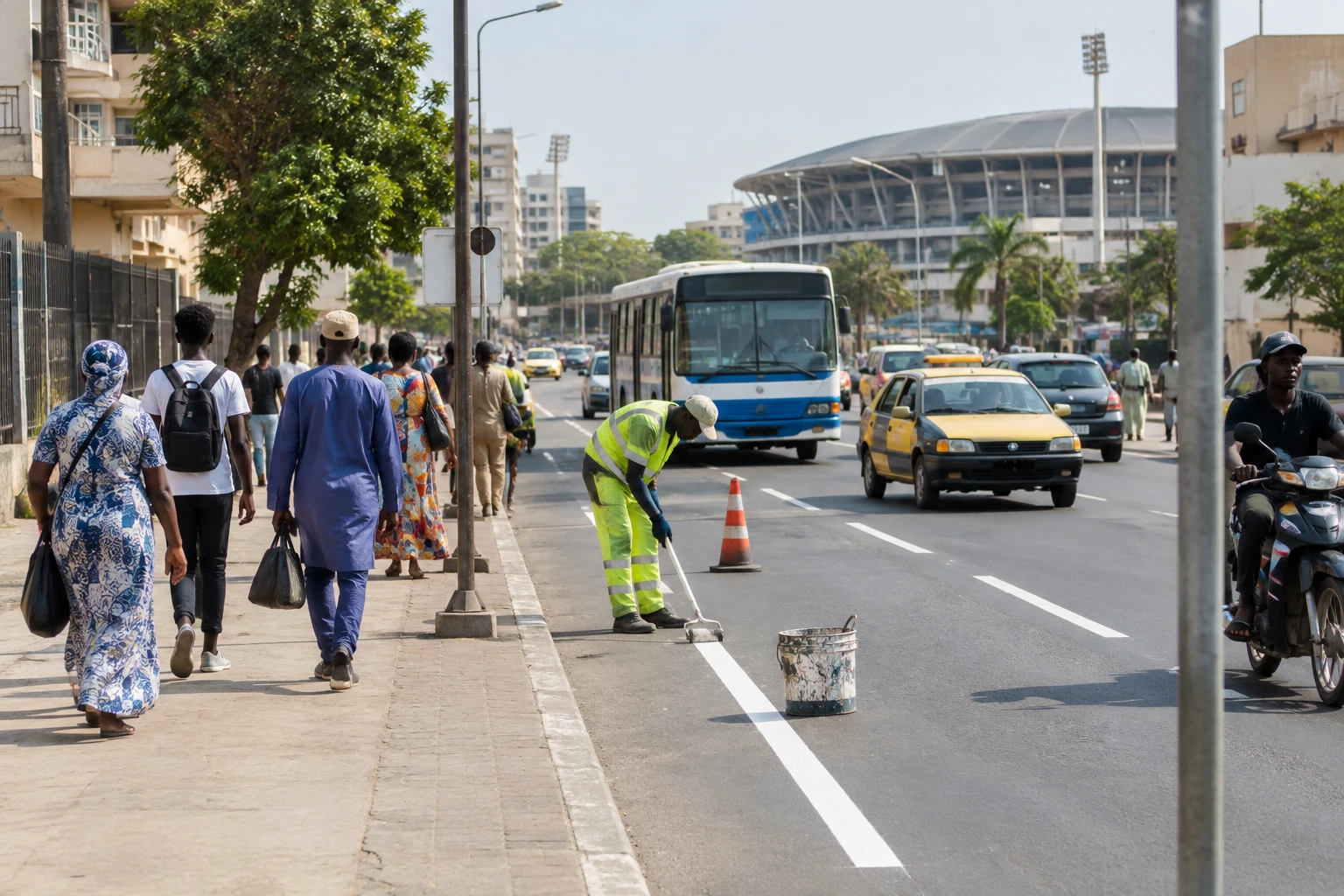
Just days before the opening of the Youth Olympic Games (YOG), Dakar is changing its face. But behind the decorations and refurbished sports venues, the countdown is also measured by the state of the roads, sanitation and daily travel.
Three hubs, one continental event
From 31 October to 13 November 2026, Senegal will host the fourth Summer Youth Olympic Games. The international competition will bring together young athletes and will be the first Olympic event held on the African continent. It will take place across Dakar, Diamniadio and Saly, about 80 kilometres south of the capital.
The choice of venues relies heavily on existing facilities. In Diamniadio, events will be held at the Abdoulaye-Wade Stadium and Dakar Arena, among other venues. In Dakar, the Iba-Mar-Diop complex, the Point E swimming pool and the Corniche are among the competition sites. Saly will host several beach and water sports. This arrangement spreads the event across the capital, a new city on its outskirts and a seaside resort.
The Games are taking place after being postponed from 2022 to 2026. The schedule was set by the International Olympic Committee, which chose a 14-day period. For Senegal, the challenge therefore goes beyond staging the competitions: it is also about showing that a major sporting event can be held in Africa and leave behind facilities that remain useful after the closing ceremony.
Projects that also affect daily life
In Dakar, Olympic decorations accompany more tangible works: repairs to some roads, public lighting and the development of sports areas. The report on preparations describes work still visible in the Medina, a district crossed by routes leading to the Iba-Mar-Diop complex. Traffic and sanitation remain concerns for residents as the final touches approach.
The timetable for sanitation works has been tightened. On 19 September, Senegal’s Minister of Water and Sanitation said that finishing work on rainwater management at the Games’ venues had to be completed by 15 October at the latest. This official deadline highlights the importance of networks that are less visible than stadiums but essential to the operation of the venues and movement around the city.
Preparations concern more than athletes and delegations. Residents of neighbourhoods near the venues may benefit from better-maintained roads and improved lighting. In return, the works, traffic restrictions and expected influx of visitors may make travel more difficult, particularly for traders and workers who rely on daily journeys. The effects will vary from one neighbourhood to another.
The Senegalese government has announced a set of measures to complete preparations. The plan reflects the scale of the coordination required between public services, organisers and local authorities, covering everything from transport and security to welcoming delegations. Operational success will depend as much on these services as on the competition venues.
The legacy promise faces a real-world test
Reusing infrastructure already in service can limit the construction of major facilities for an event lasting just a few weeks. The International Olympic Committee says several existing venues have been prioritised, with targeted renovations. In Diamniadio, facilities said to be ready stand alongside an Olympic Village set up on a university campus. In Saly, some spaces are temporary. This variety means the question of what happens after the Games differs from one location to another.
For the authorities, the legacy is not limited to sports facilities. Sanitation networks, lighting and refurbished roads could serve residents long after November. They will need to be maintained and accessible, however, and the facilities must meet local needs. The potential benefits for businesses and employment around the venues must also be weighed against the costs and disruption borne by neighbourhoods during the works.
The challenge is all the greater because the three host areas face different realities. Dakar has the mobility challenges of a large capital. Diamniadio is home to major facilities and the athletes’ village. Saly must balance the events with the activities of a seaside resort. Successful organisation therefore requires solutions tailored to each site, rather than an overall assessment that could obscure disparities.
A first for African sport
The YOG are not the Summer Olympic Games: they are aimed at young athletes and combine competition with educational activities and cultural exchanges. But their symbolic importance is considerable. Hosting international delegations in Senegal puts Dakar at the centre of global sporting attention and offers a showcase for Africa’s youth, although visibility alone cannot guarantee lasting benefits.
The event is also part of a regional space in which travel, economic exchanges and sporting co-operation extend beyond national borders. The Games could bring together federations, coaches and young athletes from West Africa. For ECOWAS, the regional organisation that brings together West African countries, the movement of people and co-operation between states remain practical concerns when an event attracts visitors and delegations.
From 31 October, the first days of competition will provide a clearer measure of preparations: the condition of the venues, the smoothness of transport and the ability to make the event coexist with urban life. Then, after 13 November, the decisive test will be how the facilities are used. The improvements announced will have a real impact if they continue to serve residents of Dakar, Diamniadio and Saly after the spotlight has faded.