Algeria
 Egypt
 Libya
 Morocco
 Tunisia
 Benin
 Burkina Faso
 Cabo Verde
 Côte d'Ivoire
 Ghana
 Guinea
 Guinea-Bissau
 Liberia
 Mali
 Mauritania
 Niger
 Nigeria
 Senegal
 Sierra Leone
 The Gambia
 Togo
 Cameroon
 Central African Republic
 Chad
 DR Congo
 Equatorial Guinea
 Gabon
 Republic of the Congo
 São Tomé and Príncipe
 Burundi
 Comoros
 Djibouti
 Eritrea
 Ethiopia
 Kenya
 Madagascar
 Malawi
 Mauritius
 Mozambique
 Rwanda
 Seychelles
 Somalia
 South Sudan
 Tanzania
 Uganda
 Angola
 Botswana
 Eswatini
 Lesotho
 Namibia
 South Africa
 Zambia
 Zimbabwe
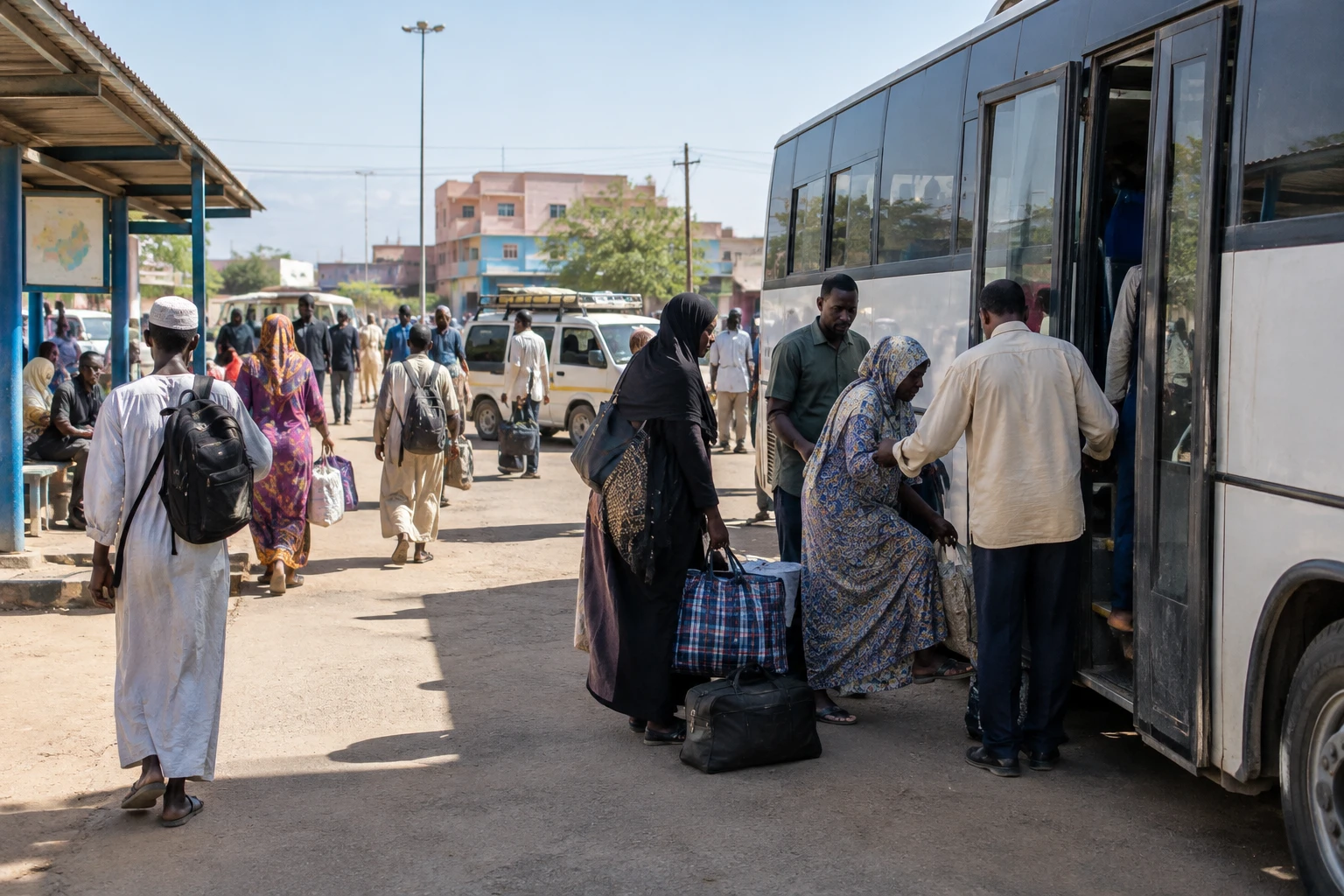
The capture of El-Fasher, in North Darfur, did more than shift the front line. It left thousands of families without news of their loved ones and raised an urgent question: how can civilians be protected when a besieged city falls to an armed force? A year later, the documented toll gives a sense of the scale of the tragedy.
A city encircled for eighteen months
Since April 2023, the Sudanese Armed Forces and the Rapid Support Forces (RSF), two rival sides in the civil war, have been fighting for control of Sudan. The capital, Khartoum, has been at the heart of the fighting. In the west, El-Fasher was the last major centre in Darfur still held by the Sudanese army and its allies.
The city endured an eighteen-month siege. Supply routes dwindled, while fighting and restrictions worsened shortages of food, medicine and water. Before the city fell, humanitarian organisations had already warned about the plight of its residents and the risks facing displaced people in nearby camps.
Darfur also bears the weight of earlier violence, particularly that of the early 2000s. Non-Arab communities, including the Zaghawa and Fur, have been particularly exposed to attacks and forced displacement in the current conflict. This context does not mean the war can be reduced to communal divisions: armed alliances and military interests also play a central role.
More than 6,000 deaths documented in three days
The RSF captured El-Fasher in late October 2025, after its final offensive against the city. A report by the United Nations Office of the High Commissioner for Human Rights, published on 13 February 2026, documents more than 6,000 deaths during the first three days of the offensive. At least 4,400 people are reported to have been killed in the city and more than 1,600 on the roads used by fleeing civilians.
The toll is based on interviews with more than 140 victims and witnesses conducted in Sudan and eastern Chad. The UN says the actual number of deaths could be considerably higher. This is therefore a documented toll for a defined period, not a complete count of all victims of the siege and attack.
UN investigators describe executions, kidnappings for ransom, sexual violence, looting and arbitrary detention. They also report attacks targeting civilians on the basis of their origin or perceived affiliation. The report finds reasonable grounds to believe that some violations amount to war crimes and that acts committed as part of a widespread attack against civilians could constitute crimes against humanity.
These are the investigators’ classifications, not a criminal judgment against named individuals. The UN fact-finding mission had already reported, in September 2025, serious crimes committed by both sides in Sudan. In relation to El-Fasher, it had documented attacks and forced displacement targeting non-Arab communities.
Displacement does not mean safety
For residents who managed to leave, fleeing did not put an end to the dangers. Civilians reached Tawila and other parts of Darfur, sometimes after long journeys. The roads were marked by the risk of assault, kidnapping and family separation. Displaced women and girls in particular need healthcare and protection measures against sexual violence.
The fall of El-Fasher also weakened essential services in a region already battered by war. In a situation report published on 28 October 2025, the United Nations Population Fund reported the loss of the last functioning maternity hospital in the city and the severing of communications with its medical staff. In Tawila, humanitarian teams maintained reproductive health and protection services, but access to the population remains a critical issue.
The consequences are not the same for everyone. Displaced people rely more heavily on aid and on being hosted in neighbouring areas. Traders, healthcare workers and farmers lose workplaces and supply networks. Separated families must search for news in a context where communications and movement are restricted.
A test for regional and continental mechanisms
The war in Sudan extends beyond its borders. Displaced people have reached Chad, while fighting and insecurity complicate humanitarian work across the region. IGAD, the regional organisation for the Horn of Africa, and the African Union are among the diplomatic frameworks involved. But calls for mediation are running up against continued military operations and the fragmentation of armed actors.
For Sudanese people, the immediate priorities remain protecting civilians, ensuring access to aid and finding the missing. At continental level, El-Fasher highlights the limits of prevention efforts that issue warnings but fail to stop atrocities. UN investigators are calling for impartial investigations and for those responsible, including commanders, to be held accountable before competent judicial mechanisms.
A year after the city was captured, the established death toll for the first three days of the offensive has therefore exceeded 6,000. The fate of those still missing, the safety of displaced people and humanitarian access to Darfur remain concrete indicators of what comes next. Accountability for the alleged perpetrators and the protection of civilians will remain central to any lasting political settlement.
For the detailed toll, see the UN Office of the High Commissioner for Human Rights report on El-Fasher, the UNFPA situation report and the international mission’s investigation into violations committed in Sudan.