Algeria
 Egypt
 Libya
 Morocco
 Sudan
 Tunisia
 Benin
 Burkina Faso
 Cabo Verde
 Côte d'Ivoire
 Ghana
 Guinea
 Guinea-Bissau
 Liberia
 Mali
 Mauritania
 Niger
 Nigeria
 Sierra Leone
 The Gambia
 Togo
 Cameroon
 Central African Republic
 Chad
 DR Congo
 Equatorial Guinea
 Gabon
 Republic of the Congo
 São Tomé and Príncipe
 Burundi
 Comoros
 Djibouti
 Eritrea
 Ethiopia
 Kenya
 Madagascar
 Malawi
 Mauritius
 Mozambique
 Rwanda
 Seychelles
 Somalia
 South Sudan
 Tanzania
 Uganda
 Angola
 Botswana
 Eswatini
 Lesotho
 Namibia
 South Africa
 Zambia
 Zimbabwe
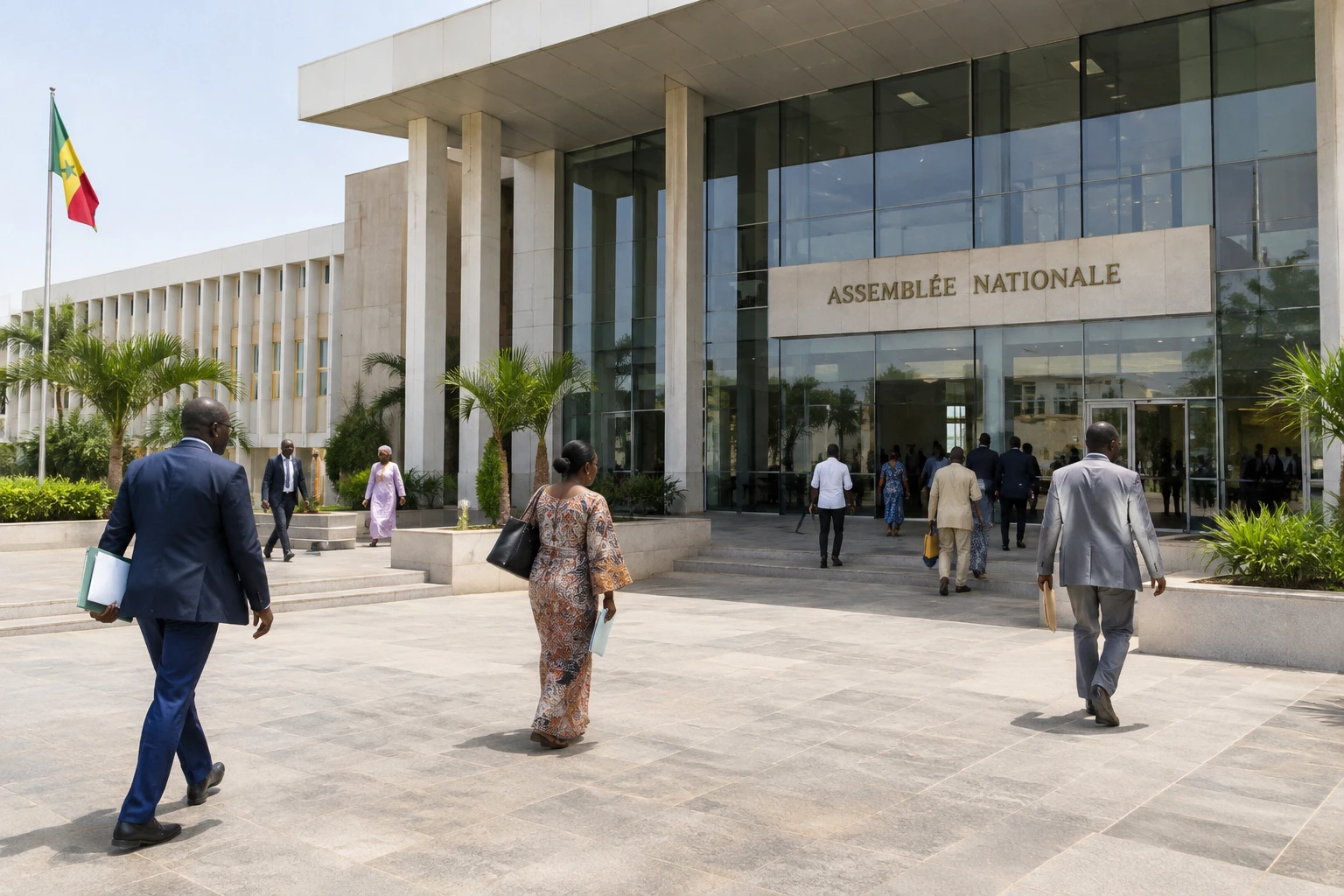
In Senegal, the budget debate has brought an immediate trade-off into focus: how to absorb rising energy costs and pay public bills without cutting essential services or jeopardising investment? In Dakar, MPs are due to examine the 2026 supplementary finance bill on Tuesday 27 October, amid disagreement within the governing camp itself.
A revised budget under cost pressures
A supplementary finance law, often called a revised budget, adjusts the revenue and spending approved in the initial budget during the year. The government has tabled the bill as revenue forecasts deteriorate and the energy bill rises. The official budget document reports a 340.1 billion CFA franc fall in revenue and an increase in energy subsidies from 250 billion to 790.3 billion. The draft published by Senegal’s Directorate-General of the Budget attributes this change in particular to rising oil prices.
To create room in the budget, the executive proposes cutting investment by 555 billion CFA francs. It also plans to allocate 300 billion to settling some of the arrears owed to businesses. These choices pit urgent needs, such as support for the energy sector and paying suppliers, against investment spending that may cover infrastructure and public services.
PASTEF, the majority party in the National Assembly, is challenging the bill in its current form. It is opposed in particular to cuts affecting health and education and is calling for special funds to be regulated by law. MPs may propose amendments, but these must comply with budget rules: increasing revenue or reducing spending.
A parliamentary majority at odds with the executive
The disagreement has a particular institutional dimension: the party leading the parliamentary majority opposes the bill put forward by the government. The Finance Committee rejected the text before its examination in plenary. The Assembly requested further information from the ministry, while indicating that a new formal procedure could not reasonably begin before the plenary session, according to a note reported by the Senegalese Press Agency. The National Assembly’s request for information illustrates both the search for clarification and the limited time available to resume dialogue.
The session, initially announced for 23 October, was postponed to 10am on 27 October. Senegalese Radio and Television confirmed the new date, relaying information from the Assembly. The timetable for the parliamentary examination therefore narrows the window for negotiations between political groups.
Prime Minister Ahmadou Al Aminou Lô has called for an agreement and invited MPs to submit costed amendments. PASTEF MP Amadou Ba, for his part, raised the possibility of suspending the debate to allow discussion during the session. But on the eve of the examination, no compromise had been announced. The statements by officials reflect diverging positions; they do not establish that an agreement or a final rejection is a foregone conclusion.
Potential effects extend beyond the Assembly benches
If the bill fails, the proposed new spending on energy and the repayment of debts to businesses would not be authorised under the terms proposed. This does not mean that all public activities would stop: the initial budget would remain in force, but without these additional appropriations. For businesses awaiting payment, the repayment timetable is a cash-flow issue. For households, decisions on energy subsidies may affect the cost of electricity and fuel, although the actual impact will depend on the measures ultimately adopted.
The announced reduction in investment also warrants close scrutiny. The consequences are not the same for central government departments, contractors, users of health and education services, or people in regions that depend on public projects. The parliamentary debate must therefore clarify not only the scale of the savings, but also how they are distributed and which spending is actually protected.
The standoff comes as Senegal seeks to restore confidence in its public finances. On 1 September 2026, the International Monetary Fund announced a staff-level agreement on a programme for 2026 to 2029, with a package of around $2.2 billion, subject to the required approval steps. The IMF announcement on its agreement with Senegal links the budget adjustment to discussions with the Fund, but does not mean that disbursements have already been secured.
A political and regional test to watch
Beyond the vote, the question is whether Senegal’s institutions can publicly balance financial constraints, continuity of services and democratic oversight of spending. Disagreement over special funds adds to the political significance of the debate: MPs are calling for tighter regulation, while the executive must defend the rules and the means of financing its policies.
At the West African level, the issue is also of interest to Senegal’s economic partners in the West African Economic and Monetary Union (WAEMU), which shares the CFA franc and coordinates certain economic and monetary rules. The budget trajectory of a country in the union has implications for its financing and regional trade, without turning Dakar’s choices into a decision shared by all WAEMU members. What happens next will depend on the plenary debate, any amendments and the government’s response to requests for transparency and budgetary detail.