Algeria
 Egypt
 Libya
 Morocco
 Sudan
 Tunisia
 Benin
 Burkina Faso
 Cabo Verde
 Côte d'Ivoire
 Ghana
 Guinea
 Guinea-Bissau
 Liberia
 Mali
 Mauritania
 Nigeria
 Senegal
 Sierra Leone
 The Gambia
 Togo
 Cameroon
 Central African Republic
 Chad
 DR Congo
 Equatorial Guinea
 Gabon
 Republic of the Congo
 São Tomé and Príncipe
 Burundi
 Comoros
 Djibouti
 Eritrea
 Ethiopia
 Kenya
 Madagascar
 Malawi
 Mauritius
 Mozambique
 Rwanda
 Seychelles
 Somalia
 South Sudan
 Tanzania
 Uganda
 Angola
 Botswana
 Eswatini
 Lesotho
 Namibia
 South Africa
 Zambia
 Zimbabwe
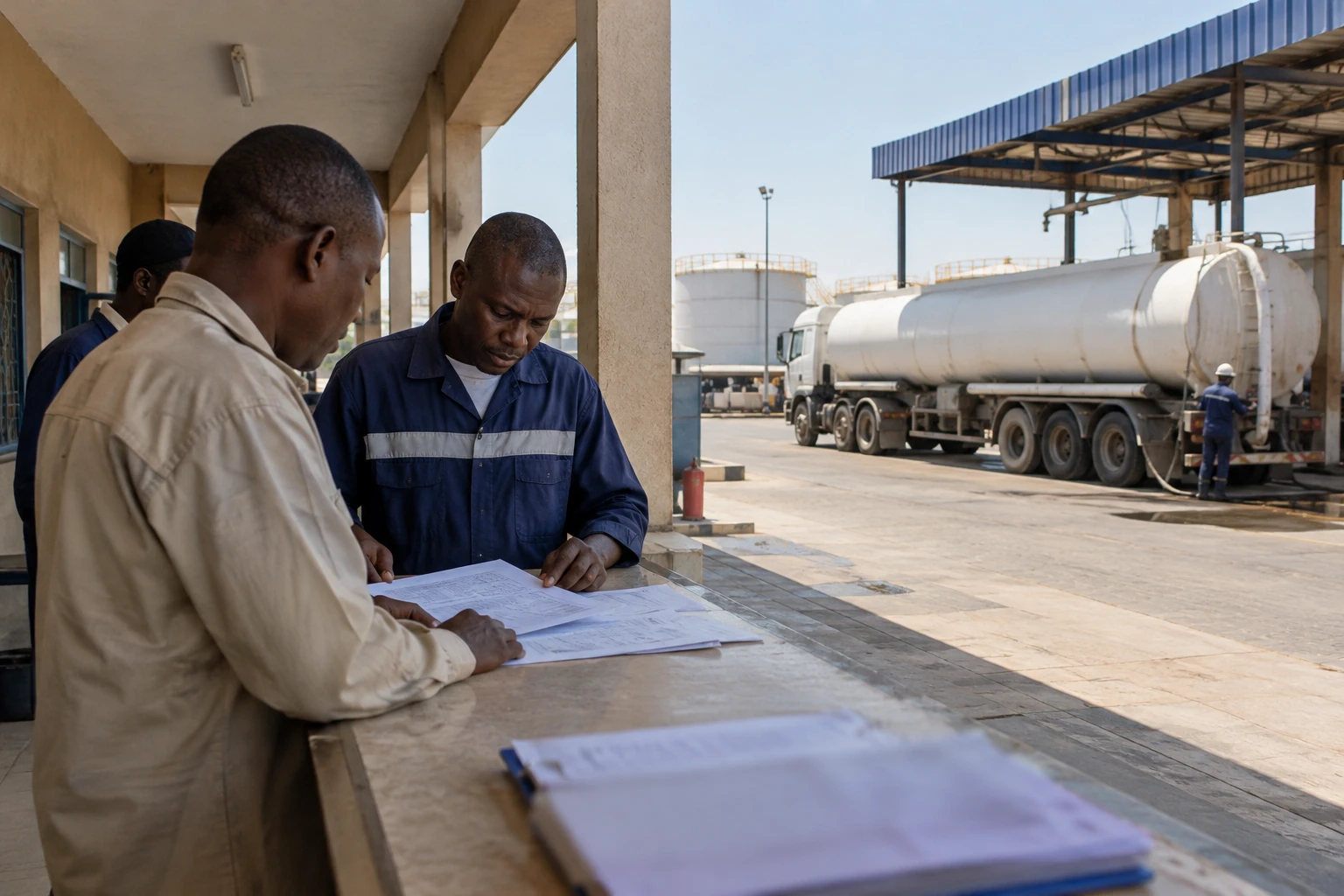
A pump closed at night cannot, on its own, solve a fuel shortage. In Niger, the new hours are intended above all to give tanker trucks time to make deliveries. But for drivers and traders, every hour without petrol can already cut into the day’s earnings.
An emergency measure in an already strained market
The shortage is not limited to Niamey. Supply difficulties had been reported in several cities before reaching the capital, where queues lengthened from mid-October. On 18 October, station managers said their tanks had been empty for several days, while residents described waiting or searching for fuel without success.
Niger produces crude oil, but that does not guarantee that petrol will be available in sufficient quantities. The Zinder Refinery Company (SORAZ), the country’s only refinery, processes some of the crude into petroleum products. Its nominal capacity does not mean it can consistently meet all demand, nor that its output consists solely of petrol.
The structure of supply also matters. According to information provided by the Ministry of Energy and reported on 18 October, domestic production does not meet all needs. The contraction in informal sales of petrol from Nigeria has also reduced a source of supply used until now, particularly in regions near the border. The halt to exports of premium petrol and diesel, decided in October to prioritise the domestic market, is another response by the authorities.
The situation unfolds against a political backdrop shaped since July 2023 by the military seizure of power and the stated intention to strengthen national control over resources. It is also playing out in a regional context in which Niger is a member of the Alliance of Sahel States with Mali and Burkina Faso, following its withdrawal from ECOWAS. Fuel flows, meanwhile, remain tied to cross-border trade and regional transport networks.
A night-time window for station deliveries
Since Monday 19 October 2026, service stations have had to suspend sales to the public from 9pm to 6am, except for those designated to remain open. A joint statement by the ministries of the interior, petroleum and trade describes the arrangement as temporary. It is intended to facilitate resupply, particularly by the Nigerien Petroleum Products Company (SONIDEP), and secure deliveries.
The authorities have designated stations to remain open in municipal and rural districts. The locations and arrangements are to be communicated by the relevant services. The statement also bans the sale of fuel outside stations in localities that have at least one. It says the system may be adjusted or lifted depending on how supply develops.
On 21 October, during a visit to the Sorey depot, Petroleum Minister Hamadou Tini cited deliveries of around 1.15 million litres a day. He also said stations should be able to serve customers from 6am. These figures and assurances reflect the authorities’ position; on their own, they are not enough to establish that volumes are reaching every city regularly or meeting local demand.
Logistical difficulties remain central to discussions. On 16 October, SONIDEP’s new management met hydrocarbon transporters to discuss bottlenecks and speed up deliveries. Two days after the new hours took effect, ministers also questioned delays in resupply and called for compliance with the weekly schedule agreed with stations.
An immediate cost for transport workers
For a taxi driver, the problem is not measured only by the price per litre. It is also measured in time lost in a queue, fares turned down and daily payments that still have to be made. One account gathered in Niamey in the available material cites usual earnings of 20,000 to 23,000 CFA francs a day, of which 12,500 goes on fuel and 8,000 on vehicle payments. These amounts have not been corroborated by a second independent source and should therefore be treated as the reported case of one driver, not as an industry average.
The Taxi Drivers’ Union (Synctaxi) is calling for the restrictions to be relaxed, according to the information provided. Its secretary-general, Ganda Sanda, notes that access to fuel now depends on permits and stations designated to remain open. The request highlights a practical trade-off: freeing up time for deliveries may help stations, but restricting night-time sales outlets makes mobility more difficult for people who work late and transport professionals.
The ban on selling fuel in jerrycans outside stations raises another question of access. It is intended to channel distribution through stations in areas already served by one. But residents of remote localities, small-scale sellers and drivers who depend on informal channels may experience its effects differently. Implementation will therefore need to be assessed across different areas, not only by looking at the situation at pumps in Niamey.
The test will be the regularity of deliveries
In the short term, the decisive measure will be SONIDEP and transporters’ ability to supply stations, beyond announcements of overall volumes. It will also be necessary to see whether stations designated to remain open are genuinely accessible, whether queues are getting shorter and whether distribution is improving in inland cities. The government has announced regular monitoring, without setting an end date for the restrictions in its statement.
Across West Africa, this episode is a reminder that energy security depends as much on refining capacity as on transport networks, borders and sales channels. For households and the informal economy alike, a shortage quickly affects mobility and earnings. For Nigerien authorities, the challenge is now to turn a night-time closure into more predictable supply, without shifting the shortage from one city or group of users to another.
The government statement and available reports on supply tensions provide complementary insights: details of opening hours and stations designated to remain open, ministerial visit to the Sorey depot and background on the shortage and refining.