Algeria
 Egypt
 Libya
 Morocco
 Sudan
 Tunisia
 Burkina Faso
 Cabo Verde
 Côte d'Ivoire
 Ghana
 Guinea
 Guinea-Bissau
 Liberia
 Mali
 Mauritania
 Niger
 Nigeria
 Senegal
 Sierra Leone
 The Gambia
 Togo
 Cameroon
 Central African Republic
 Chad
 DR Congo
 Equatorial Guinea
 Gabon
 Republic of the Congo
 São Tomé and Príncipe
 Burundi
 Comoros
 Djibouti
 Eritrea
 Ethiopia
 Kenya
 Madagascar
 Malawi
 Mauritius
 Mozambique
 Rwanda
 Seychelles
 Somalia
 South Sudan
 Tanzania
 Uganda
 Angola
 Botswana
 Eswatini
 Lesotho
 Namibia
 South Africa
 Zambia
 Zimbabwe
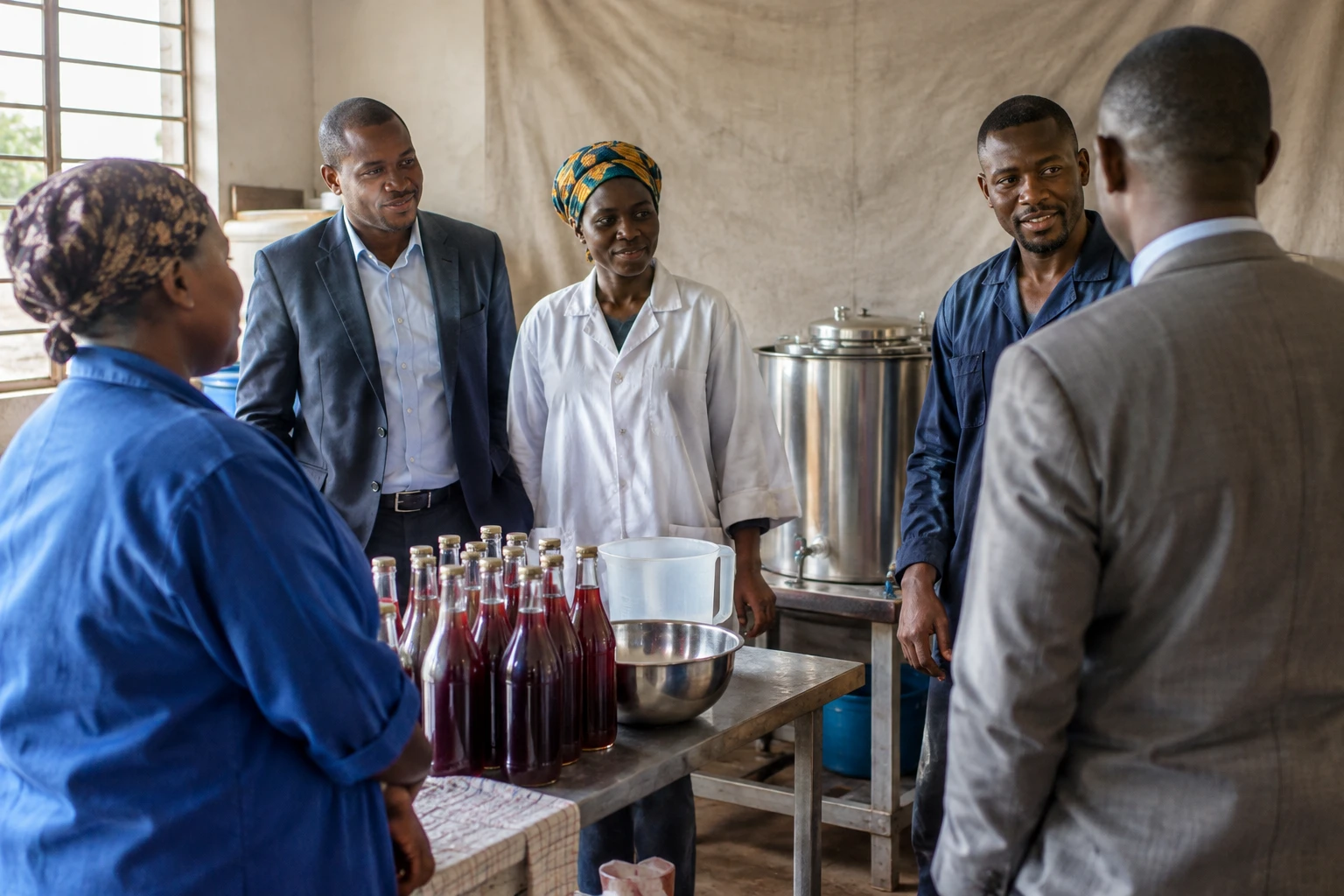
In Ouagadougou, a fermented hibiscus drink can already be processed, certified and sold. In Bobo-Dioulasso, an industrial project now aims to turn grapes grown in Burkina Faso into a new sector. These initiatives raise a practical question: how can local producers make drinks consistently and at a price that can compete with imported bottles?
Local drinks, several raw materials
The word “wine” covers different products here. According to the International Organisation of Vine and Wine, wine in the strict sense results exclusively from the fermentation of fresh grapes or their must. Bissap, cashew apple and palm sap drinks also ferment, but are made from other ingredients. Their names and labels must therefore clearly inform consumers about their composition.
In Burkina Faso, YAM Agro Industrie illustrates this diversification. Established in Ouagadougou in 2019, the company produces fermented bissap, liana goïne and wild grape drinks, among other products. These products are listed in the national standards body’s catalogue of certified products. The company has also received support from Sinergi Burkina to develop its production and broaden its range.
In Ghana, Nkulenu Industries sells a packaged drink made from palm sap, called Palm Drink. Founded in Accra in 1942, the company has long processed local food products and distributes some of them abroad. These examples show that processing locally sourced raw materials is not solely a craft activity: businesses are seeking to bring it into organised commercial channels.
The sector is not limited to these two countries. In Benin, a study published in May 2026 examined 30 cashew apple processing units in the Collines, Borgou and Donga departments. It documented several fermented products, including cashew apple wine, and found wide variation in production methods. Most of the units studied were run by women.
A market already open to imports
These local drinks are entering markets where foreign grape wines are already available, particularly in shops in major cities. In Ghana, wine imports reached $35.2 million in 2024, according to a report by the US Department of Agriculture’s Foreign Agricultural Service. The European Union was the leading supplier by value. Togo also appeared as an important transit route: the report specifies that it is a re-exporting country, not a major wine producer.
The figure varies depending on the scope used. Trade databases distinguish, among other things, still wines, sparkling wines and grape must. For Côte d’Ivoire, available data show $35.8 million in imports for one category of still wines in 2024, but this amount does not cover all drinks in the customs category. Comparing figures without checking which products are included can therefore give a misleading picture of the market.
For local producers, the goal is not necessarily to replace every imported bottle. It is also to persuade consumers who already have established preferences and to gain visibility in shops where local drinks, regional brands and foreign products sit side by side. Market opportunities differ between capitals, secondary cities and rural areas. Businesses must adapt their formats, prices and distribution to these different customer groups.
Quality depends on what happens before and after fermentation
A popular recipe is not enough to win lasting customer loyalty. Taste, alcohol content and food safety must remain consistent from one batch to the next. The Beninese study on cashew apples describes practices that remain uneven and calls for better control of fermentation, including through the selection of suitable micro-organisms. This requires equipment, technical skills and testing accessible to small-scale units, which are often far from major laboratories.
Preservation is another challenge. Palm sap can continue fermenting rapidly after collection. The FAO notes that some fermented sap drinks have a short shelf life, limiting how far they can be sold if the product is not stabilised or refrigerated. To supply retailers regularly, manufacturers must therefore manage packaging, storage and transport.
Containers matter as much as the recipe. Bottles, cans and labels all cost money, and a packaging shortage can halt sales. Small businesses must also secure supplies of bissap, fruit or sap while absorbing fluctuations in harvests. This sets apart production sold directly in the local area from a brand seeking space on urban shelves or export markets.
Certification provides a benchmark, but it does not by itself resolve questions of price, financing or distribution. Public bodies can support standards, applied research and access to equipment. Businesses, for their part, must demonstrate that the quality they promise is maintained over time. Clear labelling enables consumers to distinguish grape wine from fermented drinks made from other raw materials, without devaluing the latter.
SOVIB: an industrial bet that remains to be tested
On 22 October 2026, Burkina Faso’s Council of Ministers adopted a decree establishing the Société viticole du Burkina Faso (SOVIB). The mixed-economy company is to be based in Bobo-Dioulasso. Its initial capital is set at 1 billion CFA francs: the state would hold 45%, BRAFASO 10% and the Burkinabe private sector 45%. The government estimates the required investment at 9.8 billion CFA francs and has announced plans to process grapes grown in the country.
The project therefore targets a different kind of production from fermented fruit or sap drinks: it falls within viticulture in the strict sense. Its success will depend on several steps that have yet to be completed, from regular grape production to industrial processing and then marketing. The announced investment and expected jobs are government targets, not results already achieved.
The initiative comes at a time when the West African Economic and Monetary Union (UEMOA), which brings together eight countries that share, among other things, a market and a currency, is promoting local products and regional value chains. But businesses in Burkina Faso, Côte d’Ivoire, Benin and Ghana do not operate within the same monetary and trade frameworks: Ghana, for example, is not a member of UEMOA. Smoother regional trade could broaden market opportunities, provided that standards, logistics costs and preservation are addressed.
The next step will be less symbolic than practical: seeing whether producers can maintain consistent quality, secure containers and gain lasting access to shop shelves. SOVIB, for its part, will have to turn a decree and an announced investment into productive vineyards and industrial activity. It is at this level — supply, jobs actually created and repeat sales — that the place these drinks have won in West African markets will be measured.
International definition of wine by the OIV · Profile of YAM Agro Industrie and its support · Burkinabe catalogue of certified products · Nkulenu Industries and its palm drink · Beninese study on fermented cashew apple products · Data on wine imports to Ghana · Trade data on still wines · FAO report on traditional fermented drinks · Official decision to establish SOVIB · Further reporting by the African Press Agency · UEMOA’s Local Consumption Month initiative