Algeria
 Egypt
 Libya
 Morocco
 Sudan
 Tunisia
 Benin
 Burkina Faso
 Cabo Verde
 Côte d'Ivoire
 Ghana
 Guinea
 Guinea-Bissau
 Liberia
 Mali
 Mauritania
 Niger
 Nigeria
 Senegal
 Sierra Leone
 The Gambia
 Togo
 Cameroon
 Central African Republic
 Chad
 Equatorial Guinea
 Gabon
 Republic of the Congo
 São Tomé and Príncipe
 Burundi
 Comoros
 Djibouti
 Eritrea
 Ethiopia
 Kenya
 Madagascar
 Malawi
 Mauritius
 Mozambique
 Rwanda
 Seychelles
 Somalia
 South Sudan
 Tanzania
 Uganda
 Angola
 Botswana
 Eswatini
 Lesotho
 Namibia
 South Africa
 Zambia
 Zimbabwe
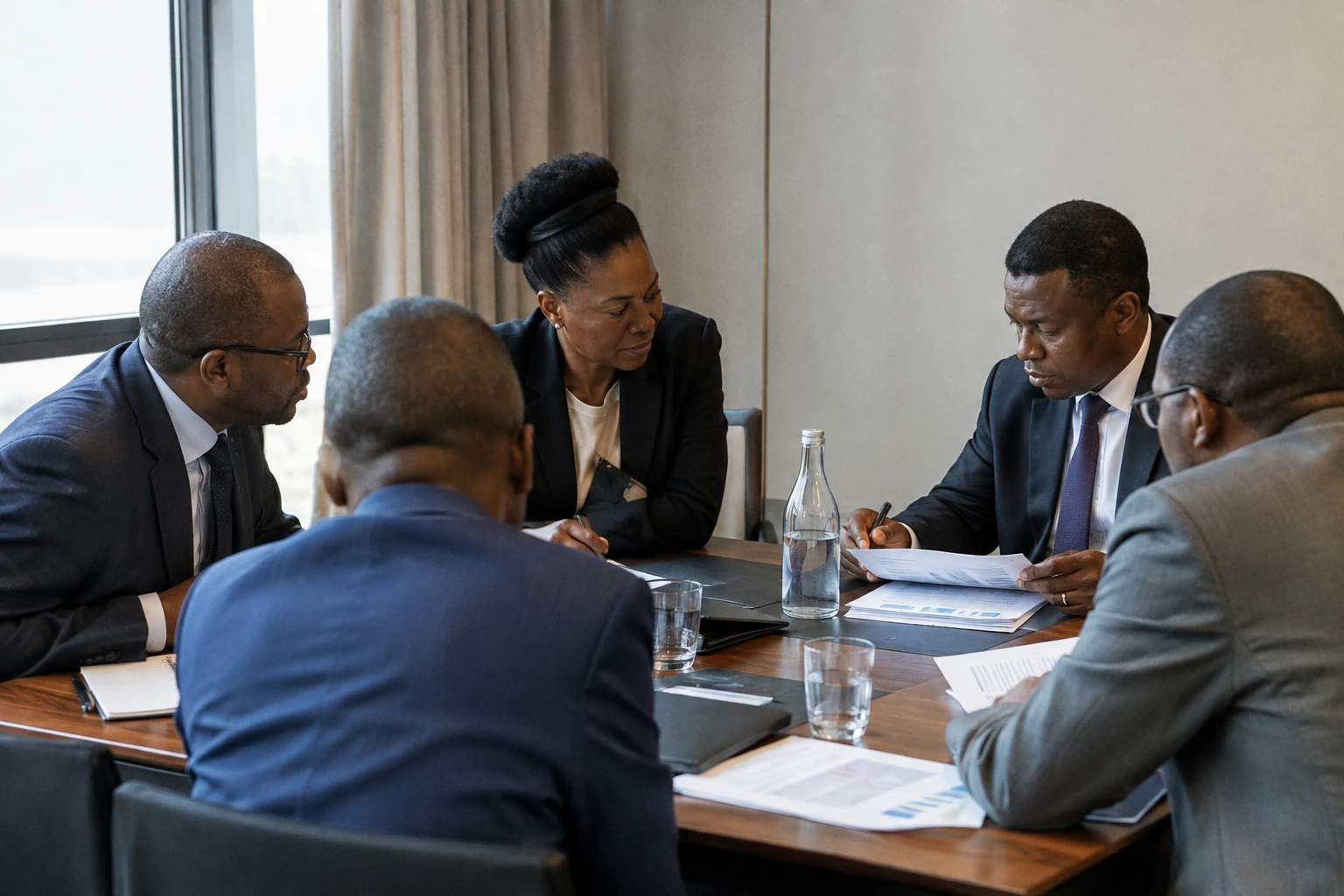
In Kinshasa, the question is no longer simply whether a national dialogue will take place. It is also about who will set its rules, who will take part and what place will be given to opponents. Against this backdrop of disagreement, the leaders of the Article 64 Coalition (C64) are due to meet in Rome, Italy, from Monday 26 October 2026.
A European tour amid political disagreement
The C64 brings together five figures from the Congolese opposition: Martin Fayulu, Moïse Katumbi, Jean-Marc Kabund, Augustin Matata Ponyo and Delly Sesanga. The coalition, launched in Kinshasa in May 2026, says it is defending constitutional order. Radio Okapi reported on its creation and objectives.
The meeting in Rome is intended to allow the five leaders to align their positions. According to reports by several Congolese media outlets, their trip is part of a European tour. Brussels and Paris are among the proposed stops. A meeting in Paris was announced for 2 November. Stops in Madrid and London, however, remained to be confirmed. The precise schedule and whether diplomatic meetings will take place have not been established through publicly available official announcements.
In Rome, the opposition figures are planning discussions with representatives of the Catholic Church, among others. In the Democratic Republic of the Congo (DRC), religious leaders are regularly called on to take part in political discussions. Cardinal Fridolin Ambongo, the archbishop of Kinshasa, is also in Europe for separate activities, with no official connection to the C64 announced.
The coalition wants to persuade European interlocutors to support its call for a swift and inclusive national dialogue. It also intends to discuss human rights. A member of the delegation, quoted in reports announcing the trip, believes this issue carries less weight among current European priorities. This is that member’s assessment; it does not constitute a position officially expressed by the governments concerned.
Dialogue launched, but its terms disputed
President Félix Tshisekedi announced the launch of the “National Dialogue for Peace, Cohesion and the Refoundation of the State” in his address to the nation on 27 August. The presidency outlined a process involving consultations in all 26 provinces before national talks in Kinshasa. The Congolese presidency published the main outlines of the initiative, which were also reported by the national news agency ACP.
The disagreement now concerns how the talks should be prepared. The C64 rejects the idea that the government should set the format and choose the participants on its own. It is calling for prior consultation among political and social forces. In September, the coalition also welcomed a call by MONUSCO, the United Nations mission in the DRC, for a broadly inclusive dialogue. It argues that participants’ confidence will depend on guarantees concerning facilitation and the agenda. Actualite.cd reported on this position.
The government presents the dialogue as a way to strengthen national cohesion in a country facing a persistent security crisis in the east. For the opposition, a process conducted without agreement on its rules risks remaining a consultation rather than becoming a negotiation. These two readings define the central issue: the opening announced by the authorities is not, on its own, enough to establish that political actors will trust the proposed framework.
From Kinshasa to the regions: who can influence the process?
A tour to meet European officials could raise the profile of the C64’s demands and open diplomatic channels. It cannot, however, replace discussions among Congolese people. Its influence will depend on the opposition’s ability to speak with one voice, as well as on the response from the authorities and national organisations invited to take part in the dialogue.
The consequences of an agreement or a deadlock would not be limited to political leaders in the capital. National institutions, civil society organisations and representatives of the provinces would be affected by the choice of participants and subjects. In the east, where insecurity remains a major concern, a dialogue seen as too narrow would struggle to address local concerns. Conversely, the arrangements for representation and security will affect the possibility of involving actors based far from Kinshasa.
Human rights also touch on civic space: the ability of parties, associations and citizens to speak out and participate without intimidation. The C64 plans to raise the issue with its European interlocutors. But commitments made abroad will have a tangible effect only if they translate into observable guarantees and a dialogue accessible to Congolese political and social forces.
A regional issue beyond European capitals
The DRC is a member of the Southern African Development Community (SADC), a regional organisation comprising 16 states that deals with peace, security and co-operation, among other issues. It is also involved in the dynamics of the Great Lakes region, where security and political crises regularly cross national borders. SADC lists the DRC among its member states.
The European tour draws attention to the diplomatic channels the opposition is seeking to mobilise. The political test, however, will mainly play out in Kinshasa: can the process launched by the president bring together actors who dispute its terms? The announced next steps — the Rome meeting, provincial consultations and the establishment of the national talks — will make it possible to measure the gap between the call for inclusivity and its implementation. At this stage, neither the C64’s participation in the dialogue nor the outcome of the tour is assured.