Egypt
 Libya
 Morocco
 Sudan
 Tunisia
 Benin
 Burkina Faso
 Cabo Verde
 Côte d'Ivoire
 Ghana
 Guinea
 Guinea-Bissau
 Liberia
 Mali
 Mauritania
 Niger
 Nigeria
 Senegal
 Sierra Leone
 The Gambia
 Togo
 Cameroon
 Central African Republic
 Chad
 DR Congo
 Equatorial Guinea
 Gabon
 Republic of the Congo
 São Tomé and Príncipe
 Burundi
 Comoros
 Djibouti
 Eritrea
 Ethiopia
 Kenya
 Madagascar
 Malawi
 Mauritius
 Mozambique
 Rwanda
 Seychelles
 Somalia
 South Sudan
 Tanzania
 Uganda
 Angola
 Botswana
 Eswatini
 Lesotho
 Namibia
 South Africa
 Zambia
 Zimbabwe
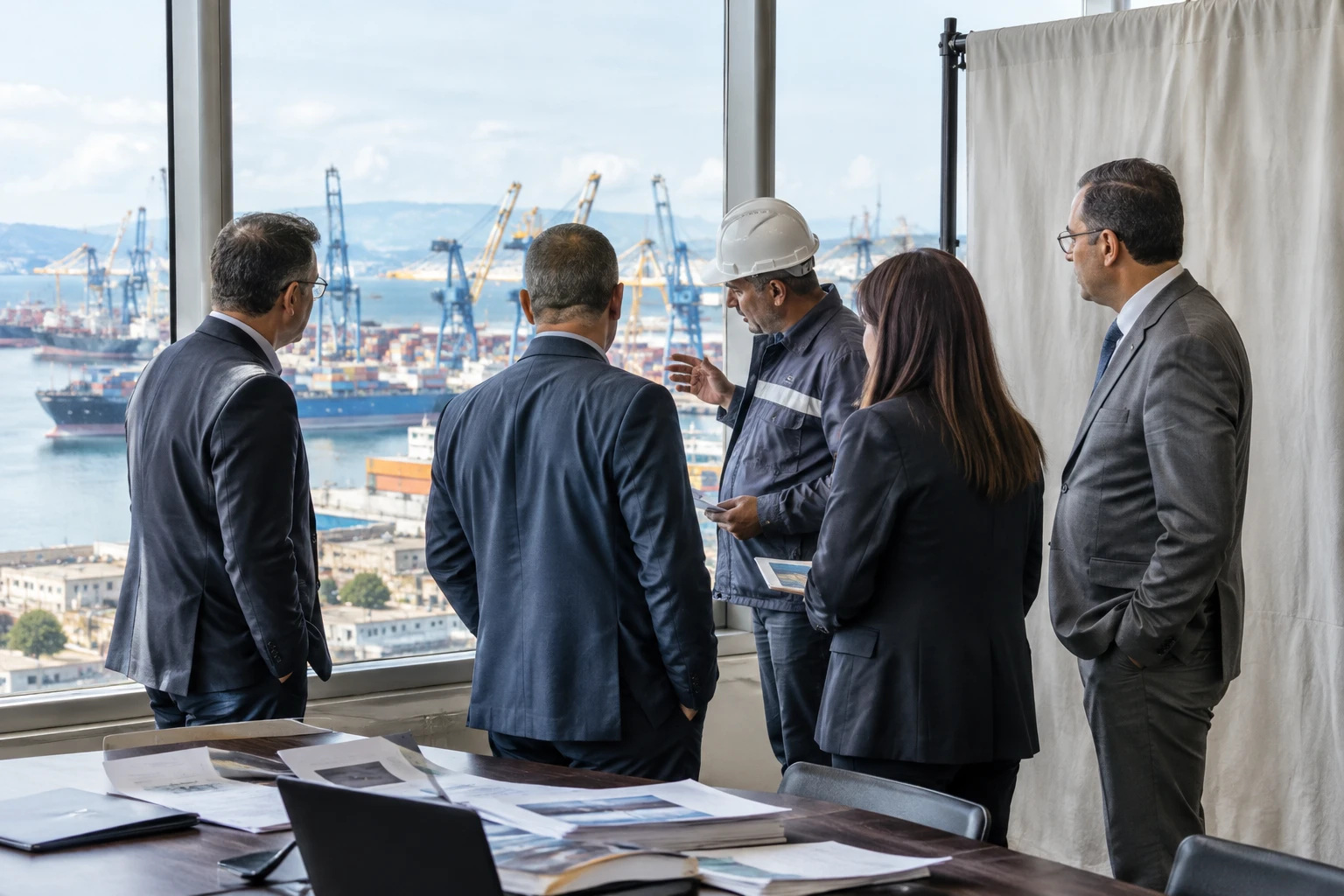
An announced budget transports neither ore nor passengers. In Algeria, the test in 2027 will be to turn public funding into reliable, well-maintained connections that serve residents and businesses.
The draft Finance Bill puts major rail and port projects on the table, as well as less visible works: repairing roads, maintaining airports and protecting structures against bad weather. Their progress will matter as much as the sums allocated.
A proposed budget, not yet a result
On 21 October 2026, the Minister of Public Works and Basic Infrastructure, Abdelkader Djellaoui, presented his sector’s funding to the Finance and Budget Committee of the National People’s Assembly. The draft provides for 980 billion dinars in payment appropriations and 322 billion in commitment authorisations. These allocations serve different purposes: the former fund payments, while the latter allow expenditure to be committed for planned projects.
The minister announced 456 new operations and the reassessment of 14 existing projects. More than 290 billion dinars in commitment authorisations would go to public investment; more than 31.6 billion would cover the running costs of services. These figures describe a budget proposal being examined by Parliament, not spending that has already taken place. APS and Algerian public television report the same main figures.
The conversion into dollars, sometimes included in budget presentations, depends on the exchange rate used. The amount in dinars therefore remains the most precise reference for tracking the proposal and its implementation.
Connecting regions, moving resources
The programme forms part of a national strategy to connect the country. In a vast country, the quality of links between the North, the East and the Saharan regions affects daily travel, access to services and the cost of moving goods. The expected benefits are not automatic, however: they depend on connections to roads, production areas and ports.
In the East, the announced mining railway line extends for 422 kilometres of electrified double track. Its target capacity is around 23 million tonnes of phosphate and iron per year. According to the progress report presented by the minister, 174 kilometres are in operation; 127 kilometres are in the finalisation and testing phase, while work continues on the remaining 121 kilometres. Sections are scheduled to enter service in 2027.
This corridor is intended in particular to facilitate the transport of minerals to Annaba. It could support activity at the sites concerned and among logistics operators. But projected rail capacity alone does not guarantee an economic gain: journey times, service regularity and coordination between the railway, mining facilities and port will all need to be assessed.
Another long-term project, the North–South railway corridor is intended to link Algiers to Tamanrasset. Of the 1,925 kilometres of sections detailed by the minister, 308 kilometres are in operation, 42 are under construction, 924 are in preparation and 651 are subject to tenders. This breakdown shows a project at very different stages. Full commissioning will therefore depend on sustained planning, funding and the actual completion of sections still at an early stage.
Roads, port and maintenance: the other side of major projects
The announced funding also covers the maintenance and reinforcement of roads and motorways, network modernisation, and the construction or reconstruction of engineering structures. Work is planned on airport infrastructure. For users, these projects can matter as much as a new line: a deteriorated road or an interrupted connection affects journeys, the transport of goods and small businesses, including in areas far from major centres.
The draft bill also proposes a National Fund to repair damage caused by bad weather to infrastructure in the sector. The stated aim is to have resources available each year, rather than waiting for new projects to be added to the budget. The mechanism’s effectiveness will nevertheless depend on its funding, activation and oversight rules, which will need to be specified and monitored.
At Annaba, the port expansion includes dredging the basins to depths of 16 to 27 metres, extending a breakwater by 1,400 metres, an 82-hectare platform and a 1,600-metre mineral quay. The project aims to increase capacity and facilitate the transport of minerals. Its impact will also be measured by the smooth running of operations and its integration with the eastern railway line.
Implementation, the key indicator to watch
For the authorities, the challenge is to advance development projects and maintain existing infrastructure at the same time. For residents, the effects will depend on practical access to new connections and continuity of service. For businesses, transport reliability will affect delivery times and costs. Areas far from Algiers will fully benefit from investment only if local services keep pace.
Across North Africa, this infrastructure could strengthen exchanges between Algerian regions and improve connections with neighbouring markets. But the announcements do not guarantee regional integration: that also depends on agreements, border crossings and network continuity beyond national borders. Algeria belongs to the Arab Maghreb Union, whose ambitions for regional cooperation continue to face lasting political tensions.
The next milestones will be the budget’s final adoption, the awarding of contracts and the commissioning scheduled for 2027. Comparing approved appropriations with the sums actually spent, and then with infrastructure that is operational and maintained, will make it possible to distinguish plans from results.