Algeria
 Libya
 Morocco
 Sudan
 Tunisia
 Benin
 Burkina Faso
 Cabo Verde
 Côte d'Ivoire
 Ghana
 Guinea
 Guinea-Bissau
 Liberia
 Mali
 Mauritania
 Niger
 Nigeria
 Senegal
 Sierra Leone
 The Gambia
 Togo
 Cameroon
 Central African Republic
 Chad
 DR Congo
 Equatorial Guinea
 Gabon
 Republic of the Congo
 São Tomé and Príncipe
 Burundi
 Comoros
 Djibouti
 Eritrea
 Ethiopia
 Kenya
 Madagascar
 Malawi
 Mauritius
 Mozambique
 Rwanda
 Seychelles
 Somalia
 South Sudan
 Tanzania
 Uganda
 Angola
 Botswana
 Eswatini
 Lesotho
 Namibia
 South Africa
 Zambia
 Zimbabwe
From Cairo, Egypt is seeking to support Saudi Arabia without announcing a military intervention in Yemen. This position has become more delicate as cross-border attacks resume and fighting threatens Red Sea shipping routes.
An escalation that extends beyond the Yemeni front
The conflict has pitted the Houthi movement, which has controlled Sanaa and part of northern Yemen since 2014, against Yemen’s internationally recognised authorities. Riyadh supports the latter. A truce negotiated under the auspices of the United Nations in 2022 had reduced the fighting without resolving the political causes of the war. Large-scale fighting resumed in July 2026, then intensified in September along the west coast.
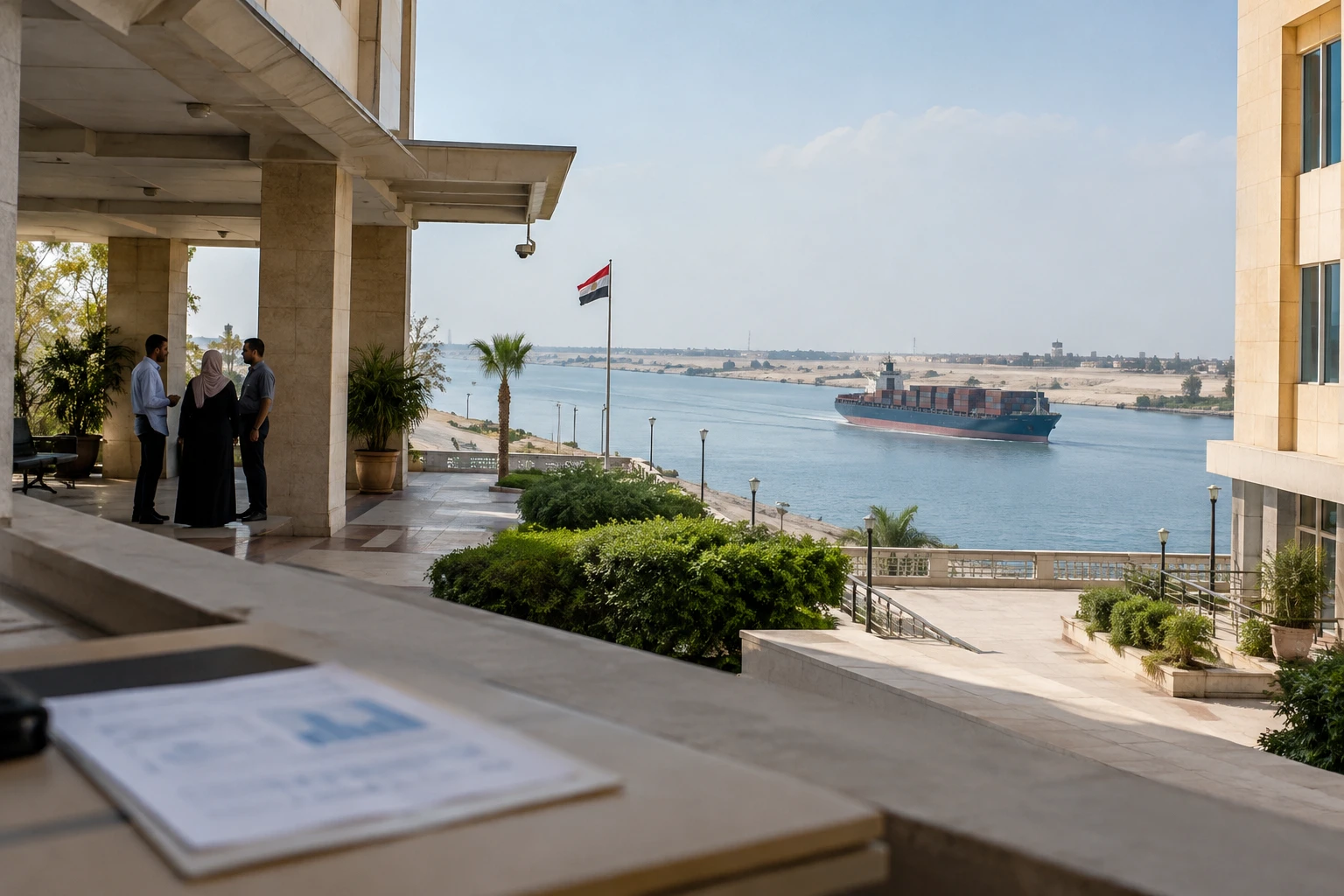
Geography makes this renewed fighting particularly sensitive. The combat is moving closer to the Bab el-Mandeb Strait, a narrow passage between the Red Sea and the Gulf of Aden. Disruptions to shipping could affect trade linking Asia, Europe and the Suez Canal, a vital route for the Egyptian economy. Cairo is therefore following the crisis both as a neighbour of the Red Sea and as an Arab diplomatic actor.
The region does not have a common economic organisation comparable to ECOWAS or CEMAC. Discussions instead take place through the UN, the Arab League and consultations among the states concerned. In September, Egypt, Saudi Arabia, Pakistan and Türkiye reaffirmed their support for Yemen’s recognised government and for inclusive political dialogue, according to the Egyptian foreign ministry statement.
Cairo signals solidarity without detailing its means
On 18 October, Egypt’s National Defence Council announced that Cairo would provide Saudi Arabia with “all possible forms of support” to enable it to defend its security. The official statement did not specify the nature of this assistance. President Abdel Fattah al-Sisi subsequently asked parliament to authorise the deployment of troops and equipment abroad, according to the Associated Press.
The following day, the Egyptian and Pakistani foreign ministers condemned the attacks on the kingdom and reaffirmed their support for its sovereignty. They also discussed an upcoming meeting of their consultation group with Saudi Arabia and Türkiye, the Saudi Press Agency SPA reports. On 21 October, however, Sisi said Egyptian military support would be aimed at defending Saudi territory, not at attacking Yemen, according to a Reuters report carried by MarketScreener.
These announcements outline a two-pronged position: strategic solidarity with Riyadh, but a clear distinction between defending Saudi territory and widening the war in Yemen. They do not, on their own, confirm details in the initial material concerning a specific call by Badr Abdelatty on 22 October, a withdrawal to positions held on 1 September or a particular strike on Riyadh airport. These details are therefore not presented here as established facts.
Civilians displaced, shipping under pressure
The human cost of the renewed fighting is rising rapidly. As of 20 October, the United Nations High Commissioner for Refugees estimated that more than 250,000 people had been displaced within Yemen since the escalation. The figure was given at a UN press briefing in Geneva. It adds to already substantial needs for shelter, food and financial assistance.
An earlier assessment by the International Organization for Migration reported 85,818 displaced people as of 13 September, including more than 82,000 since the start of the month. The gap with the later estimate reflects the rapid increase in displacement, as well as differences in timing and data collection. The figures should therefore be read as snapshots, not as a definitive count. Women, children and households forced to flee several times are particularly vulnerable to losing access to healthcare and income.
The Yemeni research centre Sana’a Center reports that the Houthis have claimed attacks on Saudi facilities and announced a blockade targeting the kingdom’s ports and airports. The same analysis places these announcements in the context of the offensive launched on the west coast. Military claims should be distinguished from independently verified facts. But threats to shipping are enough to heighten concern among countries bordering the sea and commercial operators.
Egypt’s room for manoeuvre
For Egypt, the immediate priority is to prevent a confrontation between Riyadh and the Houthis from further disrupting the Red Sea. During consultations with his Saudi counterpart in September, the Egyptian foreign ministry had already stressed the need to preserve freedom of navigation in the Red Sea and the Bab el-Mandeb Strait. Suez Canal revenues and port activity depend on a sufficiently safe and predictable maritime passage.
Cairo’s diplomatic room for manoeuvre is nevertheless narrow. Supporting Saudi defence could strengthen its ties with a major partner, but direct involvement in the fighting could widen the conflict and undermine any negotiations with the Yemeni parties. At the continental level, the African Union is not the main mediator in this war. The crisis nevertheless affects African states bordering the Red Sea and the Gulf of Aden, particularly through its potential impact on shipping, ports and supply chains.
The next steps to watch will be how Cairo’s announced support commitments are translated into concrete action, as well as the outcome of regional consultations and the UN envoy’s efforts. For Yemeni civilians, the central issues remain an end to the fighting and access to aid. For Egypt, the challenge is to defend Red Sea security without allowing military logic to close off the path to a political settlement.