Algeria
 Egypt
 Libya
 Morocco
 Sudan
 Benin
 Burkina Faso
 Cabo Verde
 Côte d'Ivoire
 Ghana
 Guinea
 Guinea-Bissau
 Liberia
 Mali
 Mauritania
 Niger
 Nigeria
 Senegal
 Sierra Leone
 The Gambia
 Togo
 Cameroon
 Central African Republic
 Chad
 DR Congo
 Equatorial Guinea
 Gabon
 Republic of the Congo
 São Tomé and Príncipe
 Burundi
 Comoros
 Djibouti
 Eritrea
 Ethiopia
 Kenya
 Madagascar
 Malawi
 Mauritius
 Mozambique
 Rwanda
 Seychelles
 Somalia
 South Sudan
 Tanzania
 Uganda
 Angola
 Botswana
 Eswatini
 Lesotho
 Namibia
 South Africa
 Zambia
 Zimbabwe
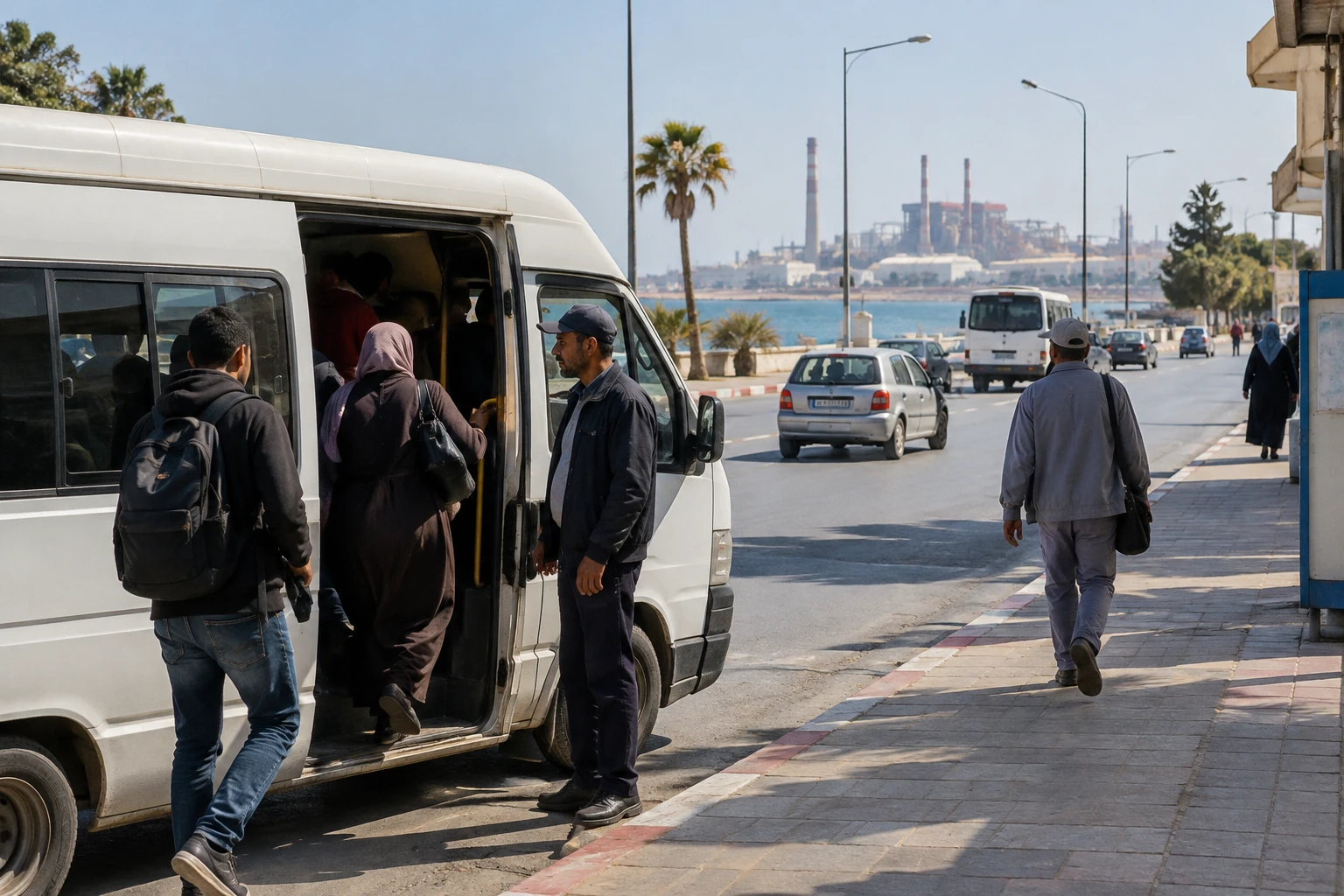
In Gabès, the defence of breathable air and the preservation of an industrial activity that provides jobs have been at odds for years. The verdict delivered on 21 October 2026 in a case stemming from an environmental sit-in has reignited the question: how can residents’ health, the right to protest and phosphate’s place in the Tunisian economy be reconciled?
In Gabès, a long-running protest at the heart of a national issue
The coastal city of Gabès, in south-eastern Tunisia, is home to a complex run by the Tunisian Chemical Group (GCT), a state-owned company that processes phosphate into products used notably in fertilisers. For years, residents and activists living around its facilities have denounced industrial discharges and emissions. They are calling for protective measures and, some of them, for the dismantling of the most polluting installations.
The conflict cannot be reduced to a choice between the environment and jobs. The complex is part of a strategic sector linked to mining, industrial processing and exports. But the anticipated national benefits do not automatically address local concerns. In Gabès, residents, workers, fishers and farmers face different risks and receive different economic benefits.
The tensions took on a national dimension in October 2025, during a general strike and renewed protests against pollution. The demonstrations brought commitments to reduce pollution back to the fore, as residents reported episodes of fumes and respiratory problems. Claims about health effects must, however, be distinguished from medical findings and scientific assessments, which require public, verifiable data.
A 2020 sit-in, convictions handed down years later
The legal case dates back to a gathering held in 2020 outside a regional GCT office. The company filed a complaint, arguing that the action had obstructed the freedom to work. The people prosecuted were arrested and then released. According to the Tunisian Forum for Economic and Social Rights, an initial conviction in absentia — handed down without the defendants present — dates from 8 March 2023. The activists say they only discovered it later.
After challenging those decisions, they appeared in court again. On 21 October 2026, the Stop Pollution campaign announced suspended six-month prison sentences. Tunisian media outlet Business News reports that 13 people were involved in the proceedings and that the same sentence was handed down to the activists prosecuted at that hearing.
Reports published on the same day do not all agree on the number of people convicted or on individual sentences. Africanews reports that 10 activists were involved, eight of whom received suspended six-month sentences and two one-year prison sentences, while Stop Pollution and Business News report a ruling involving 13 defendants and suspended six-month sentences. In the absence of an accessible court document that would resolve these discrepancies, these details should remain attributed. The reports agree that the outcome was unfavourable to the activists in a case related to their protest against pollution.
Justice at the intersection of the right to protest and industrial activity
The dispute raises a practical question: can a state-owned company obtain compensation for a protest aimed at denouncing the effects of its activities? Whether the GCT has suffered harm is for the court to assess. That question alone does not answer residents’ concerns about discharges, health or the safety of the facilities.
In February 2026, the Gabès Court of First Instance rejected an application for interim measures seeking to suspend the disputed industrial units. According to the president of the regional bar association, the court considered that the harm had not been established in the case file and that technical and scientific assessments were needed. The decision therefore does not amount to a general finding that the activities are harmless: it concerns a specific application and the evidence presented to the judge.
The FTDES denounced the prosecution of the activists and defended their right to demonstrate peacefully. This position represents that of the organisation, not a judicial finding on the merits of the case. Independent assessments of air quality, waste and health risks would help move beyond the standoff and better distinguish established facts, residents’ concerns and any potential responsibility.
Phosphate: a revival that also affects producing regions
The Tunisian government wants to significantly increase phosphate production by 2030. The sector can contribute to public revenues, industrial activity and fertiliser supplies in a global market subject to price fluctuations. But raising output without making targets for reducing discharges and the means of monitoring them public risks deepening mistrust in Gabès.
Industrial choices affect different groups in different ways. The state and the state-owned company defend the continuation of a strategic activity. Employees need jobs and safety guarantees. Residents, meanwhile, want answers about their everyday environment. In fishing, agriculture and small businesses, concerns also focus on the possible effects of pollution on resources and local incomes. These issues call for verifiable data, not general assurances.
A signal heard beyond Tunisia’s borders
Tunisia is a member of the Arab Maghreb Union (AMU), a regional organisation that also includes Algeria, Libya, Morocco and Mauritania. Across the Maghreb and the African Union, the Gabès case feeds into wider debates: how can the processing of natural resources and industrial jobs be reconciled with protecting nearby populations? The answers cannot be the same everywhere, as the economies and regions involved differ.
Two factors will be decisive in the coming months: the next steps in the legal case and the authorities’ ability to make environmental and health assessments accessible. The activists’ convictions do not close the debate on pollution. They also shift it towards how the courts, the state and state-owned companies take into account citizens who challenge the local consequences of a national economic policy.