
 Algeria
 Egypt
 Libya
 Morocco
 Sudan
 Tunisia
 Benin
 Burkina Faso
 Cabo Verde
 Côte d'Ivoire
 Ghana
 Guinea
 Guinea-Bissau
 Liberia
 Mali
 Mauritania
 Niger
 Nigeria
 Senegal
 Sierra Leone
 The Gambia
 Togo
 Cameroon
 Central African Republic
 Chad
 DR Congo
 Equatorial Guinea
 Gabon
 Republic of the Congo
 São Tomé and Príncipe
 Burundi
 Comoros
 Djibouti
 Eritrea
 Ethiopia
 Kenya
 Madagascar
 Malawi
 Mauritius
 Mozambique
 Rwanda
 Seychelles
 Somalia
 South Sudan
 Tanzania
 Uganda
 Angola
 Botswana
 Eswatini
 Lesotho
 Namibia
 Zambia
 Zimbabwe
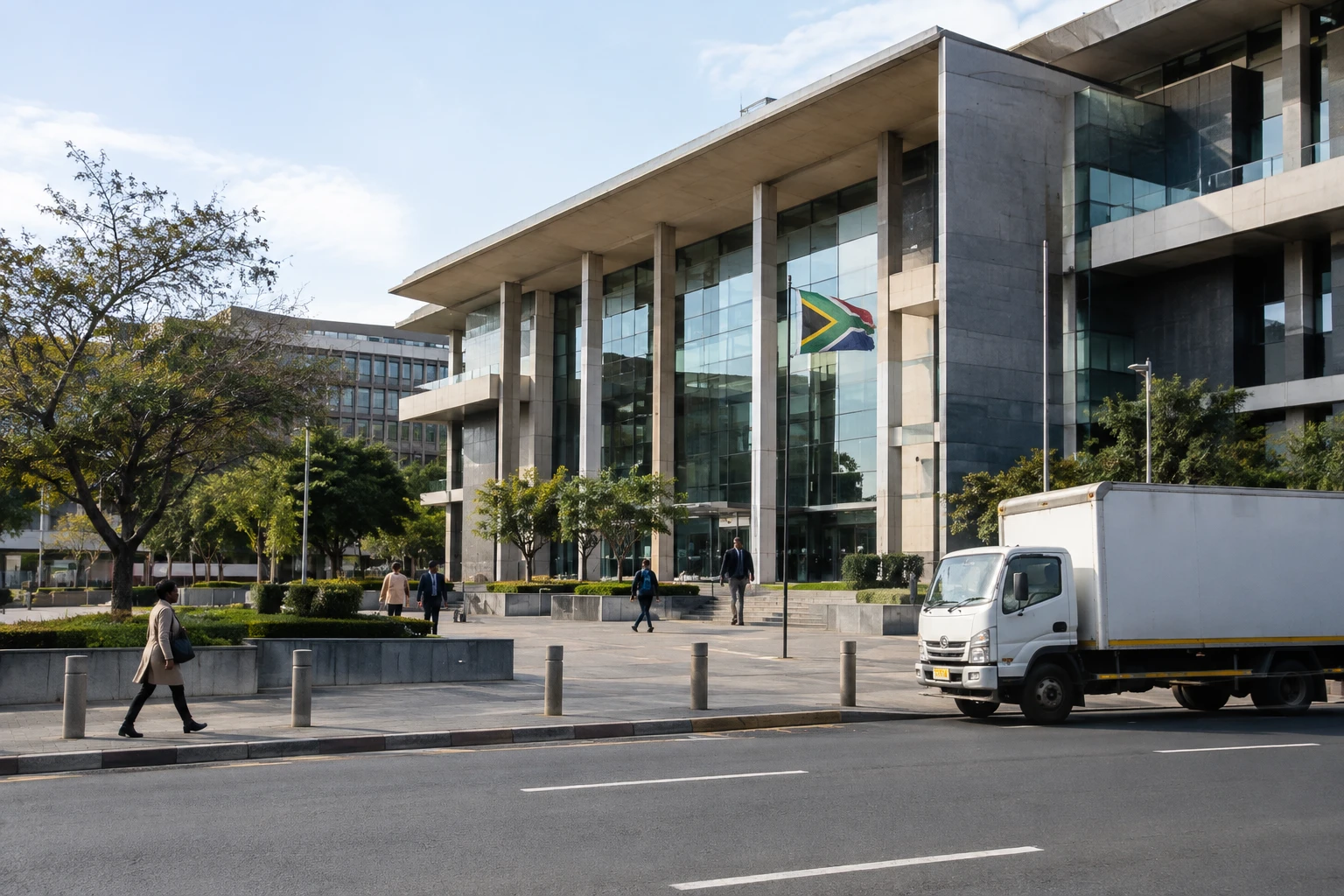
Petrol costing more than 30 rand a litre makes far more than travel more expensive. In South Africa, fuel also drives up the cost of transporting goods and businesses’ expenses, and ultimately the prices paid by households. Pretoria is relying on a temporary cut in levies to cushion the shock, but cannot influence its global causes.
A targeted cut, but for a limited time
On 21 October 2026, South African Finance Minister Enoch Godongwana announced a reduction in the general fuel levy in parliament. From 4 November to 1 December, it is to fall by 3 rand a litre for diesel and 1.50 rand for petrol. The measure will then continue at a lower level until 5 January 2027: 1.50 rand less per litre of diesel and 1 rand for petrol.
The government puts the total support at 10 billion rand. This amount therefore does not correspond to the roughly $611 million cited in some initial reports: the official announcement sets out an allocation of 10 billion rand, funded by the return to the National Treasury of funds transferred to the Central Energy Fund. The relief represents tax revenue the state is forgoing, not a permanent reduction in supply costs.
The change should be reflected in prices at the pump, but does not guarantee that they will fall by as much as the tax. The final price also depends on international prices for petroleum products, the rand exchange rate and other regulated components. The measure therefore reduces part of the bill; it does not neutralise market fluctuations.
From pump prices to the cost of goods
Pressure intensified in October, when 95-octane petrol in inland areas rose above 30 rand a litre. The increase comes amid tensions in the Middle East and disruption to global energy markets. The month’s figures do not mean that all fuels cost the same everywhere: prices vary, in particular, according to the product and location.
The impact extends beyond motorists. Diesel powers a large part of road transport and logistics. When its price rises, transport operators and businesses face higher expenses; those costs can then be passed on to goods delivered to shops. Households reliant on cars feel the impact directly at the pump, while those using public transport may feel it through fares and the cost of living.
The effects are not uniform. People in major cities with public transport networks sometimes have alternatives, although these do not cater for every journey. In outlying or rural areas, distances and reliance on vehicles can make fuel harder to avoid. Small delivery businesses and self-employed workers, who cannot always pass on their expenses quickly, are also exposed.
A constrained budgetary trade-off
The decision comes as the Treasury cuts its forecast for South African growth in 2026 to 1.2%, from 1.6% previously. The Reserve Bank also expects growth of 1.2% this year. This modest pace leaves less room to absorb price shocks, while also limiting revenue and the resources available for other public priorities.
Cutting the tax offers consumers and businesses visible relief, but comes at a cost to public finances. The government says the scheme will be funded without compromising budget sustainability. The question will be how this commitment fits with spending on public services and transfers to local authorities, which provide essential services such as water, electricity and sanitation.
The cut takes effect on 4 November, the date announced for the 2026 municipal elections. This proximity gives the measure particular political visibility, but is not enough to establish that it was decided for electoral reasons. Voters are also concerned with the day-to-day management of municipalities, whose budgets and services are sensitive to changes in transport and energy costs.
A vulnerability that crosses borders
South Africa is integrated into trade across southern Africa, notably through the Southern African Development Community (SADC), which brings together countries in the region and facilitates their co-operation. South African roads connect ports, production centres and neighbouring markets. A sustained rise in diesel prices can therefore increase transport costs beyond the domestic market, although the extent of the knock-on effect depends on routes and contracts.
The measure does not address either dependence on global prices or the vulnerabilities in growth. It offers temporary protection, whose impact will depend on the rand and oil prices over the southern winter. The next point to watch will be the pace at which the support is reduced through to 5 January 2027, and then the national budget’s ability to balance support for purchasing power with the funding of public services.
For South African households, the relief may reduce the immediate bill. For businesses and local authorities, the key question is whether this respite will be enough to slow the transmission of energy costs across the economy.



