Algeria
 Egypt
 Libya
 Morocco
 Sudan
 Tunisia
 Benin
 Burkina Faso
 Cabo Verde
 Côte d'Ivoire
 Ghana
 Guinea
 Guinea-Bissau
 Liberia
 Mali
 Mauritania
 Niger
 Nigeria
 Senegal
 Sierra Leone
 Togo
 Cameroon
 Central African Republic
 Chad
 DR Congo
 Equatorial Guinea
 Gabon
 Republic of the Congo
 São Tomé and Príncipe
 Burundi
 Comoros
 Djibouti
 Eritrea
 Ethiopia
 Kenya
 Madagascar
 Malawi
 Mauritius
 Mozambique
 Rwanda
 Seychelles
 Somalia
 South Sudan
 Tanzania
 Uganda
 Angola
 Botswana
 Eswatini
 Lesotho
 Namibia
 South Africa
 Zambia
 Zimbabwe
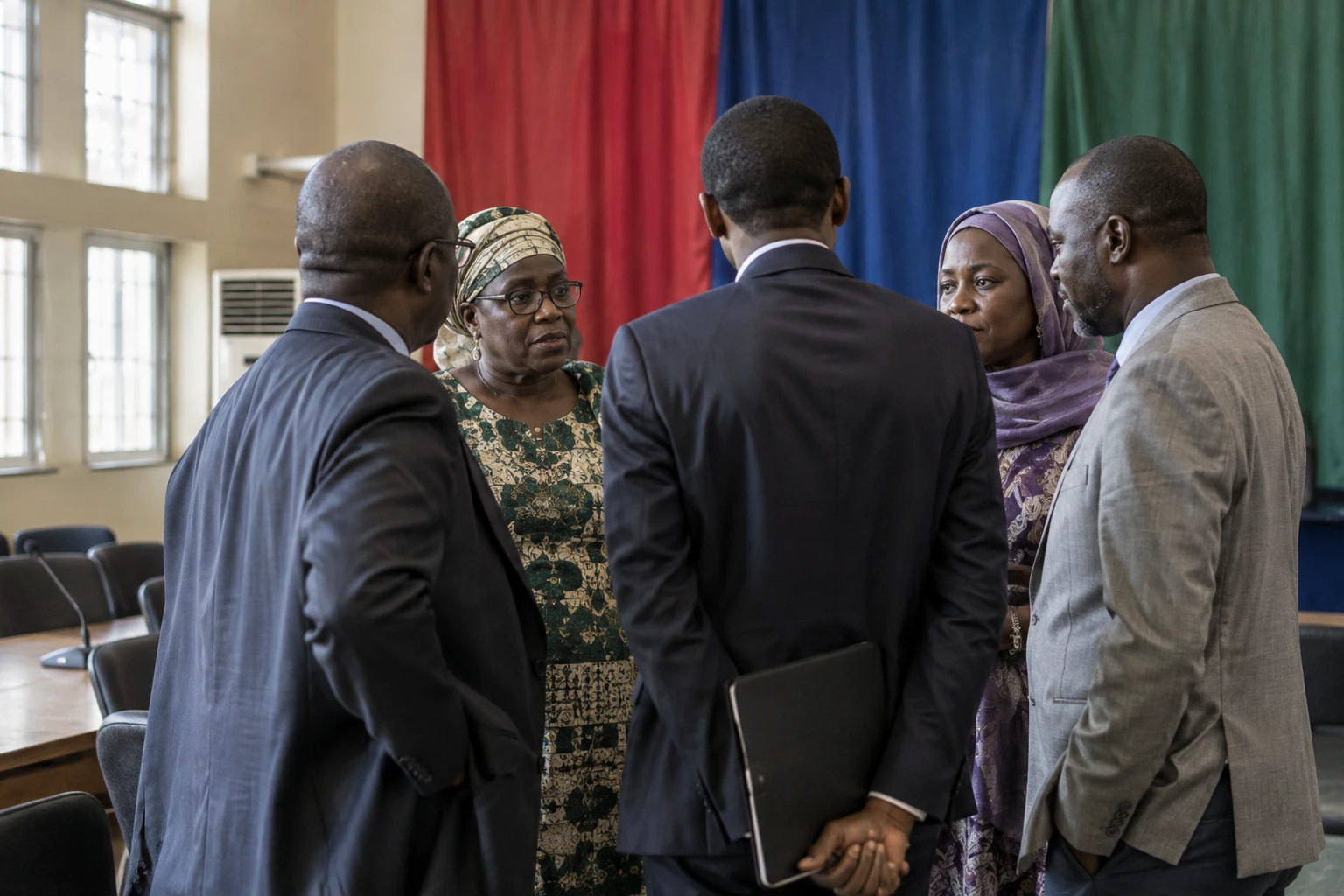
Can a house sold in Maryland help repair the harm suffered in The Gambia? The return of funds from a property attributed to Yahya Jammeh marks a concrete step, but also raises a decisive question: how can authorities ensure the money reaches victims and meets their needs?
From political crisis to reparative justice
Yahya Jammeh led The Gambia from 1994 to 2017. After losing the presidential election in December 2016 to Adama Barrow, he initially contested the result, then left power under regional pressure. ECOWAS, the West African organisation for economic and political cooperation, had launched mediation with the African Union and the UN. Forces from countries in the region had prepared to intervene if the crisis persisted. Jammeh eventually went into exile in Equatorial Guinea in January 2017.
The change of power did not close the file on violations committed under his regime. The Truth, Reconciliation and Reparations Commission (TRRC), set up to establish the facts and make recommendations, investigated the period from July 1994 to January 2017. Its work informed Gambia’s transitional justice process: seeking the truth, recognising victims and organising reparations, without reducing the effort to the payment of money alone.
The Gambian government subsequently established a Reparations Commission to compensate recognised victims. The Ministry of Justice had announced interim payments before this mechanism was set up. The challenge is therefore twofold: to pursue reparations over the long term and explain publicly how beneficiaries are identified, amounts determined and funds monitored.
Announced figures do not match
The Gambian Reparations Commission has announced that it received $2,573,414.10 from the sale of Yahya Jammeh’s property in Potomac, Maryland. It says the money has been paid into the reparations fund and will be reserved for compensation. The Commission has pledged to manage these resources responsibly and transparently.
One discrepancy should nevertheless be noted. In its statement of 18 September 2026, the US Department of Justice announced a net return of $2,507,911.73 to The Gambia. The amount subsequently reported by the Gambian Commission is higher. The public information consulted does not explain the difference. The two figures should therefore be distinguished rather than presented as a single, definitively established amount.
US authorities said the property had been confiscated and then sold following civil proceedings launched in 2020. According to the US complaint, the property had been purchased with the proceeds of corruption and misappropriated public funds. This confiscation does not, in itself, constitute a criminal judgment establishing Jammeh’s responsibility for every violation attributed to his regime. It is a separate asset-recovery mechanism, the proceeds of which are to fund reparations under the announced agreement.
For victims, transparency matters as much as payment
The recovered sums can contribute to compensation, but their impact will depend on the allocation rules and the number of people eligible. Victims and their relatives have not all suffered the same harms. Meaningful reparations must take account of needs, recognised injuries and commitments already made by the state. The Commission will therefore need to set out the timetable, criteria and payment arrangements.
The payment into a dedicated account at the Central Bank of The Gambia, announced by US authorities, provides a verifiable starting point. It does not replace regular public monitoring. Publishing reports on sums received, any costs, payments made and possible appeals would allow victims and civil society to scrutinise the use of the fund.
This requirement has particular resonance in The Gambia. In 2025, demonstrations in Banjul over the management and sale of other assets associated with Jammeh led to arrests, according to press reports. That episode did not concern the US house, but it is a reminder that the management of recovered assets has become a subject of public debate. Trust will therefore depend as much on the traceability of funds as on the announcement of their return.
A West African issue of public accountability
Recovering assets abroad can supplement national resources allocated to reparations. It also shows that cross-border confiscation proceedings can have a concrete purpose for people affected by corruption. But they remain dependent on the laws and courts of the countries where the assets are located. They do not replace domestic investigations or justice and reparations mechanisms.
For The Gambia, the next step is to turn this commitment into documented and accessible payments. For ECOWAS and the African Union, the case is a reminder that emerging from a political crisis is not enough to strengthen institutions over the long term: recognising victims and ensuring accountability matter too. The significance of this return will be measured less by the amount announced than by how clearly the Gambian authorities explain who has been compensated, under what rules and with what results.
The US Department of Justice statement on funds returned to The Gambia and Gambian coverage of the Reparations Commission’s announcement allow the announced figures to be compared. For context, see also the joint declaration by ECOWAS, the African Union and the UN in January 2017 and the Gambian Ministry of Justice’s information on interim reparations.