Algeria
 Egypt
 Libya
 Morocco
 Sudan
 Tunisia
 Benin
 Burkina Faso
 Cabo Verde
 Côte d'Ivoire
 Ghana
 Guinea
 Guinea-Bissau
 Liberia
 Mali
 Mauritania
 Niger
 Nigeria
 Sierra Leone
 The Gambia
 Togo
 Cameroon
 Central African Republic
 Chad
 DR Congo
 Equatorial Guinea
 Gabon
 Republic of the Congo
 São Tomé and Príncipe
 Burundi
 Comoros
 Djibouti
 Eritrea
 Ethiopia
 Kenya
 Madagascar
 Malawi
 Mauritius
 Mozambique
 Rwanda
 Seychelles
 Somalia
 South Sudan
 Tanzania
 Uganda
 Angola
 Botswana
 Eswatini
 Lesotho
 Namibia
 South Africa
 Zambia
 Zimbabwe
Macky Sall’s withdrawal from the race for the United Nations secretary-generalship reopens a question his supporters have never really set aside: does the former president want to return to Senegalese politics, and in what capacity? In Dakar, the Alliance for the Republic (APR) has made its desire clear. But between party ambition, a contested record and rivalries at the top of the state, a return cannot simply be decreed.
An international withdrawal, a domestic political opening
On 17 October 2026, Macky Sall announced that he was withdrawing his candidacy to lead the UN. He presented his decision as a way to facilitate the emergence of a consensus candidate. The former head of state had been nominated by Burundi, but had not secured unanimous African support. The Security Council is to conduct the selection of the next secretary-general, ahead of an appointment by the General Assembly. Channels Television reported his withdrawal; the Associated Press also reported on the results of the Security Council’s straw poll.
The decision does not amount to an announcement that he is returning to Senegal. It does, however, remove an international prospect that might have kept Macky Sall at a distance from the domestic political scene. Since the end of his presidency in April 2024, the APR has remained organised around him. Its spokesperson, Saourou Sène, said the party wanted him to return and continue the political struggle. He cited the Emerging Senegal Plan, whose horizon was set at 2035. This is the wish of party officials; it is not, in itself, an announcement of a candidacy.
The timetable is fuelling speculation. The next presidential election is scheduled for 2029, subject to electoral rules and any institutional changes. For APR officials, Macky Sall remains the most natural candidate. But public opinion is far from unanimous: some Senegalese interviewed in the supplied report want him to return, while others are calling on him to account for his record or let a new generation govern.
A political landscape already reshaped
Senegal is emerging from an exceptional period in its politics. The March 2024 presidential election brought Bassirou Diomaye Faye to power, after a campaign marked by the postponement of the vote, tensions and the release of several opposition figures. Macky Sall, president from 2012 to 2024, was not a candidate. His former party, the APR, lost power to a movement that had made a break with the previous administration a central plank of its platform.
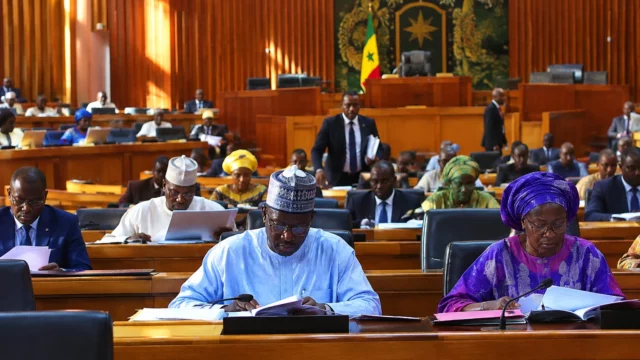
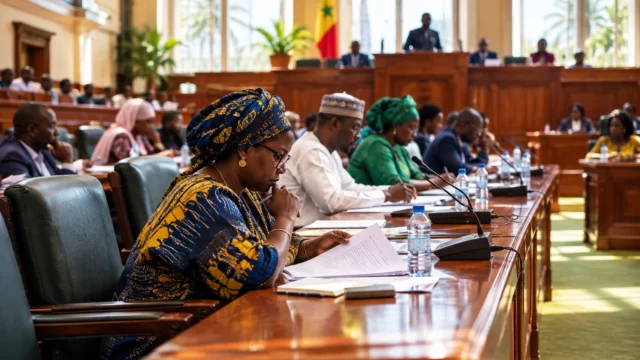
Since then, relations between Bassirou Diomaye Faye and Ousmane Sonko, his ally turned prime minister, have become strained. Their disagreement led to Sonko’s departure from the premiership in May 2026 and his election as president of the National Assembly, according to the Senegalese press. This reshuffle creates space for the opposition, but does not guarantee that the APR can take advantage of it. The two leaders from the governing camp remain major players, even as their political relationship has deteriorated. Le Monde has documented the split at the top of the state.
Macky Sall’s record will also weigh on any attempt to return. In February 2025, Senegal’s Court of Accounts published an audit of public finances that revealed significant discrepancies in figures reported by the previous administration. In March, the International Monetary Fund confirmed problems with the reporting of debt and the deficit. These findings have fuelled calls for explanations, but do not amount to a criminal conviction of the former president. Individual responsibility is a matter for the relevant proceedings and courts. The Court of Accounts report and the findings reported after the IMF mission are central to the debate.
For the APR, a recognised leader; for his opponents, a record to defend
A return could give the APR a figure capable of bringing its networks together and building a coalition. Officials have spoken of closer ties with other forces, including the Senegalese Democratic Party. The idea of an electoral front remains an analyst’s hypothesis, however, not an announced agreement. It would depend on Macky Sall’s choices, the position of potential allies and the APR’s ability to mobilise beyond its loyal supporters.
For his supporters, the former president can point to his achievements and experience. For his opponents, he should answer criticism of his management of public finances and calls for the truth about political violence during his final years in power. These issues affect different groups in different ways: leaders negotiate alliances and candidacies, while households face the practical consequences of budget decisions, employment and the cost of living. The families of victims, meanwhile, are waiting for judicial and institutional answers, not simply a battle of partisan narratives.
The constitutional framework also matters. Senegal’s Constitution limits the presidency to two consecutive terms. Macky Sall has already served two terms, from 2012 to 2024. A party’s nomination alone is therefore not enough to make a 2029 candidacy legally possible. Any ambition would have to be considered in light of the constitutional text, its interpretation and the decisions of the relevant institutions. It would be premature to present his return to power as a foregone conclusion or his candidacy as legally settled.
A Senegalese issue with regional repercussions
This reshuffle will be watched across West Africa. Senegal is a member of ECOWAS, a regional organisation that promotes co-operation and political stability. The country’s trajectory matters in a region where transfers of power, electoral legitimacy and trust in institutions are major issues. But Senegal’s situation retains its own characteristics: competition between established parties, a movement in power riven by tensions and a former president who remains influential.
At this stage, the established facts are Macky Sall’s withdrawal from the UN race and the wish expressed by APR officials for him to return. Everything else — a candidacy, an alliance or simply a role as party leader — remains open. The next indications will come from the former president’s statements, the APR’s decisions and how relations between Bassirou Diomaye Faye and Ousmane Sonko evolve. For Senegalese voters, the issue will not only be who runs in 2029, but also what record and programme each camp can defend.