
 Algeria
 Egypt
 Libya
 Morocco
 Sudan
 Tunisia
 Benin
 Burkina Faso
 Cabo Verde
 Ghana
 Guinea
 Guinea-Bissau
 Liberia
 Mali
 Mauritania
 Niger
 Nigeria
 Senegal
 Sierra Leone
 The Gambia
 Togo
 Cameroon
 Central African Republic
 Chad
 DR Congo
 Equatorial Guinea
 Gabon
 Republic of the Congo
 São Tomé and Príncipe
 Burundi
 Comoros
 Djibouti
 Eritrea
 Ethiopia
 Kenya
 Madagascar
 Malawi
 Mauritius
 Mozambique
 Rwanda
 Seychelles
 Somalia
 South Sudan
 Tanzania
 Uganda
 Angola
 Botswana
 Eswatini
 Lesotho
 Namibia
 South Africa
 Zambia
 Zimbabwe
Before it becomes a mine, a deposit is only a hypothesis to be tested. In northern Côte d’Ivoire, the Nielle project is entering this decisive stage: preliminary estimates suggest significant gold potential, but no economically viable deposit has yet been established.
A target to turn into verifiable data
Castle Minerals, an Australian exploration company, is preparing a drilling campaign at Nielle. The company says an independent assessment by Ledex Pty puts the exploration potential of the main target at between 0.8 and 1.4 million ounces of gold. This range is not a mineral reserve or a declared resource. It is a theoretical estimate that will need to be tested and refined through fieldwork.
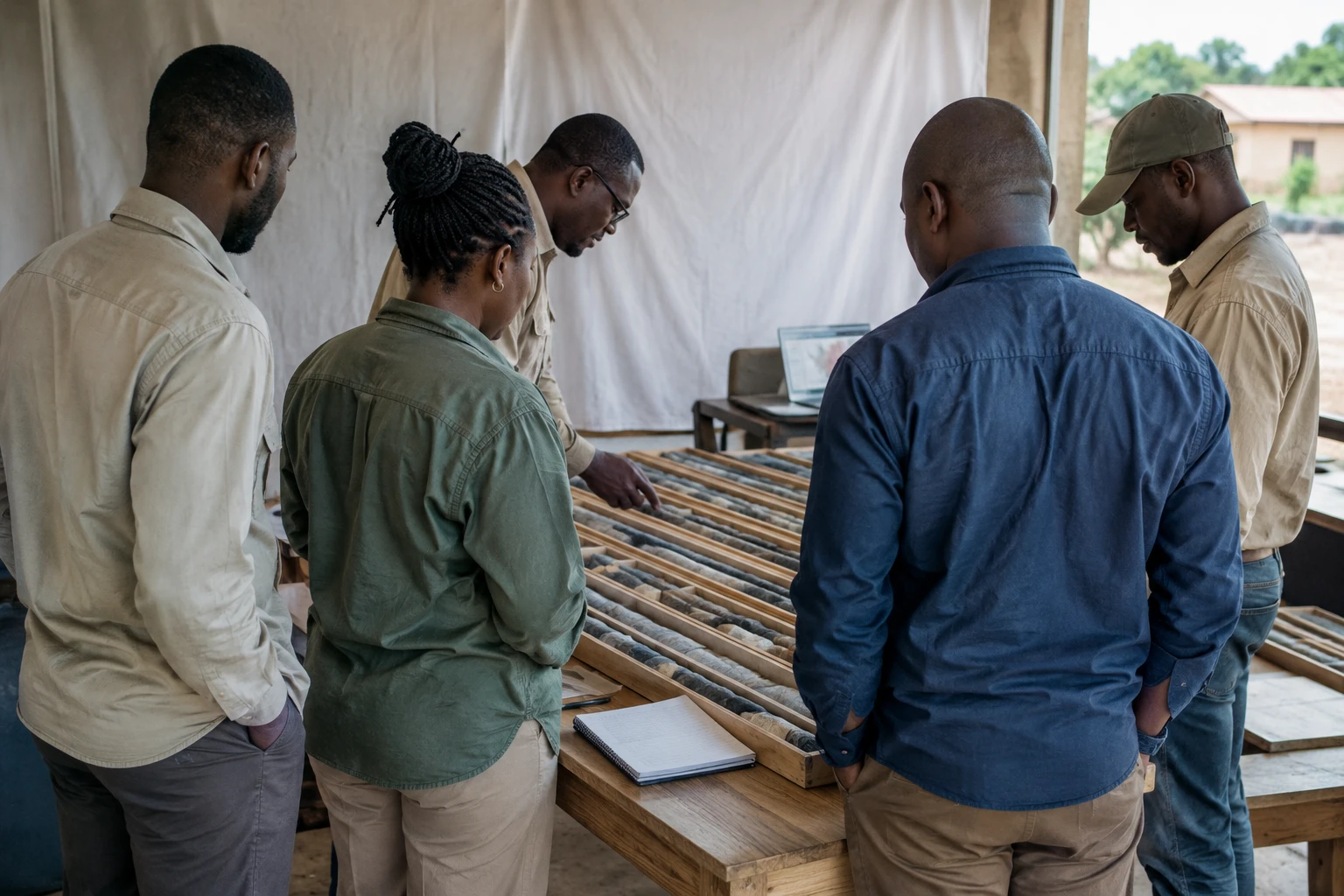
To produce this initial estimate, Ledex drew on historical drilling and geochemical data. The information provided cites 338 auger holes and 40 reverse-circulation holes on Target 1. Castle now plans reverse-circulation and diamond drilling. These techniques allow samples to be taken from underground at different depths and help verify the continuity of mineralised zones.
The project is still dependent on obtaining an exploration permit from the Ivorian authorities. The company hopes the permit will be issued in the fourth quarter of 2026, but has not set a firm timetable or budget for drilling. In August, it announced a A$4 million capital raising to fund its activities, according to its stock market announcements.
Nielle is in the north of the country, near the Tongon gold district. Castle gives the project area as about 212 km² and describes a mineralised corridor extending beyond the zone already tested by drilling. These details provide a geological framework, but do not indicate how much gold could be recovered or whether a potential mine would be profitable.
National ambitions backed by several projects
Côte d’Ivoire is seeking to accelerate the growth of its gold sector. The government has set a goal of making the country the continent’s largest gold producer by 2035. The Ivorian economic administration counted 13 operating gold mines in 2024 and forecast an increase in production in the following years. These ambitions rely on existing mines, projects under development and the discovery of new deposits.
The Koné project, led by Montage Gold, illustrates the scale of investment being considered. At its ground-breaking ceremony in December 2024, the government announced estimated resources of 152 tonnes and projected production of seven tonnes a year. Assafou, developed by Endeavour Mining, is another project expected to contribute to future supply. These figures are project projections or estimates and should not be confused with actual production.
Foreign explorers have an important role in this trajectory. They bring capital, technical teams and research programmes, but the benefits for the country will also depend on the terms negotiated with the state: tax revenues, jobs, training, local procurement and compliance with environmental rules. For communities near the permits, the questions are more immediate: what jobs will be available, which land will be affected and how will communities be consulted?
Industrial mining is not the whole story when it comes to gold. Artisanal gold mining and informal trading networks affect incomes, local employment and the state’s ability to track the volumes extracted. The public policy challenge is therefore to increase declared production without reducing gold policy to the opening of large mines alone. Transparency over contracts and revenues, as well as the management of impacts on water and soil, will weigh in the assessment of this expansion.
The drilling test and the regional picture
The next steps will show whether Nielle’s estimate holds up to scrutiny. Drilling will need to confirm the gold grade, the thickness of mineralised zones and their continuation at depth. Only then could further work potentially lead to a mineral resource estimate. A resource does not automatically mean that a mine is economically viable: costs, infrastructure, permits and environmental risks must also be assessed.
At regional level, this race for discoveries is unfolding in a West African landscape where several countries are developing their gold industries. Ghana, Côte d’Ivoire’s neighbour and a member of ECOWAS — the regional organisation for economic and political integration in West Africa — remains a major producer. Côte d’Ivoire’s 2035 goal is therefore a national ambition in a regional competition, not a position it has already secured.
For Castle, the exploration permit is the first milestone to watch. For the Ivorian authorities, progress will not be measured only by the number of ounces announced: it will depend on confirmed discoveries, their possible conversion into viable projects and the share of value retained in the country. At Nielle, drilling will first show whether the stated potential can become a documented geological reality.



