Algeria
 Egypt
 Libya
 Morocco
 Sudan
 Tunisia
 Benin
 Burkina Faso
 Cabo Verde
 Côte d'Ivoire
 Ghana
 Guinea
 Guinea-Bissau
 Liberia
 Mali
 Mauritania
 Niger
 Nigeria
 Senegal
 Sierra Leone
 The Gambia
 Togo
 Cameroon
 Central African Republic
 Chad
 DR Congo
 Equatorial Guinea
 Gabon
 Republic of the Congo
 São Tomé and Príncipe
 Burundi
 Comoros
 Djibouti
 Ethiopia
 Kenya
 Madagascar
 Malawi
 Mauritius
 Mozambique
 Rwanda
 Seychelles
 Somalia
 South Sudan
 Tanzania
 Uganda
 Angola
 Botswana
 Eswatini
 Lesotho
 Namibia
 South Africa
 Zambia
 Zimbabwe
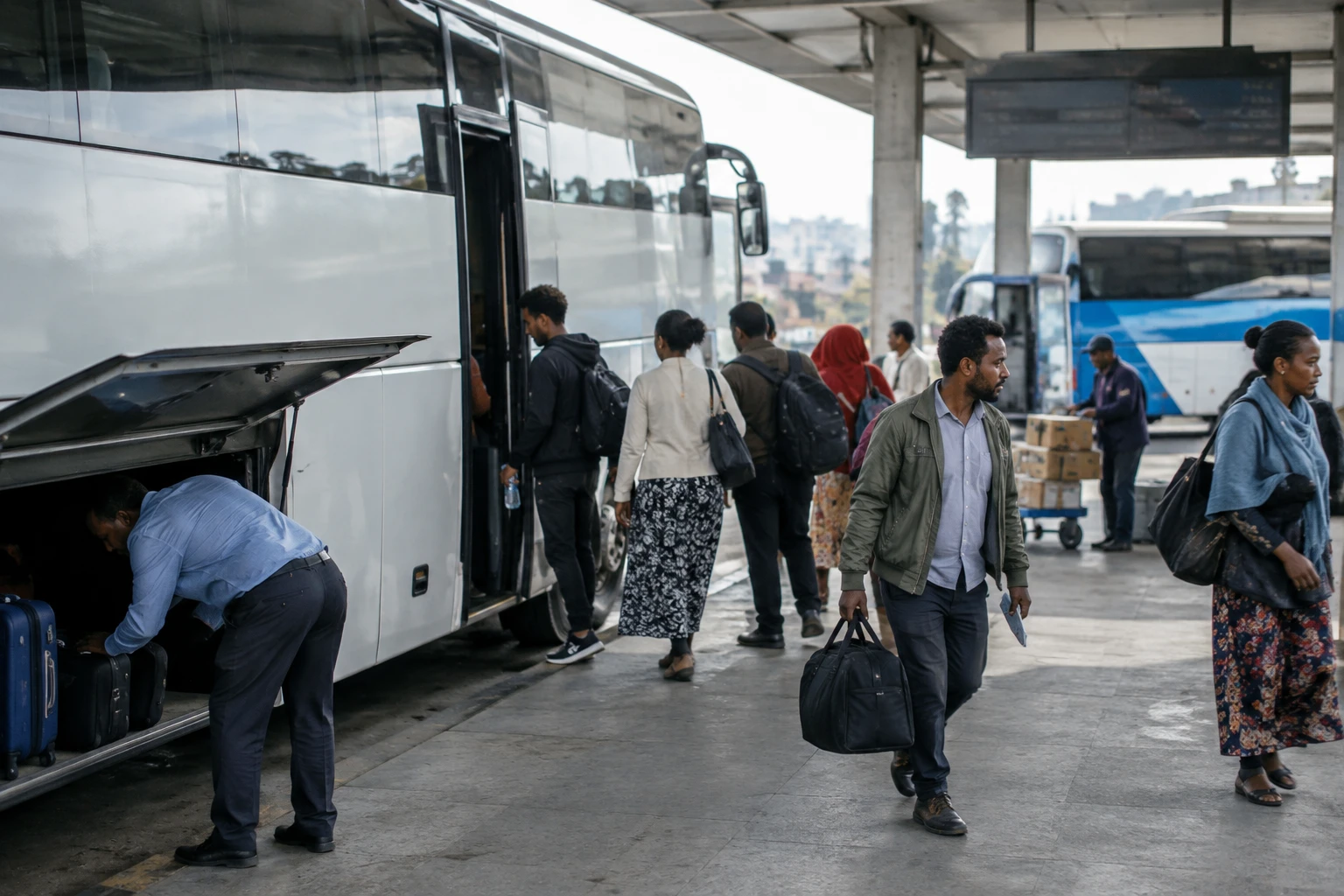
Between Ethiopia and Eritrea, calls for economic partnership are now running up against a diplomatic rupture and accusations linked to fighting in northern Ethiopia. On 19 October 2026, Prime Minister Abiy Ahmed proposed cooperation while warning Asmara of “very serious” consequences if Eritrean territory were used as a base by forces hostile to his country.
A border at the heart of a regional crisis
The two neighbours in the Horn of Africa have a history of rapprochement and conflict. After the bloody war of 1998 to 2000, the peace announced in 2018 by Abiy Ahmed and Eritrean President Isaias Afwerki ushered in a period of reconciliation. The Eritrean and Ethiopian armies later fought together during the Tigray war, from 2020 to 2022. The Pretoria Agreement, signed in November 2022 between Ethiopia’s federal government and the Tigray People’s Liberation Front (TPLF), ended the main fighting but did not resolve all political and security tensions.
The situation deteriorated again in 2026. On 1 October, after closing its embassy in Asmara and expelling ten Eritrean diplomats, Addis Ababa, Eritrea announced that it was severing diplomatic relations. Clashes in northern Ethiopia and accusations of interference add to another explosive issue: access to the Red Sea. Ethiopia, landlocked since Eritrea’s independence in 1993, says it wants to secure maritime access. Asmara sees Ethiopian statements about the port of Assab as a threat to its sovereignty.
The region falls in particular under the remit of the Intergovernmental Authority on Development (IGAD), an East African organisation working on cooperation and crisis prevention. On 23 September, IGAD voiced concern over the resumption of hostilities in northern Ethiopia and called for de-escalation. The African Union, headquartered in Addis Ababa, has also expressed concern about rising tensions between the two countries.
An offer of cooperation accompanied by a warning
In a Tigrinya-language interview broadcast on 19 October by Ethiopian state television, Abiy Ahmed presented good-neighbourly relations and economic partnership as the best path for both states. He also accused the Eritrean authorities of allowing forces hostile to Ethiopia to operate from their territory. His warning — that there would be “very, very, very serious” consequences if Ethiopia’s appeals were rejected — marks a further escalation in rhetoric.
The accusations remain contested and should be distinguished from independently verified facts. Addis Ababa accuses Eritrea of supporting the TPLF and sending soldiers into Ethiopian territory. Asmara rejects the accusations and portrays Ethiopian moves concerning access to the sea as a threat. In October, Ethiopia told the UN Security Council that it was acting in self-defence, while Eritrea described Ethiopian statements as posing a risk of war. The claims made by the two governments do not, in themselves, independently confirm their respective accusations.
Abiy Ahmed’s economic proposal nevertheless concerns a tangible issue. The port of Assab, on the Red Sea, could theoretically contribute to Ethiopia’s trade and the development of cross-border activities. But any cooperation would require a political agreement between sovereign states. The severing of diplomatic ties, the fighting and the lack of trust make this prospect difficult to realise at present.
Repercussions extending beyond the two capitals
Any escalation would have different effects on populations and territories. In the border areas of Tigray, residents are directly exposed to fighting and displacement. In Addis Ababa, the authorities would have to manage the political and security consequences of a crisis that could require greater national resources. For Eritrea, any confrontation would pose risks to communities near the border and to already fragile trade links. Regional trade, too, could be disrupted as Ethiopia seeks routes to international markets.
The precedent of the Tigray war is a reminder of the human cost of prolonged conflict. It also calls for caution over casualty figures and accounts produced during wartime: information on troop movements, strikes and external support should be attributed unless independently corroborated. The issue, then, is not only whether the two governments will resume dialogue, but also how to protect civilians and prevent border tensions from drawing in other regional actors.
Moscow could provide an opportunity for contact. Russia has proposed a platform for discussions on the sidelines of the Russia-Africa summit scheduled for 28 and 29 October 2026. The announced presence of Isaias Afwerki and the invitation extended to Abiy Ahmed do not, however, guarantee a bilateral meeting or negotiations. For now, IGAD and the African Union are calling for restraint, while official relations between Addis Ababa and Asmara remain severed.
The continental significance of this crisis also stems from Ethiopia’s particular role as host of the African Union headquarters, and from the strategic position of the Red Sea for trade between Africa, the Middle East and Asia. The next milestone will be the Moscow summit: it remains to be seen whether mediation takes shape and whether the two governments agree to reopen a channel for dialogue. In the meantime, partnership rhetoric coexists with accusations of armed support and a public warning, with no confirmed sign of de-escalation.