Algeria
 Egypt
 Libya
 Morocco
 Sudan
 Tunisia
 Benin
 Burkina Faso
 Cabo Verde
 Côte d'Ivoire
 Ghana
 Guinea
 Guinea-Bissau
 Liberia
 Mali
 Mauritania
 Niger
 Nigeria
 Senegal
 Sierra Leone
 The Gambia
 Togo
 Cameroon
 Central African Republic
 Chad
 DR Congo
 Equatorial Guinea
 Gabon
 Republic of the Congo
 São Tomé and Príncipe
 Burundi
 Comoros
 Djibouti
 Eritrea
 Ethiopia
 Kenya
 Madagascar
 Malawi
 Mauritius
 Mozambique
 Rwanda
 Seychelles
 Somalia
 South Sudan
 Tanzania
 Uganda
 Botswana
 Eswatini
 Lesotho
 Namibia
 South Africa
 Zambia
 Zimbabwe
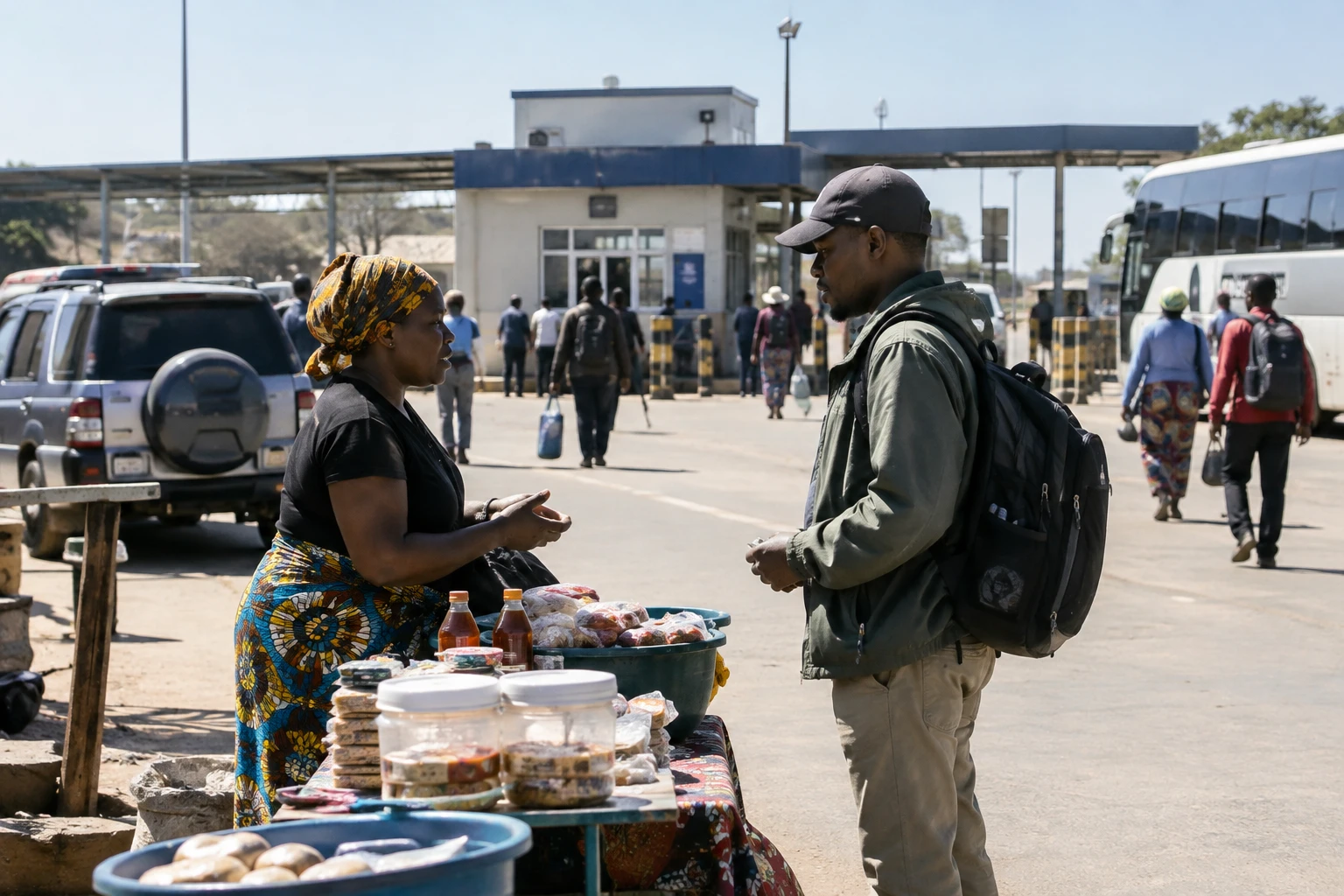
Between Santa Clara in southern Angola and Oshikango in northern Namibia, the border is both a daily crossing point and a potential obstacle to trade. Luanda and Windhoek want to make it easier to cross. The challenge is to turn signed agreements into visible changes for travellers, traders and businesses.
A historic relationship to bring to life in the economy
The two southern African neighbours forged political ties well before Namibian independence in 1990. Their cooperation is also part of a region where the Southern African Development Community (SADC) is seeking to bring the markets and infrastructure of its member states closer together.
But diplomatic ties do not guarantee balanced trade. Officials from both countries have themselves called for improvements in trade, investment and the implementation of joint projects. The binational commission, established in 2019 and co-chaired by the heads of state, is intended to provide a framework for political oversight, rather than allowing agreements to pile up without an implementation timetable. Angolan daily O País reports that its inaugural session was held, while Namibia’s NAMPA news agency had already highlighted expectations surrounding the revival of trade and infrastructure projects.
Eight agreements, from the border to fisheries
On 19 October 2026 in Luanda, Angolan President João Lourenço and Namibian President Netumbo Nandi-Ndaitwah attended the signing of eight cooperation instruments. The Namibian leader’s state visit took place from 18 to 20 October. The Angolan authorities and the Angolan media outlet O País confirmed the number and scope of the commitments.
The agreement most directly related to trade concerns the establishment of a one-stop border post at Santa Clara and Oshikango. The system is intended to coordinate formalities on both sides of the border. Its impact will nevertheless depend on how it works in practice: opening hours, staffing, equipment, customs procedures and the capacity to handle peak periods.
The other agreements cover a range of sectors. They include the minutes of the binational commission, an agreement allowing dependants of diplomatic staff to take up paid employment, and an amendment concerning commemorative sites at Cassinga and Xetequela in Angola. Further commitments relate to sport, arts and culture, fisheries and aquaculture, and tourism. The detailed list published by the Angolan embassy is consistent with the count announced by the two presidencies.
This range gives cooperation a dimension that extends beyond trade in goods. Fisheries and aquaculture could bring production and processing sectors closer together. Tourism and cultural exchanges could, in turn, strengthen ties between communities. But the texts alone do not specify budgets, those responsible for implementation or sector-specific deadlines.
Trade marked by a wide gap
Data for 2025 from the United Nations UN Comtrade database, republished by Trading Economics, show Angola exported $522.09 million worth of goods to Namibia, compared with $31.59 million in the opposite direction. These figures point to a significant gap, but are not enough to explain its structure or causes. They should therefore be read as figures reported in this database, rather than as a comprehensive measure of trade in services, informal flows or activity by businesses operating near the border.
The one-stop post could reduce some of the friction for hauliers and traders, particularly delays caused by successive checks. But gains will not be automatic: simplifying a procedure does not create reliable roads, storage capacity or access to finance. Small operators, with less scope to absorb delays and administrative costs, may experience the improvements differently from larger companies.
The binational commission is also expected to monitor other economic and infrastructure issues. In his speech, João Lourenço referred to electricity interconnection in southern Africa and the binational Baynes hydropower project. These initiatives extend beyond the bilateral relationship: they require technical decisions, financing and regional coordination. The Namibian president, for her part, linked cooperation priorities to energy, water and the African Union’s development goals.
Commitments to be measured on the ground
The Angolan president also raised the possibility of joint mechanisms with Botswana and other diamond producers. According to his official remarks, the aim is to defend the position of natural diamonds against substitute products. The proposal raises a regional issue: it involves several southern African economies and how their producers can coordinate their positions in a changing global market.
The next step, then, will be less about signing new texts than implementing them. For people in border areas, results will be measured by whether formalities are genuinely shortened and the movement of people and goods becomes more predictable. For businesses, they will depend on the ability to turn sectoral memorandums into projects, contracts and commercial opportunities. The binational commission will need to make this progress verifiable between its sessions.
Sources consulted: Aníbal de Melo Press Centre, Angola; statement by the Namibian president published by the Angolan presidency; speech by João Lourenço; Namibian news agency NAMPA; UN Comtrade trade data republished by Trading Economics; Namibian exports to Angola.