
 Egypt
 Libya
 Morocco
 Sudan
 Tunisia
 Benin
 Burkina Faso
 Cabo Verde
 Côte d'Ivoire
 Ghana
 Guinea
 Guinea-Bissau
 Liberia
 Mali
 Mauritania
 Niger
 Nigeria
 Senegal
 Sierra Leone
 The Gambia
 Togo
 Cameroon
 Central African Republic
 Chad
 DR Congo
 Equatorial Guinea
 Gabon
 Republic of the Congo
 São Tomé and Príncipe
 Burundi
 Comoros
 Djibouti
 Eritrea
 Ethiopia
 Kenya
 Madagascar
 Malawi
 Mauritius
 Mozambique
 Rwanda
 Seychelles
 Somalia
 South Sudan
 Tanzania
 Uganda
 Angola
 Botswana
 Eswatini
 Lesotho
 Namibia
 South Africa
 Zambia
 Zimbabwe
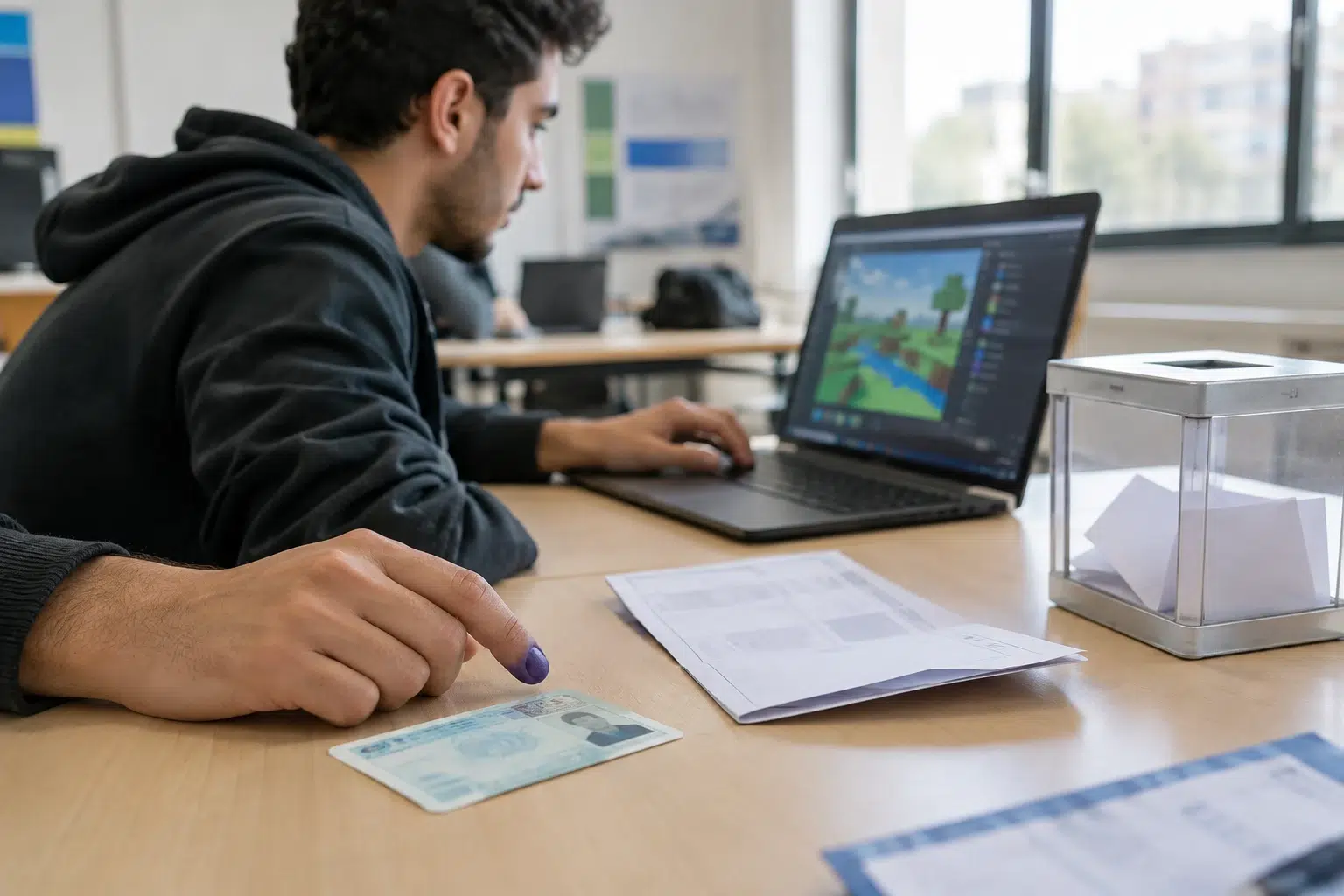
In Algeria, the return of a gaming platform is not just a question of entertainment. It also raises questions about controlling exchanges between players and the role young creators can play in a globalised digital industry.
Access restored, but not all features
The Ministry of Post and Telecommunications announced on 13 October 2026 a preliminary agreement with Roblox, following the restoration of access to the platform in Algeria. The company and the authorities plan, among other things, to provide training in video game design and development. The programme is intended to help Algerian creators gain skills and showcase their work on the international market. Practical details — timetable, funding and number of participants — remain to be clarified. The report on the preliminary agreement with Roblox confirms that the project is still at an early stage.
The platform’s return comes after around 13 months of restrictions, which began in September 2025. It does not, however, mean a full return to its previous operation. Chat remains disabled for users in Algeria. The ministry has linked its reactivation to the introduction of Arabic-language moderation mechanisms and technical and regulatory safeguards deemed sufficient. No deadline has been announced. Reports published in Algeria on Roblox’s return also say the restriction remains in place.
The commitments outlined by the authorities also cover age estimation, parental controls and the handling of reports. These tools are intended to help families better manage playing time, spending and access to certain content. The ministry is also calling for better support for Arabic and Algerian Darija, the variety spoken in Algeria. The quality of moderation in these languages will be crucial: a poorly adapted system may let abuse through or penalise ordinary exchanges.
Protecting users without reducing gaming to a risk
Online games sometimes bring together creativity, competition and exchanges between people who do not know one another. Social features can expose minors to harassment, inappropriate content or malicious approaches. The risk therefore does not come from the game itself alone: it also depends on communication tools, moderation rules and adults’ ability to support children.
Research by Ofcom, the UK communications regulator, sheds light on these issues without measuring the situation in Algeria. Its report on children’s gaming habits, published in October 2026, brings together UK data on their practices and experiences. These findings can help frame questions, but should not be applied directly to Algeria, where usage, languages and access conditions differ. Ofcom’s study of children and online games highlights, in particular, the diversity of practices and experiences.
For now, the decision to keep chat closed amounts to a general precaution: the restriction also applies to adults. It limits interactions, but does not in itself resolve safety concerns. Age checks must be reliable without collecting more data than necessary. Reporting systems must also respond quickly, and families must be able to understand and use the available settings. Transparency about the results of these measures will therefore be just as important as their announcement.
A promise of skills still to be delivered
The training component gives the agreement an economic dimension. Roblox is both a gaming space and a platform where users can design digital experiences. For young Algerians, learning to create games can open the door to skills in programming, design and content production. But training guarantees neither income nor employment. Its value will depend on genuine access to tools, support for participants and the terms on which their creations can be marketed.
It will be important to establish who can take part in the programme, how applications will be selected, and whether the skills acquired can be used beyond a single platform. This last question matters to creators and the country alike: a solid pathway should enable people to develop transferable skills, rather than depend entirely on the commercial rules of a private company. For families, the immediate concern is different: being able to let children play without giving up all control over their interactions and purchases.
Algeria’s ministry had already held discussions with other players in the video game industry. In November 2025, an agreement discussed with the publisher of PUBG MOBILE covered security, parental controls and content adaptation, among other matters. In October 2025, difficulties accessing Fortnite also prompted public exchanges between Epic Games’ chief executive and the authorities. The available evidence does not support describing that episode as an official ban. Taken together, these precedents suggest an approach based on case-by-case negotiations with platforms, rather than an already established general framework.
An Algerian case with regional resonance
This approach forms part of a broader question for North African countries: how can minors be protected on services designed for a global market, while developing local digital skills and activities? The Arab Maghreb Union (AMU), a regional organisation comprising five North African countries, offers a potential forum for dialogue. However, the announced agreement concerns Algeria and does not constitute a common rule for its neighbours.
Across the continent, public officials must balance child safety, access to digital services and career prospects. The Algerian case highlights two related levers: setting conditions for platforms and seeking to train local creators. What happens next will be judged on concrete evidence: the programme’s actual launch, publication of its criteria and verifiable operation of the safety tools. As long as chat remains closed and the training details are unknown, the agreement remains a carefully managed opening whose results are yet to be established.



