Algeria
 Egypt
 Libya
 Morocco
 Tunisia
 Benin
 Burkina Faso
 Cabo Verde
 Côte d'Ivoire
 Ghana
 Guinea
 Guinea-Bissau
 Liberia
 Mali
 Mauritania
 Niger
 Nigeria
 Senegal
 Sierra Leone
 The Gambia
 Togo
 Cameroon
 Central African Republic
 Chad
 DR Congo
 Equatorial Guinea
 Gabon
 Republic of the Congo
 São Tomé and Príncipe
 Burundi
 Comoros
 Djibouti
 Eritrea
 Ethiopia
 Kenya
 Madagascar
 Malawi
 Mauritius
 Mozambique
 Rwanda
 Seychelles
 Somalia
 South Sudan
 Tanzania
 Uganda
 Angola
 Botswana
 Eswatini
 Lesotho
 Namibia
 South Africa
 Zambia
 Zimbabwe
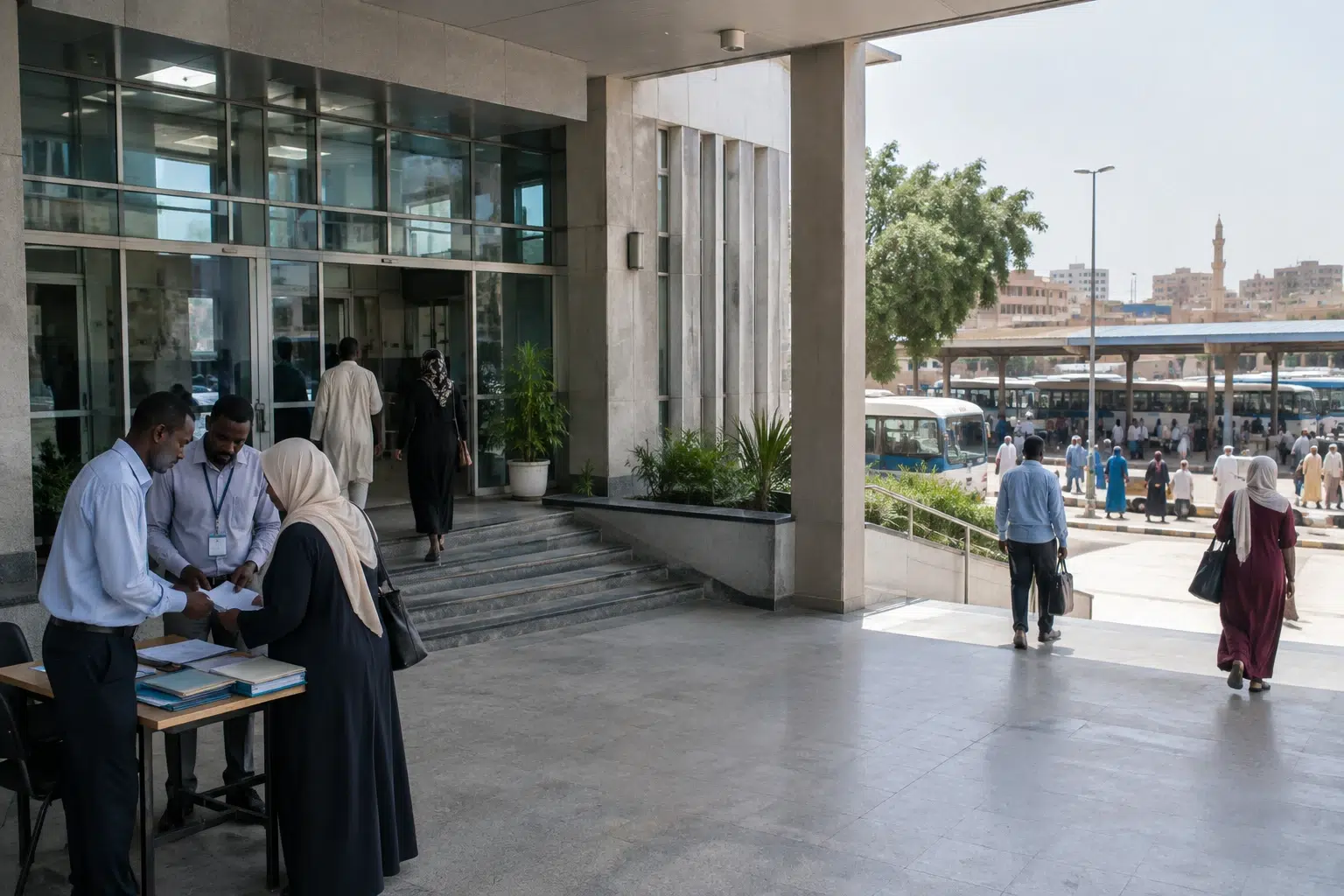
For Sudanese people, ordinary journeys have become unpredictable: waiting for a bus, crossing a market or sleeping near an airport can now expose them to strikes from the sky. In a matter of days, attacks reported in Kordofan, Darfur and near Khartoum have killed more than 100 people, according to tallies that are still provisional.
Civilian locations caught in the escalation
On Sunday 18 October, a drone strike hit a bus station in Al-Dibab, in western Kordofan, where travellers were waiting to return home. Witnesses and medical officials cited by several media outlets report at least 80 deaths. The reported tally distinguishes between people killed at the scene and others who died after being transferred; available figures remain difficult to verify independently.
Two days earlier, a strike targeting a livestock market in Nyala, the capital of South Darfur held by the Rapid Support Forces (RSF), reportedly killed around 30 people and wounded 47. The Sudanese army acknowledged strikes in the city, saying it had targeted RSF command facilities. The paramilitaries and local sources dispute this account and denounce civilian deaths. The precise attribution and circumstances of the attack therefore remain contested.
On Monday 19 October, a strike near Khartoum airport killed three children, according to a local violence-monitoring organisation, in information reported separately by the Associated Press. This documented toll in Khartoum adds to the deaths reported elsewhere, but does not by itself confirm a consolidated total for all the recent attacks.
A war spreading beyond the front lines
The war between the Sudanese Armed Forces and the RSF broke out in April 2023. The army’s recapture of Khartoum in March 2025 did not end the fighting or ensure the capital’s lasting security. Clashes have shifted and intensified in several regions, including Kordofan and Darfur, while both sides can strike at a distance using drones.
The change is also technological and tactical. These aircraft can reach infrastructure and densely populated areas far from immediate ground fighting. They make civilian travel, market trading and the delivery of aid more difficult. For families, the risk is therefore not confined to neighbourhoods on a front line: it can affect roads, stations and places where daily activities take place.
The Office of the United Nations High Commissioner for Human Rights said it had documented at least 1,120 civilians killed by drone strikes in the first half of 2026. In May, the UN had already described drones as the leading cause of conflict-related civilian deaths, after recording at least 880 deaths between January and April. These figures document cases known to the organisation; they are not necessarily a comprehensive tally.
Responsibility to be established, civilians to be protected
Strikes attributed to both sides make it necessary to distinguish military statements from verified facts. In Nyala, the army says it targeted objectives linked to the RSF; the latter say civilians were killed. In Al-Dibab, available information describes a deadly attack on a bus station, but attribution and any military presence must be established through an independent investigation.
International humanitarian law requires the parties to distinguish civilians from combatants and take precautions to reduce harm to the population. An attack on an alleged military objective is not, in itself, enough to establish that these rules were respected. The repeated deadly strikes on markets and transport hubs make independent documentation of victims and targets all the more urgent.
The consequences are not the same for everyone. People in rural areas or contested cities often have fewer options for avoiding a dangerous road or accessing medical care. In Khartoum, proximity to the airport and strategic infrastructure puts nearby neighbourhoods at risk. In Nyala and Kordofan, attacks on markets and transport routes can also disrupt supplies and the movement of people already caught up in the conflict.
The regional challenge: protecting civilians and reviving mediation
The crisis directly affects the Horn of Africa and neighbouring countries, which face population displacement and the impact of a protracted war. The Intergovernmental Authority on Development (IGAD), an East African regional organisation, called in September for an end to hostilities, the protection of civilians and a Sudanese-led political process. It also called for efforts to be coordinated with the African Union, the UN and the Arab League.
This diplomatic path remains fragile. The African Union suspended Sudan’s participation in its activities in 2019, and IGAD has recently called for fragmented mediation efforts to be avoided. For regional actors, the challenge is twofold: to contain the effects of the war beyond Sudan’s borders and support a political process that is not limited to an agreement between the two armed forces.
In the short term, developments to watch include verification of the death tolls, access for medical and humanitarian teams to affected areas, and any investigations into the strikes. But the growing number of long-range attacks highlights a broader emergency: without a ceasefire and concrete guarantees for civilians, places of everyday life will remain exposed, from Khartoum to the cities of Darfur and Kordofan.
For the references and statements cited, see the report on the strike near Khartoum, the reported toll in Nyala, the UN data on drones and the IGAD statement on Sudan.