Algeria
 Egypt
 Libya
 Morocco
 Sudan
 Tunisia
 Benin
 Burkina Faso
 Cabo Verde
 Côte d'Ivoire
 Ghana
 Guinea
 Guinea-Bissau
 Liberia
 Mali
 Mauritania
 Niger
 Nigeria
 Sierra Leone
 The Gambia
 Togo
 Cameroon
 Central African Republic
 Chad
 DR Congo
 Equatorial Guinea
 Gabon
 Republic of the Congo
 São Tomé and Príncipe
 Burundi
 Comoros
 Djibouti
 Eritrea
 Ethiopia
 Kenya
 Madagascar
 Malawi
 Mauritius
 Mozambique
 Rwanda
 Seychelles
 Somalia
 South Sudan
 Tanzania
 Uganda
 Angola
 Botswana
 Eswatini
 Lesotho
 Namibia
 South Africa
 Zambia
 Zimbabwe
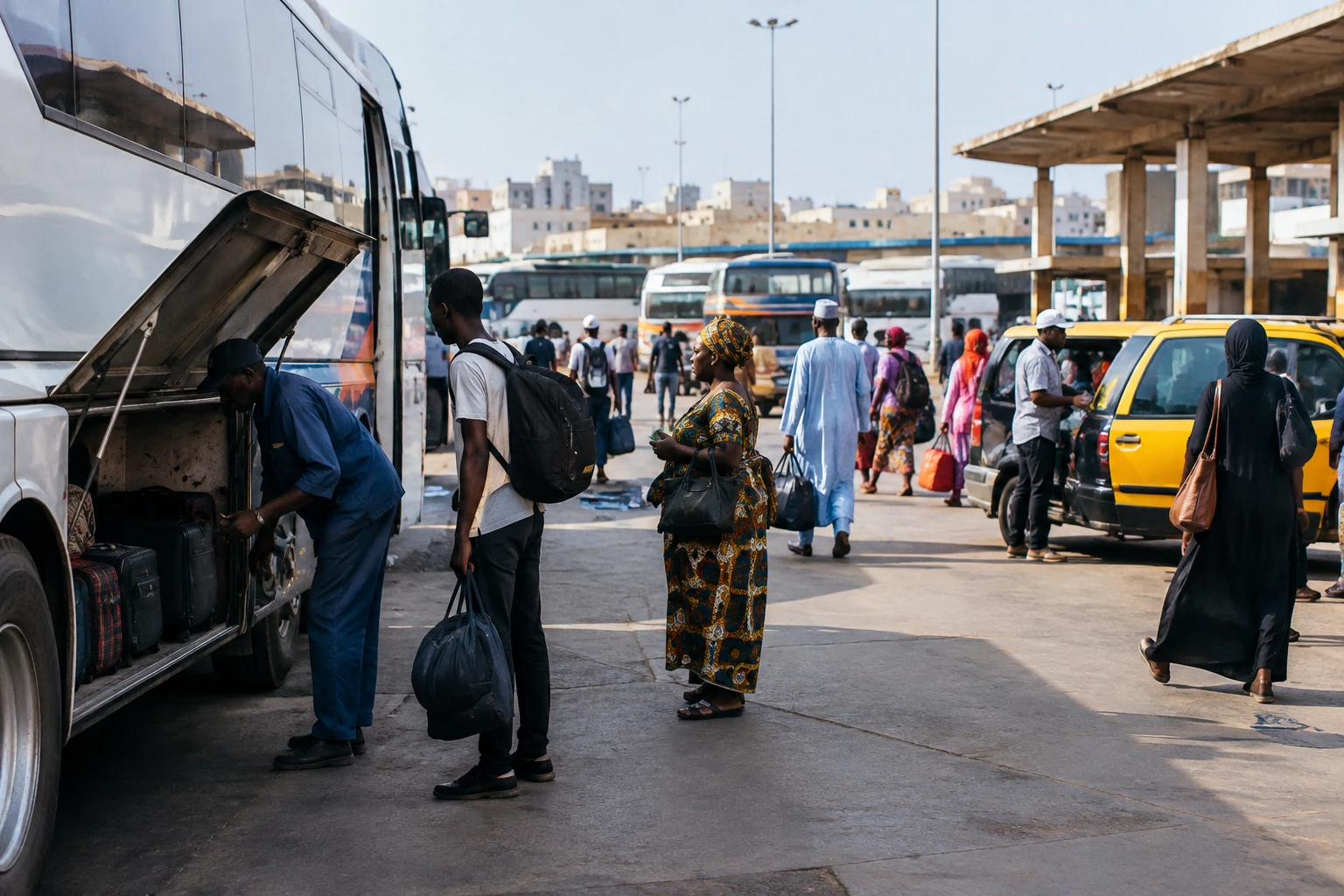
In Dakar, discussions between the Economic Community of West African States (ECOWAS) and the Confederation of Sahel States (AES) have brought a practical question back to the centre of the regional debate: how can ties between neighbouring countries be preserved after a major political rupture? The ministerial meeting on 17 October 2026 opens a negotiating path, but does not restore the former institutional relationship or the membership of the three Sahelian states.
A political rupture, enduring ties
Burkina Faso, Mali and Niger left ECOWAS after announcing their joint withdrawal and creating the AES, a confederation bringing together the three countries. The separation has redrawn regional relations without erasing the human, economic and social exchanges that cross their borders. Markets, trade routes and families remain connected on both sides.
ECOWAS is the West African regional organisation tasked with promoting cooperation and integration among its member states. The departure of the three countries therefore raises practical issues: the movement of people and goods, coordination between administrations and cooperation on shared challenges. The terms of these relations remain to be negotiated.
The Dakar meeting was convened following decisions taken by ECOWAS heads of state and government at their conference on 19 July 2026 in Lungi, Sierra Leone. It also follows consultations held in Bamako. Senegal’s Ministry of Foreign Affairs describes the meeting as the first ministerial encounter between the two organisations since the three countries’ official withdrawal.
Working groups, not an agreement already reached
On 17 October, the ECOWAS delegation was led by Cheikh Niang, Senegal’s Minister of African Integration and Foreign Affairs, who chairs the organisation’s Council of Ministers. The AES delegation was headed by Karamoko Jean-Marie Traoré, Burkina Faso’s Minister of Foreign Affairs and chair of the confederation’s ministerial steering committee.
The two delegations agreed to establish joint thematic working groups. Their task will be to continue technical discussions and prepare a possible framework cooperation agreement. Their findings will be submitted to ministers ahead of a future session, whose date and venue have not yet been set. This is therefore a process under way, not a finalised or signed text.
In their joint communiqué, the parties refer to “good neighbourliness”, respect for sovereignty and the well-being of West African populations. They say they want an “balanced” and “realistic” framework based on the interests of the people. These formulations signal a willingness to maintain dialogue without, in themselves, resolving the political disagreements that accompanied the separation.
The meeting also identified areas of common interest around which to organise future discussions. But the communiqué does not yet set out the priorities selected or the practical mechanisms envisaged. That is precisely the task of the joint groups: to turn general principles into proposals that each side can consider.
For the public, the stakes are measured at the borders
For residents and businesses, the significance of these discussions will depend less on statements than on the rules that follow. Clearer procedures could facilitate trade and travel. Conversely, differences between administrative frameworks risk making daily life more difficult for traders, transport operators and families living in border areas.
The effects will not be the same everywhere. Formal businesses may be directly affected by customs rules and regional agreements. In the informal economy, much of the trade depends on frequent crossings and local networks. People in regions far from the capitals may also feel changes at border posts sooner than central administrations do.
The political context remains sensitive. The governments of Burkina Faso, Mali and Niger defend their confederation and their choices on cooperation. ECOWAS, for its part, must preserve its capacity for regional action and maintain relations with its neighbours. Technical dialogue can help manage shared interests without erasing these divergent positions.
Senegal is playing the role of host and facilitator. President Bassirou Diomaye Faye, also described in the communiqué as the sitting chair of the ECOWAS Conference of Heads of State and Government, was thanked by both delegations. For Dakar, the challenge is to support a regional discussion while hosting representatives of two groupings that are now distinct.
Implementation will be the test
The significance of the meeting extends beyond relations between ECOWAS and the AES. It concerns how West Africa can manage disagreements while protecting the ties between its societies. The withdrawal of member states has not eliminated regional interdependence; it makes negotiating cooperation rules suited to the new situation more necessary.
The next step will be to set up the working groups in practice, followed by ministers’ consideration of their proposals. Dates remain to be confirmed through diplomatic channels. Above all, it will be important to see whether the discussions produce specific mechanisms in areas of common interest, and whether these meet the needs of the public as well as governments’ priorities.
The key details of the meeting are reported by the ECOWAS communiqué, Senegal’s Ministry of Foreign Affairs and the Malian news outlet Bamada. Cross-checking these sources confirms the date, the heads of delegation and the agreement to form joint working groups. What happens next will depend on their timetable and the proposals they submit to ministers.