Algeria
 Egypt
 Libya
 Morocco
 Sudan
 Tunisia
 Benin
 Burkina Faso
 Cabo Verde
 Côte d'Ivoire
 Ghana
 Guinea
 Guinea-Bissau
 Liberia
 Mali
 Mauritania
 Nigeria
 Senegal
 Sierra Leone
 The Gambia
 Togo
 Cameroon
 Central African Republic
 Chad
 DR Congo
 Equatorial Guinea
 Gabon
 Republic of the Congo
 São Tomé and Príncipe
 Burundi
 Comoros
 Djibouti
 Eritrea
 Ethiopia
 Kenya
 Madagascar
 Malawi
 Mauritius
 Mozambique
 Rwanda
 Seychelles
 Somalia
 South Sudan
 Tanzania
 Uganda
 Angola
 Botswana
 Eswatini
 Lesotho
 Namibia
 South Africa
 Zambia
 Zimbabwe
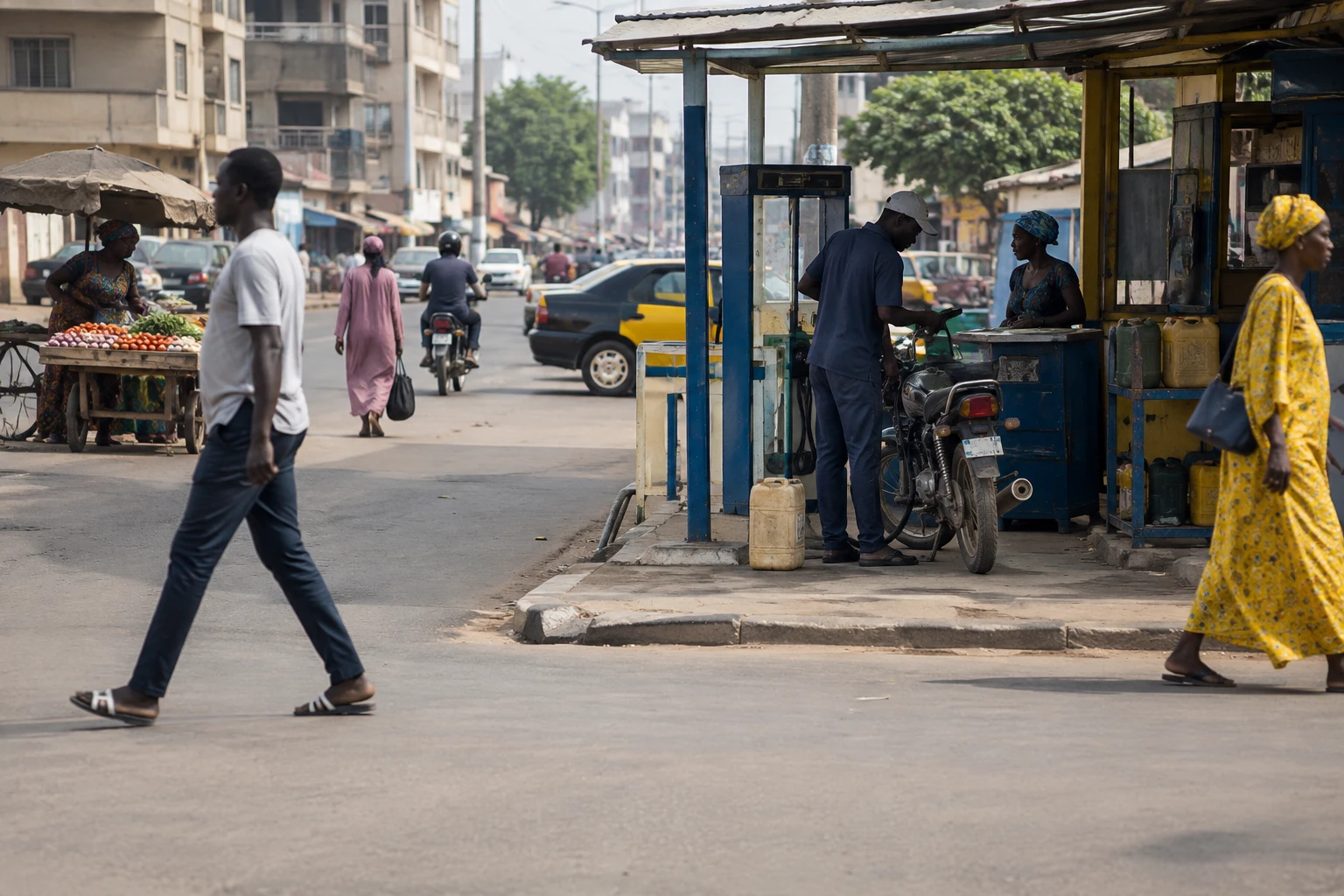
Rising oil revenues can support the budgets of exporting countries. But at the pump and in the market, the same energy shock drives up costs for households and businesses. For African economies, the overall impact therefore depends less on a continental average than on each country’s place in global trade and how it uses its resources.
Regional growth masks disparities
In Bangkok on 15 October 2026, the International Monetary Fund’s (IMF) director of the African Department, Mauritanian national Zeine Zeidane, argued that the regional economy was capable of absorbing shocks. The institution forecasts growth of 4.5% in sub-Saharan Africa in 2026 and 2027. But this average does not mean that countries, or their people, experience economic conditions in the same way.
The IMF’s latest update highlights this contrast: resource-rich economies are proving more resilient, while activity is slowing in countries less endowed with hydrocarbons and minerals. The institution estimates that export revenues and earlier reforms have cushioned some of the shock linked to the war in the Middle East. It warns, however, that debt, falling aid and weak reserves are reducing room for manoeuvre in the face of another shock. The African Development Bank (AfDB), in its own projections published in 2026, forecasts continental growth of 4.2% this year. The methodologies, coverage and publication dates differ, so these figures are not directly interchangeable.
The regional context also matters. In Central Africa, the countries of the Economic and Monetary Community of Central Africa (CEMAC) share the CFA franc and a central bank. Their fiscal policies can therefore affect the financial stability of the union as a whole. In West Africa, Niger and Senegal operate within distinct economic frameworks, even though their choices matter to partners in the Economic Community of West African States (ECOWAS).
External shocks do not benefit everyone
In his interview, Zeidane distinguishes between several situations. Oil exporters can benefit from additional public revenues and foreign exchange when prices rise. Producers of minerals such as copper, gold and cobalt can also benefit from higher prices. By contrast, countries that import energy and agricultural inputs see their external bills increase. In all cases, rising oil prices put pressure on domestic prices.
The IMF official recommends that countries receiving windfall revenues fund useful investments, clear some domestic arrears and reduce costly borrowing in their domestic markets. For CEMAC members, he also stresses the need to keep public deficits under control in order to preserve the stability of the monetary union. The issue is a practical one: a temporary rise in oil revenues does not, by itself, guarantee better-funded public services or a more diversified economy.
The allocation of energy subsidies illustrates this dilemma. As a rule, the IMF favours targeted support for low-income households over a general fuel subsidy. The argument is both fiscal and distributive: a uniform subsidy may benefit consumers who buy the most fuel more than others. However, the choice depends on governments’ ability to identify the households concerned quickly and provide them with reliable support. Without such systems, rising prices can feed directly into transport, food and informal-sector activities.
National paths under pressure
The Democratic Republic of the Congo (DRC), whose capital is Kinshasa, combines significant mineral resources with urgent spending needs. During the interview, Zeidane referred to the Ebola outbreak and the possibility of using the IMF’s Resilience and Sustainability Facility’s health window. Since then, the Fund has also described the outbreak and the ongoing conflict in the country’s east as pressures on public finances. Financial support can help meet immediate needs, but it cannot replace national health capacity or the lasting provision of services in affected areas.
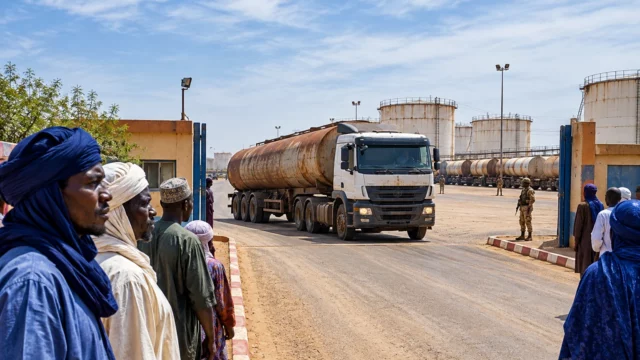
In Niger, a Sahelian country that has become an oil producer, the IMF official described fiscal policy as prudent and the use of revenues as reasonable. In February 2026, the Fund published a staff-level agreement on reviews of existing programmes. This assessment remains the IMF’s; it is not enough to establish how oil revenues translate into services or investments in each region.
In Senegal, the staff-level agreement announced by the IMF in September 2026 concerns a programme worth about $2.2bn over three years. The Senegalese government confirmed the amount. This is a staff-level agreement, not proof that all the funds have already been disbursed. Senegalese authorities present their programme as their own economic strategy, while the IMF believes it can receive support from the international community. Debt treatment, meanwhile, is to be discussed between Dakar and its official and private creditors. Social spending has been identified as a priority, but its effective protection will depend on budget decisions and their implementation.
Households at the heart of the next test
Oil prices are only part of the pressure. The cost of fertilisers and other inputs weighs on farms, while climate shocks can reduce harvests. The IMF’s regional report published in April estimated that a 20% rise in international food prices could push more than 20 million additional people into moderate or severe food insecurity in sub-Saharan Africa. This is a projection, not an observed outcome.
Falling foreign aid also complicates financing for the most vulnerable countries, particularly those that struggle to borrow on international markets. The IMF argues that well-sequenced reforms, backed by stronger public-sector capacity and a credible social contract, could increase output by up to 20% over five to ten years. This prospect depends, however, on national choices: improving revenue collection, supporting local businesses and preserving investment in health, education and infrastructure.
The question facing governments is therefore not simply whether growth is holding up. It is also necessary to ask who benefits from it, who bears the higher costs and whether windfall revenues strengthen economies beyond the next commodity cycle. The next budget decisions, debt negotiations and implementation of announced programmes will show how much difference this makes.