Algeria
 Egypt
 Libya
 Morocco
 Sudan
 Tunisia
 Benin
 Burkina Faso
 Cabo Verde
 Côte d'Ivoire
 Ghana
 Guinea
 Guinea-Bissau
 Liberia
 Mali
 Mauritania
 Niger
 Nigeria
 Senegal
 Sierra Leone
 The Gambia
 Togo
 Cameroon
 Central African Republic
 Chad
 DR Congo
 Equatorial Guinea
 Gabon
 Republic of the Congo
 São Tomé and Príncipe
 Burundi
 Comoros
 Djibouti
 Eritrea
 Ethiopia
 Kenya
 Madagascar
 Malawi
 Mauritius
 Mozambique
 Rwanda
 Seychelles
 Somalia
 South Sudan
 Tanzania
 Uganda
 Angola
 Botswana
 Eswatini
 Lesotho
 Namibia
 Zambia
 Zimbabwe

A colony of bees in a wall or garden structure poses a very real dilemma: how can residents be protected without destroying pollinators that play a part in the life of ecosystems? In the Western Cape province, a relocation initiative is trying to meet both needs.
When a hive settles near homes
In Somerset West, near Cape Town, around 40,000 bees had settled in a concrete garden structure. According to reports of the intervention, those responsible for the site chose to call on Lourens Kruger and his son Dylan rather than have the colony exterminated.
Their organisation, Cape Honeybee Conservancy, relocates colonies found in homes, ceilings, walls or trees. It is reported to have relocated more than 250 colonies since 2018. This figure describes the tally reported for the initiative; it is not a census of wild colonies in the region.
The presence of a hive can concern residents, particularly families with young children. A disturbed colony may defend its nest, and stings pose risks, especially for people with allergies. Animals may also be vulnerable. But the mere presence of bees does not mean an attack is imminent.
Mike Allsopp, a researcher at the Agricultural Research Council of South Africa, notes that some colonies remain in buildings for a long time without being noticed. This observation points to the need to distinguish actual nuisance from perceived risk: intervening without care can itself trigger a defensive response.
A delicate relocation, not a simple capture
Relocation requires a methodical intervention. The beekeepers transfer the comb containing the queen and larvae into a hive. The other bees then gradually join the colony. The method aims to preserve the group’s social structure rather than scatter or destroy the insects.
The work does not end with the move. A colony needs to find a place where it can feed and settle for the long term. Lourens Kruger is reported to have established six refuges on farms in the region. The sites mentioned include the organic wine estate Radford Dale, in Elgin, which is said to host nine hives from urban areas.
These figures and examples describe the local scheme reported for this operation. They do not, on their own, make it possible to assess the long-term survival of relocated colonies. This depends, among other things, on the availability of flowers, water and suitable habitat.
Native bees at the heart of Cape landscapes
In the south of the country, the Cape honey bee, Apis mellifera capensis, is a native subspecies. It is found in the fynbos biome, a type of vegetation unique to this part of southern Africa. Its visits contribute to the pollination of wild plants and crops that depend on insects.
The role of pollinators extends beyond honey production. Bees contribute to plant reproduction and support some agricultural production. The South African government cites fruit, vegetables, citrus, avocados and macadamia nuts among the crops concerned. The South African Department of Agriculture also highlights pressures linked to habitat loss and the inappropriate use of pesticides.
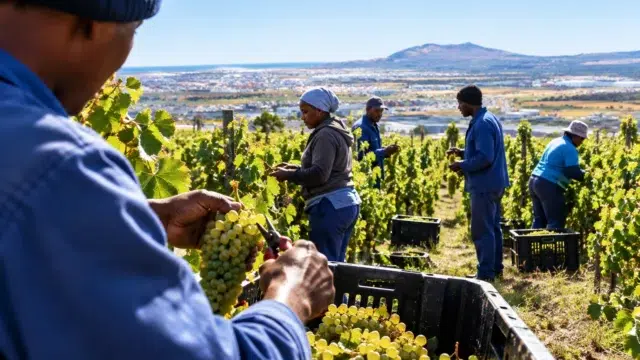
Agricultural refuges can therefore offer a compromise between residential safety and conservation. Radford Dale says its organic practices exclude pesticides and herbicides on the farm, reducing one potential source of exposure. But a vineyard is not automatically an ideal refuge: the quality of a site also depends on the floral resources available throughout the seasons.
Research conducted in the Western Cape shows that managed bees use plant resources spread across the landscape, beyond cultivated plots alone. Preserving natural areas around farms is therefore just as important as choosing a site for hives. A university study on floral resources and pollination in the region highlights this dependence on nearby habitats.
A local issue with regional agricultural significance
For residents, the expected benefit is immediate: reducing the risk associated with a colony settled near a pathway or home. For farmers, beekeepers and natural-area managers, the challenge plays out over a different timescale: maintaining pollinator populations and environments where they can feed.
However, relocation alone cannot provide the answer. South African authorities have also identified pesticides, habitat loss and climate change among the threats facing bees. Managing flowering areas, co-ordinating between farmers and beekeepers, and taking care when applying agricultural treatments complement case-by-case interventions.
In southern Africa, where agricultural sectors and natural environments extend beyond national borders, this issue also concerns the exchange of practices and the health of regional ecosystems. South Africa is a member of the Southern African Development Community (SADC), which brings together countries in the region. The Cape case does not represent all their realities, but it illustrates a shared tension: reconciling public safety, agricultural activity and biodiversity protection.
The outcome will become clear over time. It remains to be seen whether relocated colonies adapt, whether the refuges have sufficient resources and whether interventions remain accessible to residential neighbourhoods as well as farms. Relocating a hive can sometimes prevent its destruction; protecting pollinators also requires safeguarding the landscapes on which they depend.