Algeria
 Egypt
 Libya
 Morocco
 Tunisia
 Benin
 Burkina Faso
 Cabo Verde
 Côte d'Ivoire
 Ghana
 Guinea
 Guinea-Bissau
 Liberia
 Mali
 Mauritania
 Niger
 Nigeria
 Senegal
 Sierra Leone
 The Gambia
 Togo
 Cameroon
 Central African Republic
 Chad
 DR Congo
 Equatorial Guinea
 Gabon
 Republic of the Congo
 São Tomé and Príncipe
 Burundi
 Comoros
 Djibouti
 Eritrea
 Ethiopia
 Kenya
 Madagascar
 Malawi
 Mauritius
 Mozambique
 Rwanda
 Seychelles
 Somalia
 South Sudan
 Tanzania
 Uganda
 Angola
 Botswana
 Eswatini
 Lesotho
 Namibia
 South Africa
 Zambia
 Zimbabwe
In Sudan, a declared willingness to negotiate is not enough to open a way out. It takes on meaning when accompanied by a verifiable ceasefire, humanitarian access and a process in which Sudanese civilians have a place.
On 15 October 2026, General Abdel Fattah al-Burhan said he had written to US President Donald Trump to reiterate his government’s commitment to Washington’s peace efforts. The announcement comes as fighting continues and several mediation initiatives seek to bring the parties closer together.
A war rooted in an interrupted transition
Since 15 April 2023, the Sudanese army, led by al-Burhan, has been fighting the Rapid Support Forces (RSF), a paramilitary group commanded by Mohamed Hamdan Dagalo, known as Hemedti. The rupture between the two men is rooted in the failure of the political transition launched after the fall of Omar al-Bashir in 2019. Disagreement over integrating the RSF into the army, in particular, blocked negotiations before hostilities broke out.
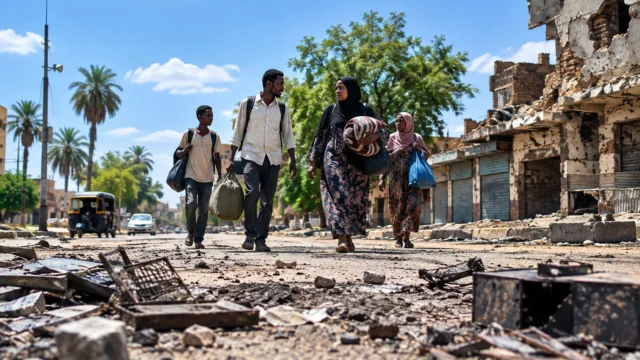
The fighting has hit Khartoum, the capital, as well as Darfur and the Kordofan regions. It has caused mass displacement and disrupted services, markets and livelihoods. People do not all experience the war in the same way: city residents face fighting and supply disruptions, while many rural communities are exposed to violence, isolation and difficulties in delivering aid.
Sudan is a member of the Intergovernmental Authority on Development (IGAD), a regional organisation in the Horn of Africa. IGAD, the African Union, the UN and other actors have supported mediation efforts since the conflict began. In June 2026, these institutions again called for an inclusive political process led by the Sudanese themselves.
A diplomatic message, but no deal announced
In his message published on X, al-Burhan said his government was ready to work “in good faith with all parties” to achieve a just and lasting peace, according to available accounts of his post. He also emphasised the country’s sovereignty, its unity and the dignity of its people.
The statement does not, however, specify the contents of the letter sent to Donald Trump or the concrete measures the army would accept to stop the fighting. It makes no mention of any agreement reached with the RSF. The announcement is therefore a political signal, not proof that negotiations have succeeded.
Washington is part of the so-called “Quad” mechanism, alongside Egypt, Saudi Arabia and the United Arab Emirates, which is tasked with supporting mediation efforts. These states’ interests and relations with Sudanese actors are not identical. Coordination among mediators, as well as the inclusion of Sudanese civilian forces, will therefore weigh on the credibility of any initiative.
Violence undermines trust
Al-Burhan’s message was published after US adviser Massad Boulos condemned a drone strike reported on 9 October in An Nuhud, in West Kordofan. Initial reports put the death toll at at least 12 civilians. A human rights documentation organisation also reported 12 deaths after a strike in the town. In the absence of a full independent investigation, attribution of the attack and the precise circumstances should be treated with caution.
A few days earlier, on 5 October, a joint force of armed groups allied with the army had announced that it had retaken Bir Saliba in West Darfur after clashes with the RSF. The announcement describes a military advance claimed by one side; on its own, it does not say whether control of the area is lasting or what the situation is for civilians there.
These developments highlight the gap between diplomatic statements and realities on the ground. Reported strikes, battles for control of towns and population displacement are fuelling distrust. Without guarantees to protect civilians and regular access for aid workers, a truce risks remaining fragile, even if the parties agree to discuss one.
The test: verifiable commitments
For residents, the immediate issue is not simply whether Khartoum and Washington are exchanging messages. It is whether they can travel safely, receive medical care and access food and water. Traders and informal-economy workers, who depend on daily travel, are particularly exposed to checkpoints, fighting and road closures. In remote regions, communication breakdowns also make it harder to verify casualty figures and organise aid.
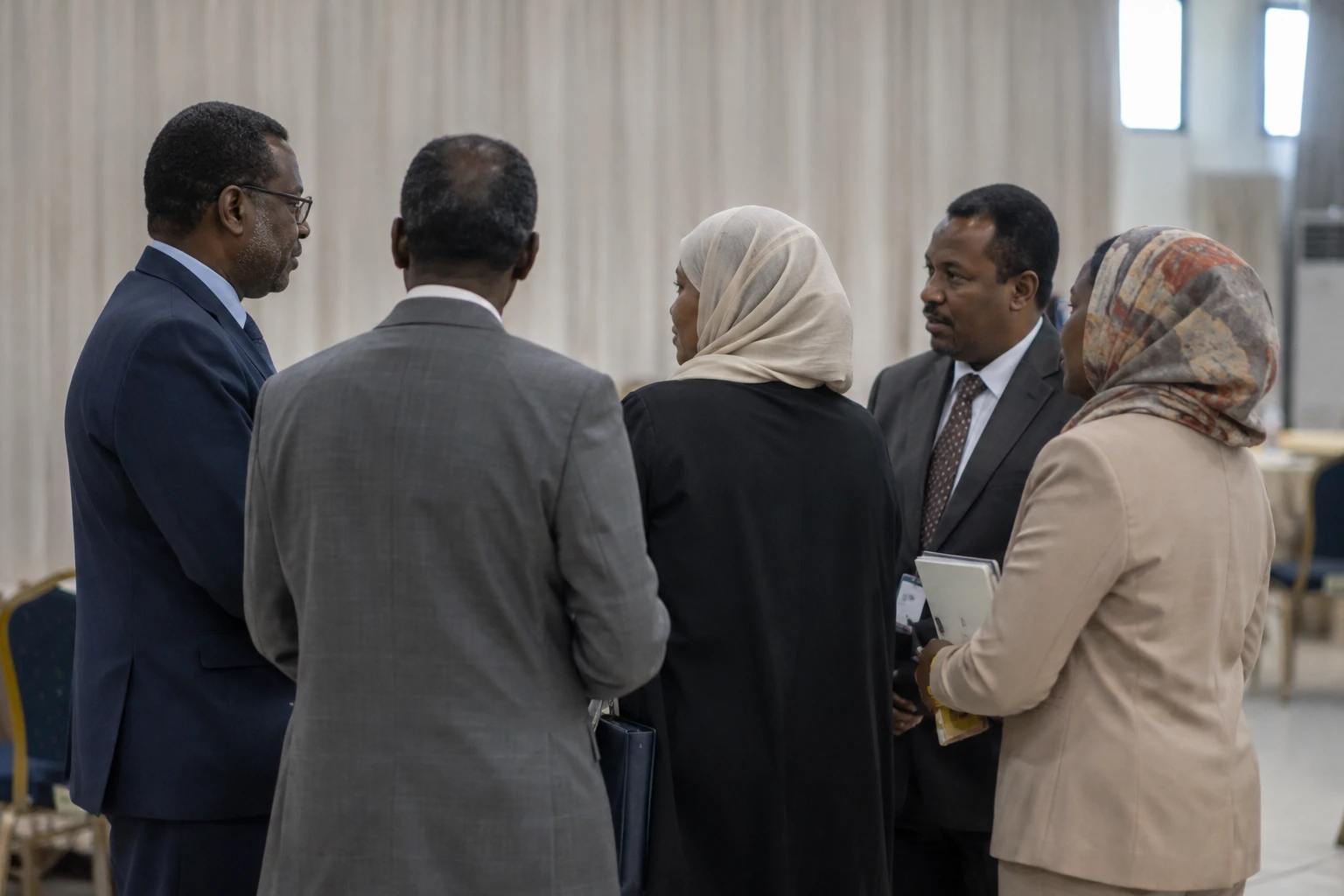
The regional impact is direct. The conflict in Sudan affects neighbouring countries and involves several diplomatic frameworks, from IGAD to the United Nations. In July 2026, IGAD brought together envoys and representatives of the African Union, the European Union, the Arab League and the UN to coordinate peace efforts. This consultation highlights the risk that competing initiatives could overlap or contradict one another.
What happens next will therefore depend less on the wording of a letter than on the steps that follow it: a verifiable halt to attacks, humanitarian access, a monitoring mechanism and political dialogue involving Sudanese civilian representatives. IGAD and the African Union will also need to maintain their regional role, while international mediators seek commitments from both forces. For now, al-Burhan’s statement opens up a diplomatic possibility, but has not yet changed the conditions of the war.
Background and corroboration: report on al-Burhan’s statement, Sudan Tribune on the message to Trump and the mediation mechanism, preliminary documentation on the An Nuhud strike and Quintet consultations with Sudanese actors.