Algeria
 Egypt
 Libya
 Morocco
 Sudan
 Tunisia
 Benin
 Burkina Faso
 Cabo Verde
 Ghana
 Guinea
 Guinea-Bissau
 Liberia
 Mali
 Mauritania
 Niger
 Nigeria
 Senegal
 Sierra Leone
 The Gambia
 Togo
 Cameroon
 Central African Republic
 Chad
 DR Congo
 Equatorial Guinea
 Gabon
 Republic of the Congo
 São Tomé and Príncipe
 Burundi
 Comoros
 Djibouti
 Eritrea
 Ethiopia
 Kenya
 Madagascar
 Malawi
 Mauritius
 Mozambique
 Rwanda
 Seychelles
 Somalia
 South Sudan
 Tanzania
 Uganda
 Angola
 Botswana
 Eswatini
 Lesotho
 Namibia
 South Africa
 Zambia
 Zimbabwe
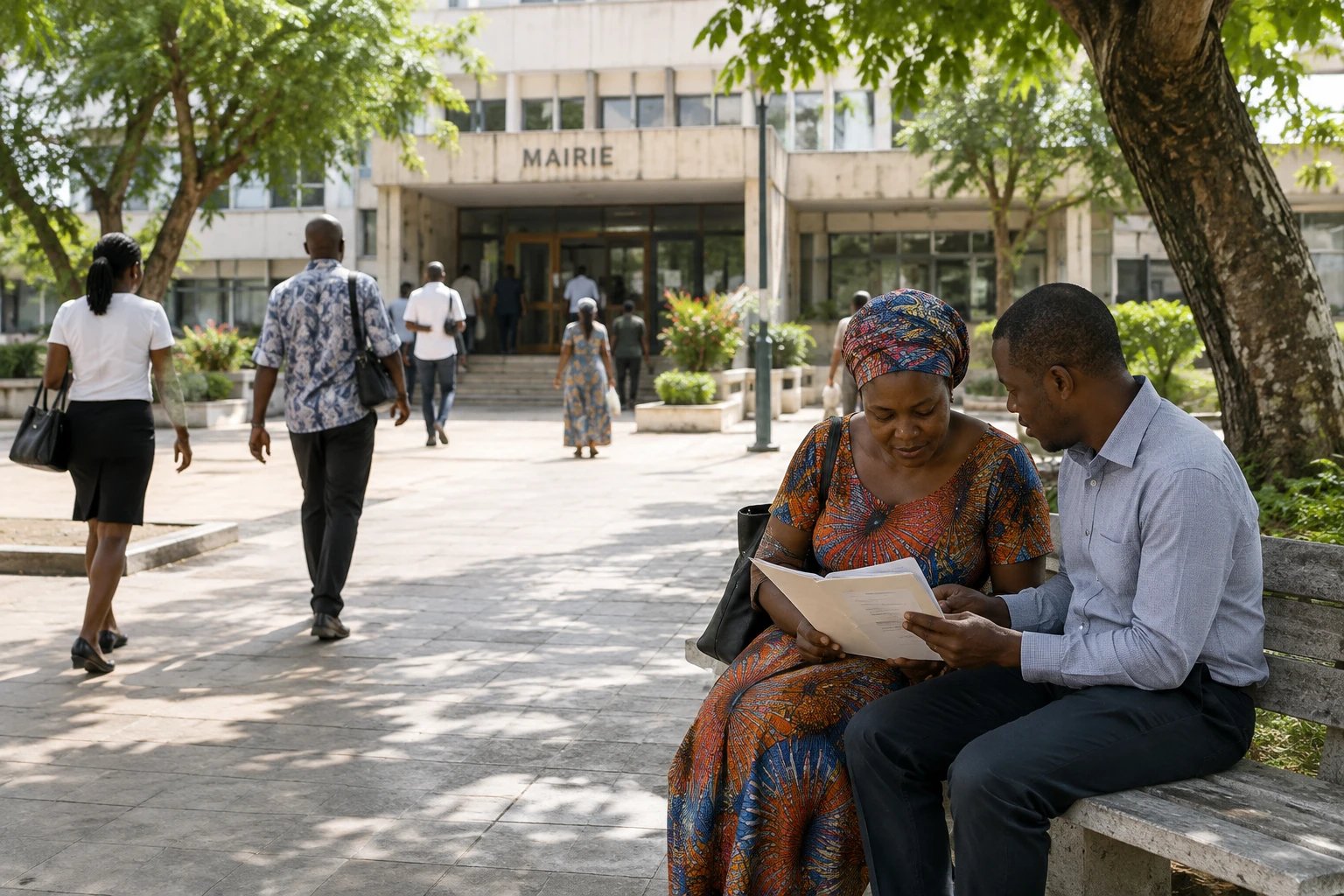
A budget up 6.4%, growth forecast at 6.6% and a projected decline in the public deficit: Côte d’Ivoire’s 2027 draft budget sets out an ambitious equation. The question remains how to fund investment without easing efforts to keep public finances under control.
Draft finance bill enters parliamentary debate
The Council of Ministers adopted the 2027 draft finance bill on Wednesday 14 October 2026 in Abidjan. It sets out a budget balanced between revenue and expenditure at CFAF 18,466.1 billion, compared with CFAF 17,350.2 billion in 2026. The increase is 6.4%, according to figures published by the government and reported by the Ivorian Press Agency and Fraternité Matin.
This amount is equivalent to about $31.56 billion, according to the conversion given in the published data. The draft must now be examined by Parliament, in line with the constitutional procedure. It is therefore not yet the definitively adopted budget.
The plan is based on economic growth forecast at 6.6% in 2027, following 6.2% in 2026. The budget deficit — the gap between government expenditure and revenue — is expected to reach 3.5% of gross domestic product, down from 3.8% this year. These figures are forecast targets, not results already recorded.
The budget is organised into 27 appropriations and 160 programmes, including 40 special Treasury accounts. This breakdown gives an indication of the structure of spending, but is not enough to show what households, businesses or local authorities will see on the ground.
National Development Plan at the heart of funding needs
The government presents the budget as a lever for the 2026-2030 National Development Plan, a multi-year roadmap bringing together the country’s investment priorities. An allocation of CFAF 70 billion is earmarked to fund studies related to resource mobilisation and the preparation of projects under the plan.
This funding comes ahead of construction work: it is intended, in particular, to help design projects and prepare their financing. Its value will therefore depend on the quality of the studies, the selection of investments and the ability to turn prepared plans into completed projects. The announced appropriations do not, by themselves, mean that the projects are already funded or under way.
The draft also provides CFAF 100 billion to launch the activities of the Côte d’Ivoire Sovereign Fund. Creating such a vehicle could open up long-term financing opportunities, but the information made public does not yet specify its priority sectors, future resources or governance rules. These details will be essential to understanding its role and assessing the transparency of its decisions.
Meanwhile, the National Development Plan’s significance goes beyond major national projects. Public investment can support activity in urban centres and regions, improve infrastructure and contribute to employment. But its effects are neither automatic nor uniform: the location and timing of projects, and local companies’ access to contracts, will matter as much as the budget allocations.
Lower deficit: a target to maintain
Reducing the deficit from 3.8% to 3.5% of GDP while increasing budgetary resources requires revenue to rise or spending to be prioritised more effectively. This tension is central to implementation: the state must fund development priorities while meeting its public finance consolidation targets.
For the authorities, the expected growth rate should help sustain this trajectory. However, an economic forecast does not guarantee the corresponding revenue. Results will also depend on changes in economic activity, tax collection and the timing of expenditure. Parliament will have to examine these assumptions alongside the appropriations and priorities set out in the budget bill.
Fiscal discipline is not simply a matter of reducing the headline deficit. It is also measured by whether planned spending is carried out and by the quality of the services delivered. For Ivorians, the practical question will be whether the allocated resources translate into tangible improvements in the political capital, Yamoussoukro, as well as in Abidjan and other regions.
A regional test of credibility and investment
Côte d’Ivoire belongs to the West African Economic and Monetary Union, which shares the CFA franc and a framework for economic coordination. It is also a member of ECOWAS, a West African regional organisation. In this integrated area, Côte d’Ivoire’s budget choices are of interest to investors and regional partners, although the fiscal trajectories of individual states are not identical.
The Ivorian draft combines an increase in planned spending with a targeted reduction in the deficit. Its credibility will depend on implementation and the publication of detailed information: which projects will be selected, how the sovereign fund will be overseen, and on what timetable will spending be carried out? These are the details that will show whether the funding announcements become productive investments.
The next step is parliamentary examination of the finance bill and its tax annex. Debates will have to clarify the trade-offs between investment, current spending and expected revenue. For West African economies facing infrastructure needs and financing constraints, Côte d’Ivoire’s experience will be followed through these concrete choices rather than on the basis of the amounts announced alone.
The draft figures were presented by the Ivorian government, and cross-checked against reports by the Ivorian Press Agency and Fraternité Matin. Multi-year budget guidelines are also presented by the Directorate-General of the Budget and Finance.