
 Algeria
 Egypt
 Libya
 Morocco
 Sudan
 Tunisia
 Benin
 Burkina Faso
 Cabo Verde
 Côte d'Ivoire
 Ghana
 Guinea
 Guinea-Bissau
 Liberia
 Mali
 Mauritania
 Niger
 Nigeria
 Senegal
 Sierra Leone
 The Gambia
 Togo
 Cameroon
 Central African Republic
 Chad
 Equatorial Guinea
 Gabon
 Republic of the Congo
 São Tomé and Príncipe
 Burundi
 Comoros
 Djibouti
 Eritrea
 Ethiopia
 Kenya
 Madagascar
 Malawi
 Mauritius
 Mozambique
 Rwanda
 Seychelles
 Somalia
 South Sudan
 Tanzania
 Uganda
 Angola
 Botswana
 Eswatini
 Lesotho
 Namibia
 South Africa
 Zambia
 Zimbabwe
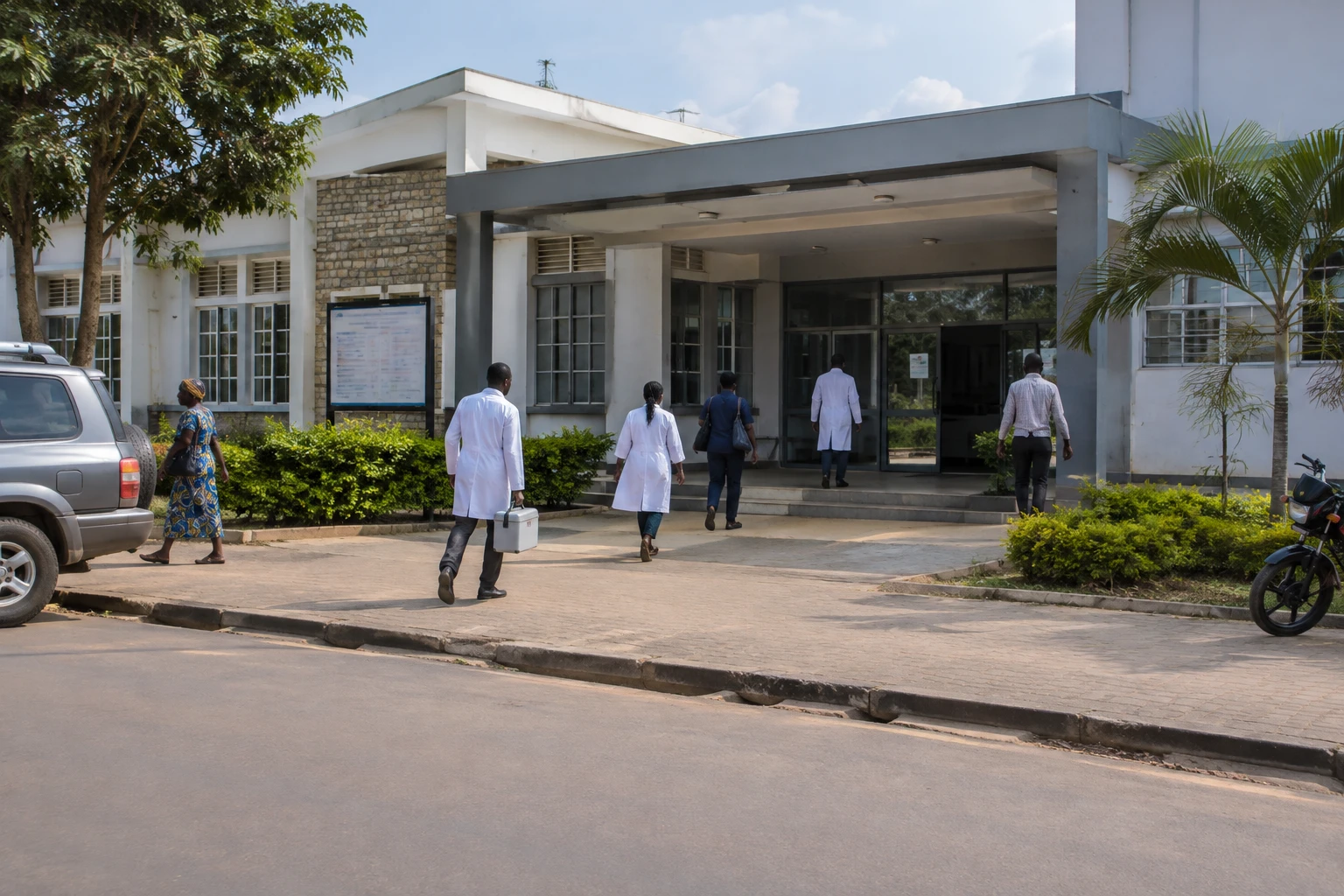
When an outbreak crosses a border, the speed of health teams matters as much as the resources available in hospitals. In the Democratic Republic of the Congo (DR Congo), the financial support announced on 13 October aims to strengthen the response in affected areas and preparedness in neighbouring countries.
A response that crosses borders
The current outbreak is caused by the Bundibugyo virus, a rare Ebola strain. Declared in May 2026 in Ituri province, in north-eastern DR Congo, it has taken on a regional dimension: Uganda also reported cases, and Kenya then confirmed an imported case on 6 October. The World Health Organization (WHO) declared the outbreak a public health emergency of international concern, calling for coordination between countries.
DR Congo has experienced several Ebola outbreaks. But the Bundibugyo virus presents a particular challenge: according to WHO, there is no licensed vaccine or authorised specific treatment for this strain. Rapid detection, supportive care, contact tracing and infection prevention in health facilities therefore remain essential.
The risk of transmission is not confined to administrative borders. Travel for trade, work and healthcare connects communities in eastern DR Congo with those in neighbouring countries. WHO also notes that insecurity and population mobility complicate the tracing of transmission chains and access to services.
$93 million for two levels of action
The World Bank announced an additional $93 million on 13 October. Of this sum, $80 million is earmarked to strengthen the national response in DR Congo. The remaining $13 million is intended to support preparedness and coordination in eleven countries through the Health Emergency Preparedness, Response and Resilience programme.
The funding planned for DR Congo is to support epidemiological surveillance, laboratories, patient care, and infection prevention and control measures. It is also intended to help maintain essential health services in Ituri, including maternal and child healthcare, and to protect the livelihoods of affected communities.
This funding brings the World Bank’s total announced commitment for the emergency to $426.6 million. The figure combines new and previously committed funding, so it does not represent a sum paid out in full on 13 October. The World Bank sets out the allocation between the two strands in its statement.
For residents, the issue is not limited to screening equipment. Maintaining routine care matters too: when services are disrupted by an outbreak, pregnant women, children and people with other illnesses may face greater obstacles to getting treatment. The announced support must therefore serve both the response and the continuity of care.
Turning resources into local capacity
The regional strand provides for strengthening surveillance and laboratory systems, health workers’ skills and digital screening at key points of entry. The World Bank says the programme will draw in particular on regional institutions, including the East, Central and Southern Africa Health Community and the Intergovernmental Authority on Development.
These tools can speed up the identification of a suspected case and the sharing of alerts. But their effectiveness also depends on very practical resources: available teams, tests suited to the circulating strain, facilities able to isolate and treat patients, and information that communities can understand. WHO stresses the importance of local engagement and maintaining trust, both essential to reporting symptoms and tracing contacts.
Implementation will also need to take account of differences between areas. In Kinshasa, national authorities are coordinating the response, while health services in Ituri are dealing directly with needs on the ground. In border areas, travel and links between communities make operational cooperation with neighbouring countries necessary, beyond financial announcements.
Case announcements must also be reported accurately. Kenya’s Ministry of Health confirmed on 6 October a first case imported from DR Congo. The World Bank says Uganda officially declared the end of its outbreak on 28 July 2026. These distinct national situations are a reminder that improvement in one country does not end the need for vigilance across the region.
The next test will be implementation
The significance of this announcement will be measured by the ability of national and regional institutions to turn funding into accessible services: screening, laboratory testing, care, staff protection and continuity of consultations. For communities, results will also depend on whether these services are available beyond major centres and adapted to local realities.
The response involves Congolese actors, neighbouring countries, WHO, the Africa Centres for Disease Control and Prevention, and financial partners. This regional coordination matters, but it does not replace the role of DR Congo’s authorities in leading the response on their territory.
The World Bank now puts its overall commitment at $426.6 million. The focus will be on the effective disbursement of funds, cross-border coordination and continuity of care in Ituri. In an outbreak linked to a strain for which there is no licensed vaccine or authorised specific treatment, rapid detection and quality care remain decisive tools.
For further information, see the World Bank statement on Ebola funding in DR Congo and the region, the WHO Africa office’s outbreak updates and the Kenyan Ministry of Health announcement on the imported case.



