Algeria
 Egypt
 Libya
 Morocco
 Sudan
 Tunisia
 Benin
 Burkina Faso
 Cabo Verde
 Côte d'Ivoire
 Ghana
 Guinea
 Guinea-Bissau
 Liberia
 Mali
 Mauritania
 Niger
 Nigeria
 Senegal
 Sierra Leone
 The Gambia
 Togo
 Cameroon
 Central African Republic
 Chad
 DR Congo
 Equatorial Guinea
 Gabon
 Republic of the Congo
 São Tomé and Príncipe
 Burundi
 Comoros
 Djibouti
 Eritrea
 Ethiopia
 Kenya
 Malawi
 Mauritius
 Mozambique
 Rwanda
 Seychelles
 Somalia
 South Sudan
 Tanzania
 Uganda
 Angola
 Botswana
 Eswatini
 Lesotho
 Namibia
 South Africa
 Zambia
 Zimbabwe
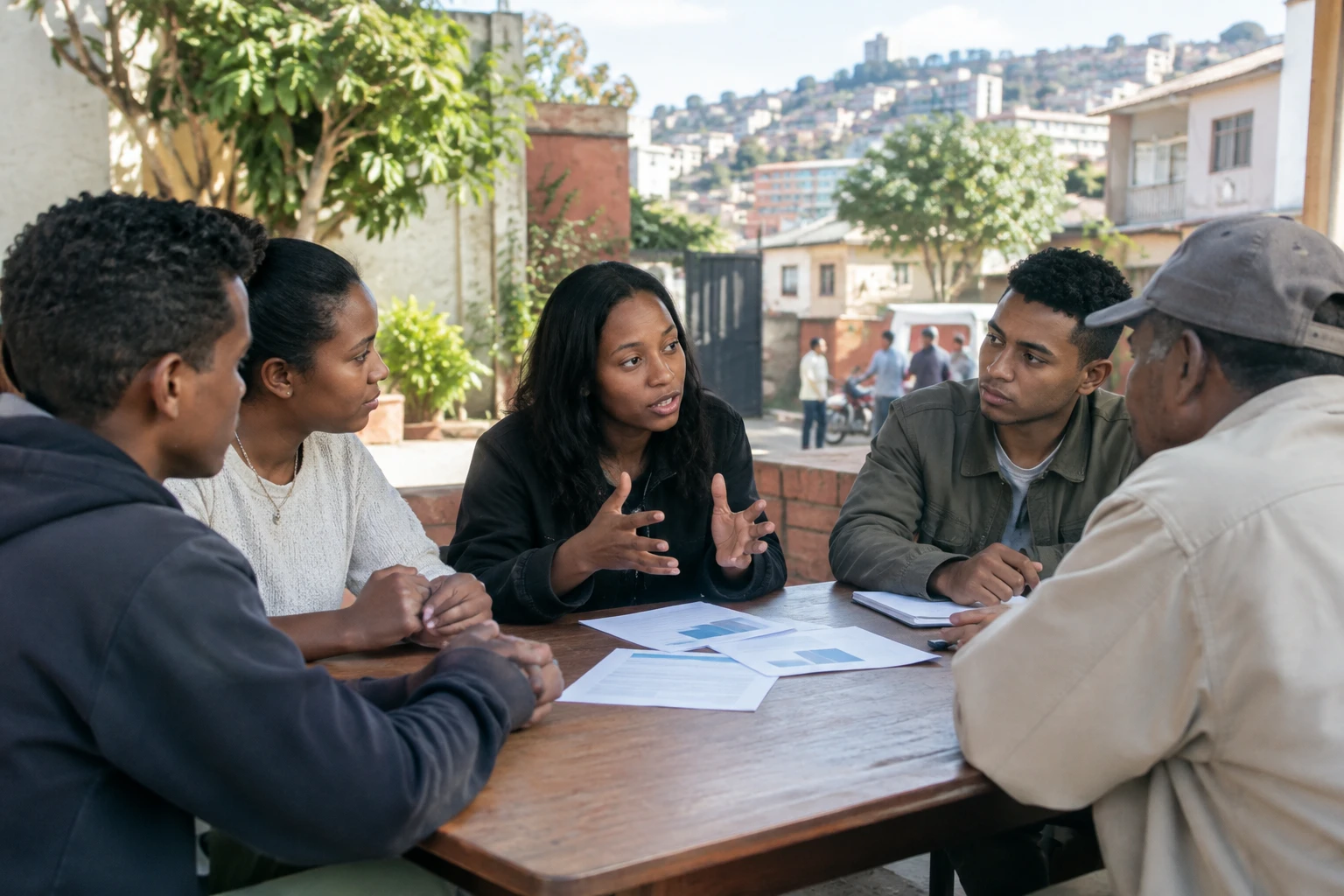
A year after protests brought about the fall of Andry Rajoelina, one question remains in Antananarivo: will the military-led transition give a genuine place to the young people who helped bring it to power? The announced consultations and electoral timetable provide a framework for that promise. But political representation, civil liberties and trust remain at stake.
Social protest turns into a crisis of power
Mobilisation began on 25 September 2025. Young people denounced water and electricity cuts before broadening their demands to governance and the president’s departure. On 14 October, after a military unit sided with the protesters and Andry Rajoelina fled, Colonel Michaël Randrianirina took the lead of the transition.
This shift is part of a political history in which the army has already influenced transfers of power. Andry Rajoelina himself came to power in 2009 following a crisis backed by the military. The 2025 rupture therefore raised both popular hopes and concerns about a repeat of transitions outside the constitutional framework.
The African Union described the military takeover as an unconstitutional change of government and suspended Madagascar’s participation in its activities. It called for a civilian transition and credible elections, in coordination with the Southern African Development Community (SADC), the regional organisation of which Madagascar is a member. This position is a reminder that popular recognition of a movement and constitutional legality are two distinct questions.
Consultations, but how will power be shared?
As the first anniversary of the change of power approaches, the head of state has defended the citizen consultations conducted with the support of the Council of Christian Churches in Madagascar, known by its French acronym, FFKM. He has ruled out the idea of political negotiations aimed at redistributing responsibilities within the government. The announced timetable provides for consultations to end before December 2026, followed by constitutional and presidential deadlines in 2027.
These consultations are more than an administrative step. They are meant to contribute to the electoral rules and institutional reforms that will shape the end of the transition. Their credibility will depend in particular on the diversity of participants, the publication of proposals and how the authorities follow up on them. The FFKM can facilitate discussions, but mediation is no substitute for political guarantees or institutions accepted by the different parties.
The timetable is tight. A nationwide consultation means reaching regions beyond the capital, then turning contributions into decisions. In January 2026, SADC said electoral reform was among the priorities discussed with the Malagasy authorities. It also stressed inclusion and national dialogue. Meeting the announced deadlines will therefore be a concrete test of the transition.
Young people caught between participation and disillusionment
A monument unveiled in Antananarivo on 25 September 2026 illustrates the debate over the place given to young people. It depicts citizens breaking their chains beneath the figure of an armed soldier. Some former protesters see a portrayal of history that does not place the population and the army on an equal footing. Others are more broadly concerned by the gap between promises of renewal and the actual role of protesters in decision-making.
Frustration does not erase divisions within the movement. Some members have joined institutions or the administration; others continue to mobilise, while many have drifted away from organised politics. This fragmentation makes it harder to appoint spokespeople and to exert influence in negotiations. It does not mean that demands have disappeared: reliable public services, freedom of expression and employment opportunities remain central expectations.
National political consultations should also be distinguished from discussions specifically focused on young people. According to UNESCO, youth consultations took place between May and June 2026 in all 24 regions, with recommendations covering governance, the economy, social issues and the environment. This process provides a channel for participation. The decisive question is whether it will be reflected in public policy and the rules of the political game.
The effects of a transition are not felt in the same way everywhere. In Antananarivo, political debates and protests are more visible. In other regions, access to essential services and the ability to make local priorities heard matter just as much. Young people in cities, those in rural areas and those working in the informal economy do not have the same means of taking part in consultations. A credible refoundation will have to make these inequalities visible, without reducing citizens’ voices to a ceremony or a final document.
The 2027 election, the next regional test
For Madagascar, the issue goes beyond setting an election date. It is a question of whether reforms will be drawn up with a sufficiently diverse range of political and social actors, then implemented by institutions capable of ensuring fair competition. The possibility that the head of the transition might stand as a candidate is already being discussed, though he has not confirmed this. Clear rules on the neutrality of the administration and electoral bodies will be essential.
Madagascar’s trajectory is also being watched by the African Union and SADC, which have called for a return to constitutional order and supported discussions on the transition. The election announced for 2027 will be an important indicator, but not the only one: open debate, respect for freedoms and the implementation of recommendations will also matter. A year after Rajoelina’s fall, young people have secured a place in the transition’s official narrative. It remains to be seen whether they can influence its decisions and the end of military rule.
For more on the institutional framework, see the African Union communiqué on Madagascar, the SADC update on dialogue and reforms, and UNESCO information on regional youth consultations.