Algeria
 Libya
 Morocco
 Sudan
 Tunisia
 Benin
 Burkina Faso
 Cabo Verde
 Côte d'Ivoire
 Ghana
 Guinea
 Guinea-Bissau
 Liberia
 Mali
 Mauritania
 Niger
 Nigeria
 Senegal
 Sierra Leone
 The Gambia
 Togo
 Cameroon
 Central African Republic
 Chad
 DR Congo
 Equatorial Guinea
 Gabon
 Republic of the Congo
 São Tomé and Príncipe
 Burundi
 Comoros
 Djibouti
 Eritrea
 Ethiopia
 Kenya
 Madagascar
 Malawi
 Mauritius
 Mozambique
 Rwanda
 Seychelles
 Somalia
 South Sudan
 Tanzania
 Uganda
 Angola
 Botswana
 Eswatini
 Lesotho
 Namibia
 South Africa
 Zambia
 Zimbabwe
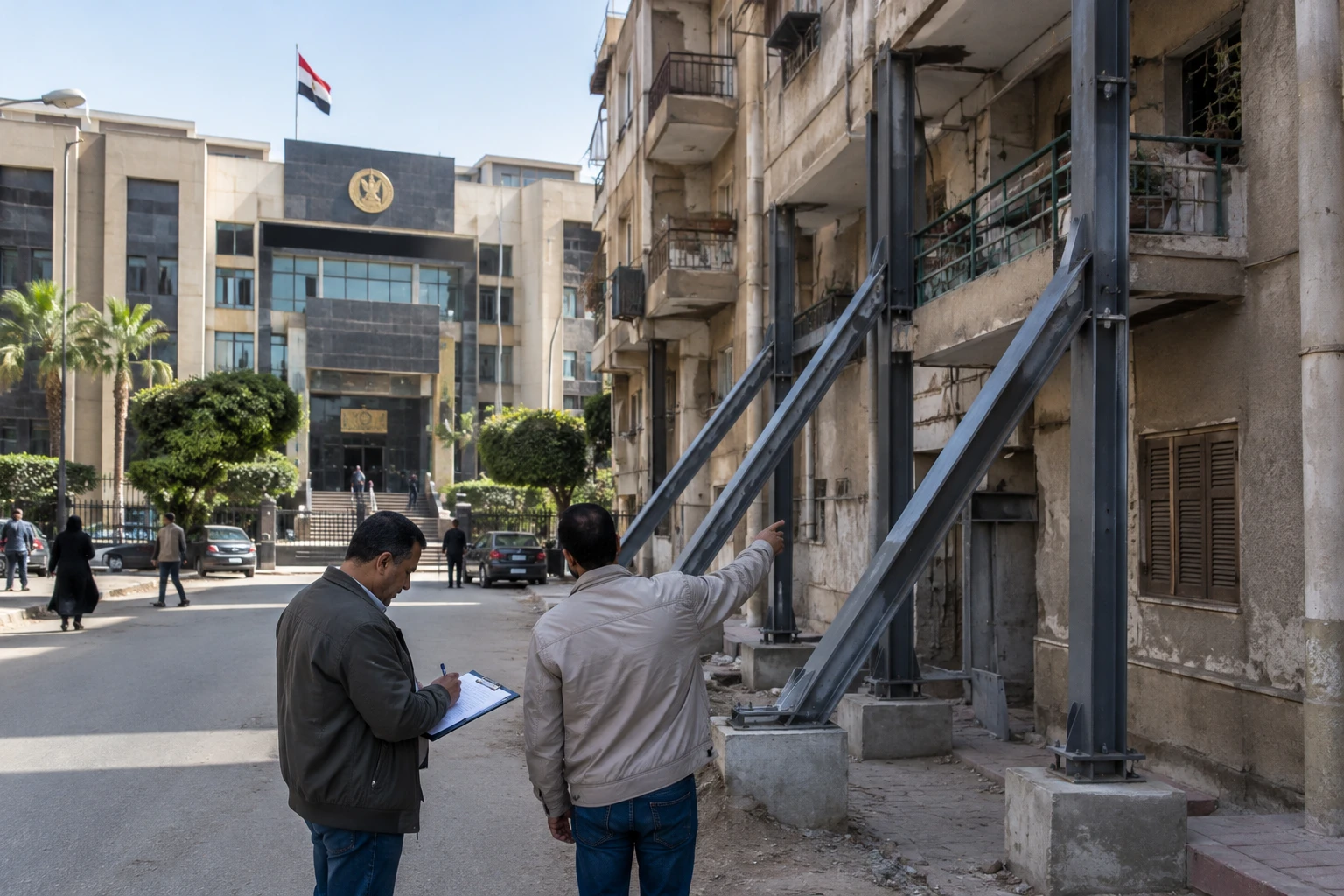
In Cairo’s densely packed streets, the safety of an old building concerns more than its occupants. It also affects neighbours, municipal services and the authorities’ ability to enforce regulations before a building becomes dangerous.
Old building, neighbours evacuated
On Tuesday 13 October, a residential building collapsed in the Hadayek al-Qubbah district, north-east of Cairo. Built in the 1950s, the building had a ground floor and four upper storeys. Cairo Governorate authorities said rescue teams, police and ambulances had been sent to the scene.
The toll reported the following day was six dead, including three children, and seven injured, among them a child. Rescue teams continued searching beneath the rubble. The figures were reported by several Egyptian media outlets, including Ahram Online and the state-run daily Al-Ahram, cited by Egypt Today.
Neighbouring buildings were evacuated as a precaution. A committee of engineers is to assess their stability and identify any damage. Metal props have also been installed to provide temporary support to some structures. At this stage, the cause of the collapse has not been established and no responsibility has been officially determined.
The prosecution has opened an investigation. In particular, investigators are to examine the building’s condition, its administrative records and any previous warnings or decisions. An Egyptian media outlet reported that a repair or partial demolition measure may have applied to the building. This information, based on preliminary investigations, remains to be confirmed as part of the judicial process.
Building inspections, a matter of urban governance
The disaster has again highlighted a longstanding challenge in Egypt: enforcing building standards and maintaining a highly varied housing stock. The age of buildings alone does not explain a collapse. The condition of the structure, work carried out, permits granted and the way safety decisions were implemented must also be established.
The capital encompasses districts built in different periods and subject to heavy pressure on land. In older, densely populated areas, residents may depend on buildings where repairs are costly or difficult to organise. Tenants do not always have control over repairs. Landlords, meanwhile, may face obligations to bring properties up to code. The investigation will need to establish what happened in this specific case, without conflating these broader issues with facts already proven.
Public responsibility is also at stake. An administrative order to repair a building or evacuate it protects residents only if it is followed by an inspection, repairs or effective rehousing. Conversely, an evacuation can shift the risk onto families with few immediate alternatives. Assessing neighbouring buildings and the measures offered to those evacuated will therefore be as important as establishing the technical cause.
Responses cannot be limited to emergency measures. They require regular inspections, accessible records on building conditions, clear procedures for reporting dangers and rehousing options when homes are deemed unsafe. Transparency about the investigation’s findings will make it possible to distinguish between structural failure, poor maintenance and a possible breach of regulations.
An issue that extends beyond Cairo
Nationwide, the Egyptian authorities have conducted crackdowns on unauthorised construction and developed rehousing programmes. But these policies do not automatically meet the needs of residents in older districts. Prevention also depends on local administrations’ ability to identify risks in inhabited streets and then intervene without leaving families to bear the cost of moving or repairs alone.
The regional dimension is distinctive. Egypt is a member of the African Union and the Arab Maghreb Union (AMU), but it does not belong to an integrated North African economic community comparable to ECOWAS in West Africa. The matter falls first and foremost to Egyptian institutions: the governorate, municipal services, civil defence and the courts. It nevertheless reflects a challenge shared by many growing African cities: balancing urban densification, housing safety, regularisation and the protection of residents.
For the residents concerned, the immediate question is practical: whether the evacuated buildings are safe to live in and what solutions will be offered. For the authorities, the challenge is to publish the results of the assessment and investigation, then set out corrective measures. These findings will show whether the disaster leads to action focused on this building or to wider inspections of vulnerable buildings in the district.