Algeria
 Egypt
 Libya
 Morocco
 Sudan
 Tunisia
 Benin
 Burkina Faso
 Cabo Verde
 Côte d'Ivoire
 Ghana
 Guinea-Bissau
 Liberia
 Mali
 Mauritania
 Niger
 Nigeria
 Senegal
 Sierra Leone
 The Gambia
 Togo
 Cameroon
 Central African Republic
 Chad
 DR Congo
 Equatorial Guinea
 Gabon
 Republic of the Congo
 São Tomé and Príncipe
 Burundi
 Comoros
 Djibouti
 Eritrea
 Ethiopia
 Kenya
 Madagascar
 Malawi
 Mauritius
 Mozambique
 Rwanda
 Seychelles
 Somalia
 South Sudan
 Tanzania
 Uganda
 Angola
 Botswana
 Eswatini
 Lesotho
 Namibia
 South Africa
 Zambia
 Zimbabwe
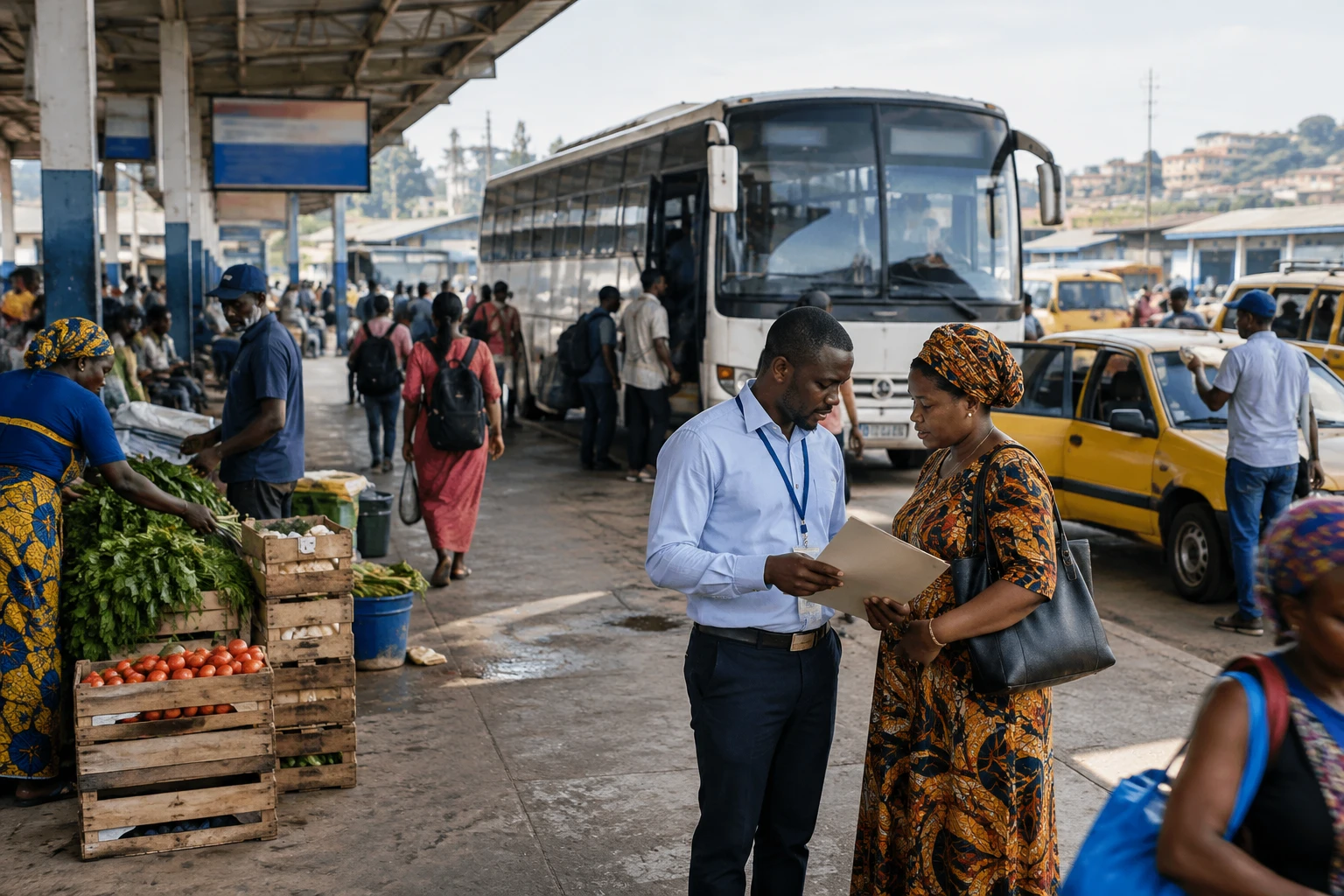
For a small Guinean business, securing a loan can determine whether a harvest is processed, a workshop expanded or a market finally reached. But the arrival of new capital at a bank does not, by itself, guarantee that these projects will find affordable financing.
A new injection into a tight credit market
BADEA, the Arab Bank for Economic Development in Africa, has concluded a €20 million financing agreement with Vista Group Holding, equivalent to about $22.4 million. The financing is intended to support Guinea’s private sector, particularly small and medium-sized enterprises.
The agreement was signed in Bangkok. A Guinean publication specialising in finance dates the signing to 13 October 2026 and its announcement to the following day. The distinction matters, as available reports do not all give the same date for the ceremony. BADEA president Abdullah Almusaibeeh and Vista Group chief executive Yao Kouassi took part in the agreement.
The sum is to be channelled through Vista Gui, the group’s Guinean banking subsidiary, as funds intended to support businesses. The announced amount is that of the agreement, not the value of loans already disbursed to SMEs. Detailed terms — duration, interest rates and disbursement schedule — have not been specified in the published information.
The financing need is considerable. The International Finance Corporation (IFC), a World Bank Group institution focused on the private sector, estimates that the financing gap for Guinean micro, small and medium-sized enterprises amounts to 21.5% of GDP. It also notes that businesses owned or led by women face greater obstacles.
Financing is accumulating; results remain to be checked
The BADEA agreement adds to other recent transactions. In March 2026, the IFC announced a $20 million senior loan to Vista Gui. At least a quarter of this funding is to finance businesses owned or led by women. The institution says the loan is also intended to support agricultural value chains and other productive activities.
In October 2025, the European Investment Bank (EIB) signed two agreements with Vista Group totalling €30 million for Guinea and Sierra Leone. The Guinean share, allocated to Vista Gui, amounts to €20 million. The EIB said the operation was intended to support SMEs and agricultural value chains, among other areas.
Another signal comes from the region. In October 2025, the ECOWAS Bank for Investment and Development (EBID), the financial institution of the Economic Community of West African States, announced a $40 million credit line to Vista Gui. These amounts should not be added together as if they had already been fully lent to businesses: they correspond to different agreements and facilities, whose disbursements and uses must be tracked separately.
This range of partners may expand the resources available to a local bank. It does not, however, yet reveal who the ultimate beneficiaries are. To measure the real impact, information will be needed on the number of loans granted, their size, cost and duration, and the share going to businesses outside Conakry.
From bank to business
Bank lending often fails to meet the needs of many small businesses when they lack sufficient collateral, regular financial statements or a solid banking history. Informal businesses and rural enterprises can therefore be left out, even when a financing facility is announced. The terms applied by the intermediary bank will determine who can actually borrow.
Selection criteria will also affect sectors differently. An agricultural business may need seasonal financing linked to storage or processing. A small services company may instead seek a loan to buy equipment or manage payment delays. A suitable offer must take these cycles into account, not just the overall availability of funds.
The share reserved for businesses led by women in the IFC loan is a measurable commitment. For BADEA’s funds, the available information does not specify a comparable quota. Transparency about beneficiaries, lending criteria and results would make it possible to check whether this financing is actually reducing inequalities in access.
Vista Gui therefore has an important intermediary role, but also a responsibility: to turn institutional resources into accessible credit without losing sight of repayment risk. The quality of support, the simplicity of the application process and a presence beyond major centres will matter as much as the amounts mobilised.
A Guinean concern, a West African test
For Guinea, these agreements form part of a wider effort to finance productive activities. Agriculture and processing can create opportunities for small businesses, but their development also depends on infrastructure, access to markets and income stability. Credit cannot replace these conditions, but it can help viable businesses invest.
Across West Africa, the presence of BADEA, the IFC, the EIB and EBID shows that several institutions are seeking to finance businesses through local banks. This convergence does not mean that the lenders’ approaches or priorities are identical. It nonetheless puts the region’s banks at the heart of the transition between development finance and the everyday economy.
The next data to watch are concrete: actual disbursements, the cost of loans, their distribution across sectors and territories, and access for businesses led by women. The agreement’s impact on Guinean entrepreneurs will be measured by these results — not by the announced amount alone.
The report on the BADEA-Vista Group signing in Guinea ; details of the IFC loan to Vista Gui ; the EIB financing for Guinea and Sierra Leone ; EBID’s regional credit line to Vista Gui.