Algeria
 Egypt
 Libya
 Morocco
 Sudan
 Tunisia
 Benin
 Burkina Faso
 Cabo Verde
 Côte d'Ivoire
 Ghana
 Guinea-Bissau
 Liberia
 Mali
 Mauritania
 Niger
 Nigeria
 Senegal
 Sierra Leone
 The Gambia
 Togo
 Cameroon
 Central African Republic
 Chad
 DR Congo
 Equatorial Guinea
 Gabon
 Republic of the Congo
 São Tomé and Príncipe
 Burundi
 Comoros
 Djibouti
 Eritrea
 Ethiopia
 Kenya
 Madagascar
 Malawi
 Mauritius
 Mozambique
 Rwanda
 Seychelles
 Somalia
 South Sudan
 Tanzania
 Uganda
 Angola
 Botswana
 Eswatini
 Lesotho
 Namibia
 South Africa
 Zambia
 Zimbabwe
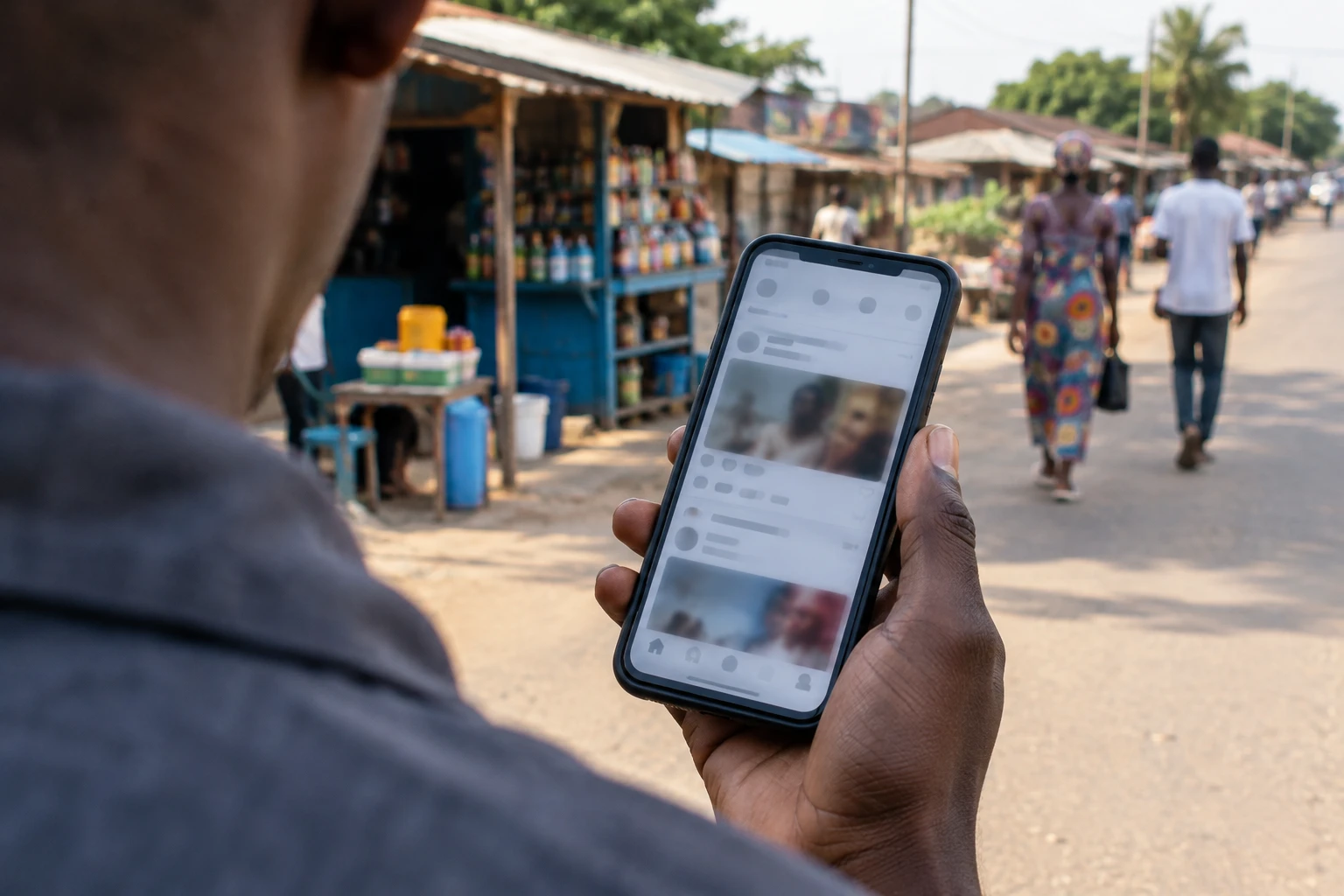
In Moribadou, in Beyla prefecture, a family says it has had no news of Magnama Sagno since Sunday 11 October. Her son, Falikou Kourouma, says his mother was taken by force. At this stage, the circumstances of her disappearance and the identity of those responsible have not been established by an independent source.
A family account that remains unverified
According to information provided in the material available, Magnama Sagno sold drinks outside her home. A man is said to have called her over to a vehicle on the pretext of giving her change. Masked individuals then allegedly forced her into a pick-up truck. These details are based on accounts reported by her son and people described as witnesses. They could not be corroborated independently.
Falikou Kourouma, who lives in France and describes himself as close to the Rally of the Guinean People (RPG), has called for his mother’s release. He also said she “should not pay in my place”, after apologising for insults directed at the head of state, Mamadi Doumbouya. These remarks are reported by his family; no official response on this specific case was found in the sources consulted.
The material indicates that the gendarmerie is said to have visited the family home on the day of the disappearance and that the prosecutor in Kankan was reportedly informed. In the absence of independent confirmation, these steps must also be attributed. A judicial investigation could establish what happened, gather testimony and determine whether an offence was committed.
Concern amid an already tense political climate
This report comes amid strong concern in Guinea over the abductions and disappearances of critical figures, or their relatives. In July 2026, Amnesty International, the Coordination of Human Rights Organisations in Guinea and the West African Human Rights Defenders Network denounced the persistence of disappearances and called for those responsible to be identified. Their statement refers in particular to the abduction, in November 2025, of relatives of artist Élie Kamano, who lives abroad.
This context helps explain the Kourouma family’s fears, but does not prove that the Guinean authorities are involved in Magnama Sagno’s case. No independent evidence consulted identifies the alleged perpetrators or establishes their motive. The distinction is essential: reporting on a documented climate is not enough to confirm a specific allegation.
The political arena has also narrowed. In March 2026, the authorities dissolved 40 parties, including the RPG, the Union of Democratic Forces of Guinea and the Union of Republican Forces. The decision, reported by several media outlets, reduced the institutional space available to several long-established opposition groups. The RPG is the party associated with former president Alpha Condé.
Since the September 2021 coup, Guinea’s transition has been marked by restrictions on protests and political activity. The country has since undergone institutional changes, while human rights organisations have continued to report alleged disappearances. These are a distinct issue: they require impartial investigations and effective access to remedies, regardless of the political status of those concerned.
Consequences that reach beyond political figures
When a relative of a public figure living abroad disappears, the immediate consequences fall on the family left behind in the country. Relatives must seek information, contact security services and turn to the courts, sometimes without knowing where the person is. In a place such as Moribadou, the lack of reliable information can also fuel fear and rumours. There is, however, no way to assess the concrete impact on residents of the prefecture in this case.
For the authorities, the institutional response is crucial. An announced investigation or a visit by gendarmes is not enough to establish the facts. The steps taken must be verifiable, witnesses must be heard and information about the search must be communicated in a way that respects the investigation. For the family, the priority remains to find out what has happened to Magnama Sagno and to be able to contact her.
The case also highlights the particular vulnerability of relatives of political figures in exile. But this possibility must not become an automatic conclusion: the link between Falikou Kourouma’s activities and his mother’s alleged disappearance remains to be established. Guinea’s judicial authorities are best placed to open or document an investigation; their independence and the transparency of their actions will be central to dispelling doubts.
An issue of trust for Guinea and the region
Guinea is a member of the Economic Community of West African States (ECOWAS), which brings together countries in the region and monitors political developments in its members. Alleged disappearances and restrictions on civic space are relevant to assessments of political stability, beyond electoral cycles. They also affect citizens’ trust in the police, gendarmerie and justice system.
For now, the facts of Magnama Sagno’s case remain to be confirmed. What happens next will depend on investigators’ ability to locate her, establish the circumstances of her disappearance and report on the steps they have taken. Until those details are known, allegations must remain attributed and conclusions suspended.