Algeria
 Egypt
 Libya
 Morocco
 Sudan
 Tunisia
 Benin
 Burkina Faso
 Cabo Verde
 Côte d'Ivoire
 Ghana
 Guinea
 Guinea-Bissau
 Liberia
 Mali
 Mauritania
 Niger
 Nigeria
 Senegal
 Sierra Leone
 The Gambia
 Togo
 Cameroon
 Central African Republic
 Chad
 DR Congo
 Equatorial Guinea
 Gabon
 Republic of the Congo
 São Tomé and Príncipe
 Burundi
 Comoros
 Djibouti
 Eritrea
 Ethiopia
 Kenya
 Madagascar
 Malawi
 Mauritius
 Mozambique
 Seychelles
 Somalia
 South Sudan
 Tanzania
 Uganda
 Angola
 Botswana
 Eswatini
 Lesotho
 Namibia
 South Africa
 Zambia
 Zimbabwe
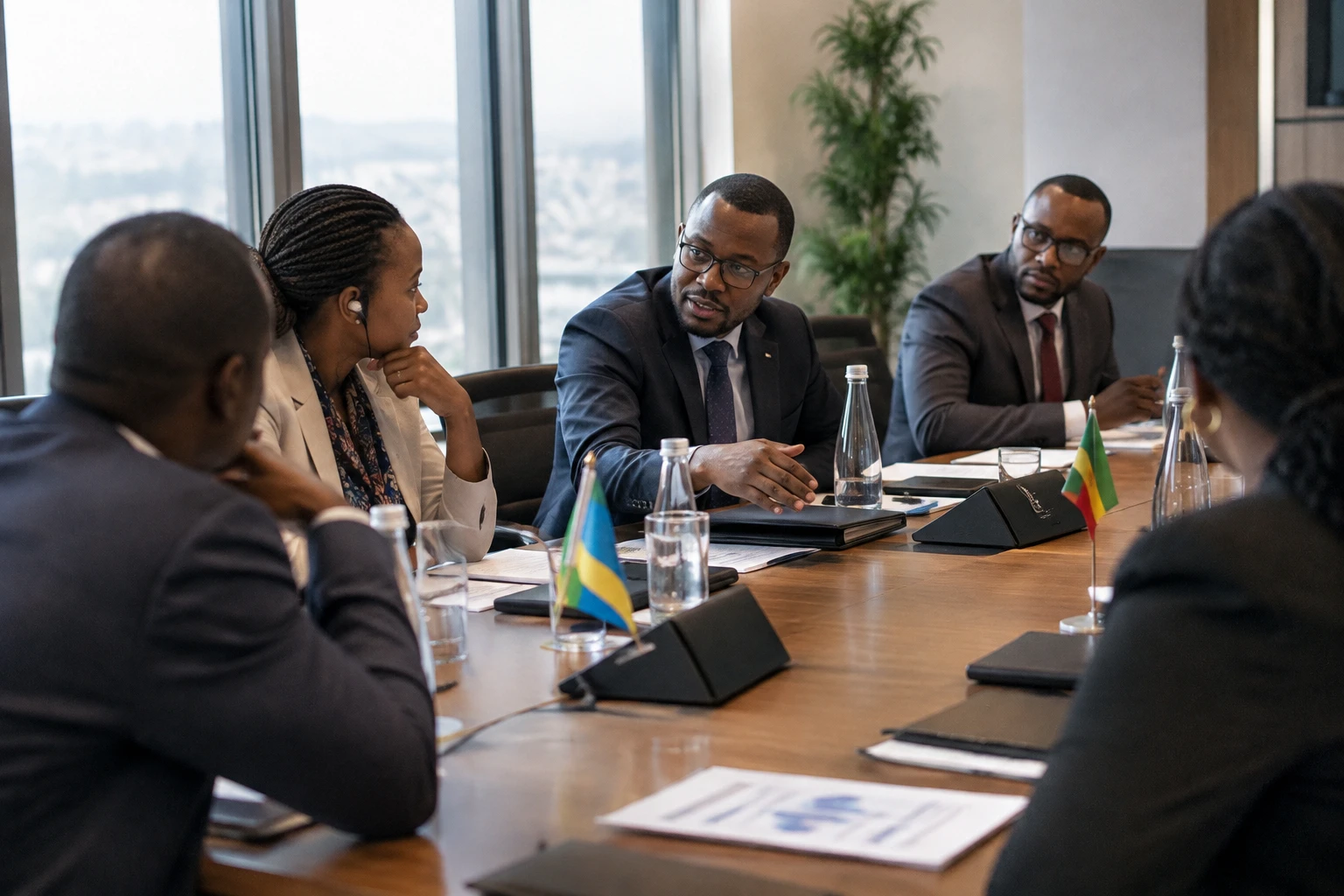
A Grand Prix can bring visitors, investment and attention far beyond a circuit. But for Rwanda, the Formula 1 announcement also raises a practical question: who will benefit from this showcase, and on what terms? The answer will depend as much on construction at Bugesera as on the benefits that Rwandans can actually access.
A project tied to Bugesera’s transformation
Rwanda has for several years been relying on major sporting events to boost its appeal. Kigali has hosted international events, including the 2025 UCI Road World Championships. Now a further step has been announced: Formula 1’s return to the African continent after more than three decades away.
The country belongs to the East African Community (EAC), a regional bloc that facilitates economic cooperation among its member states. In this context, a major event can attract visitors and businesses from across the region. It does not, however, guarantee lasting trade or a redistribution of benefits on its own.
The South African Grand Prix on 14 March 1993, held at Kyalami, remains the last Formula 1 race staged in Africa. The Rwandan race would therefore mark the championship’s return to the continent, without erasing South Africa’s motor racing history.
Race announced, but not yet dated
On 13 October 2026, Formula 1 announced a ten-year agreement with Rwanda. The African Grand Prix is due to join the calendar “in the early 2030s”. No specific year has been set. The first edition depends on the completion of a new permanent circuit at Bugesera, south-east of Kigali.
The track must meet the FIA’s Grade 1 standards, which are required to host a Formula 1 race. The project is part of a broader programme to develop sport, tourism and infrastructure, led by the Rwanda Development Board. The authorities say the site is about 40 kilometres from the capital.
The timetable should therefore be treated with caution: the agreement is in place, but racing cannot begin before the circuit is built and homologated. Information published so far does not yet detail the total cost, public and private funding, or verifiable stages of construction. These details will make it possible to assess the project’s financial exposure more precisely.
Assessing benefits beyond the grandstands
For the government, the challenge is to turn global visibility into economic activity: hotel stays, transport, catering, event-related jobs and contracts for local businesses. The effects could also reach artisans, service providers and young people training for careers in sport and events.
But benefits are not distributed automatically. Hotels and businesses already connected to international markets do not have the same resources as small enterprises in Kigali or around Bugesera. Temporary jobs over a race weekend cannot, on their own, replace stable employment. It will therefore be important to track contracts awarded to Rwandan businesses, training opportunities and infrastructure that the public can use after the Grand Prix.
Construction is another area requiring scrutiny. The project is located in an area also undergoing infrastructure-related change. Information published so far does not specify the expected effects on land, possible relocations or local services. Environmental and social assessments, as well as consultations with affected communities, will be crucial to gauging the true cost of the construction work.
The sporting profile also raises a broader debate. Human rights organisations have already called for scrutiny of how major events can enhance a state’s international image. This question does not, on its own, determine the project’s value. It does, however, serve as a reminder that an event cannot be assessed solely on the basis of the tourism benefits it promises: spending transparency, civil liberties and local gains also matter.
Regional reach, subject to conditions
Rwanda presents the race as an event for the whole continent, not a competition reserved for its domestic audience. This ambition could bring new attention to African motor racing. It does not yet mean that other countries will soon host a round: the agreement concerns Rwanda, while the promise of paving the way for other races remains a political objective, not an established timetable.
For EAC countries, the Grand Prix could boost visitor flows and regional partnerships if transport, services and benefits extend beyond the Bugesera site. For African sporting bodies, the challenge will also be to turn this showcase into wider access to training, technical careers and motor racing competitions.
The next steps will therefore be more revealing than the announcement itself: publication of the construction timetable, detailed funding, circuit approvals and measures to protect local communities. Rwanda has secured a ten-year commitment. What remains to be established is how the project will translate, before the first race, into benefits for Bugesera residents, Rwandan businesses and sports fans across the region.
Related references: Formula 1 announcement of the agreement and Bugesera circuit ; independent report on the announcement in Kigali ; official archives of the 1993 South African Grand Prix.