
 Algeria
 Egypt
 Libya
 Sudan
 Tunisia
 Benin
 Burkina Faso
 Cabo Verde
 Côte d'Ivoire
 Ghana
 Guinea
 Guinea-Bissau
 Liberia
 Mali
 Mauritania
 Niger
 Nigeria
 Senegal
 Sierra Leone
 The Gambia
 Togo
 Cameroon
 Central African Republic
 Chad
 DR Congo
 Equatorial Guinea
 Gabon
 Republic of the Congo
 São Tomé and Príncipe
 Burundi
 Comoros
 Djibouti
 Eritrea
 Ethiopia
 Kenya
 Madagascar
 Malawi
 Mauritius
 Mozambique
 Rwanda
 Seychelles
 Somalia
 South Sudan
 Tanzania
 Uganda
 Angola
 Botswana
 Eswatini
 Lesotho
 Namibia
 South Africa
 Zambia
 Zimbabwe
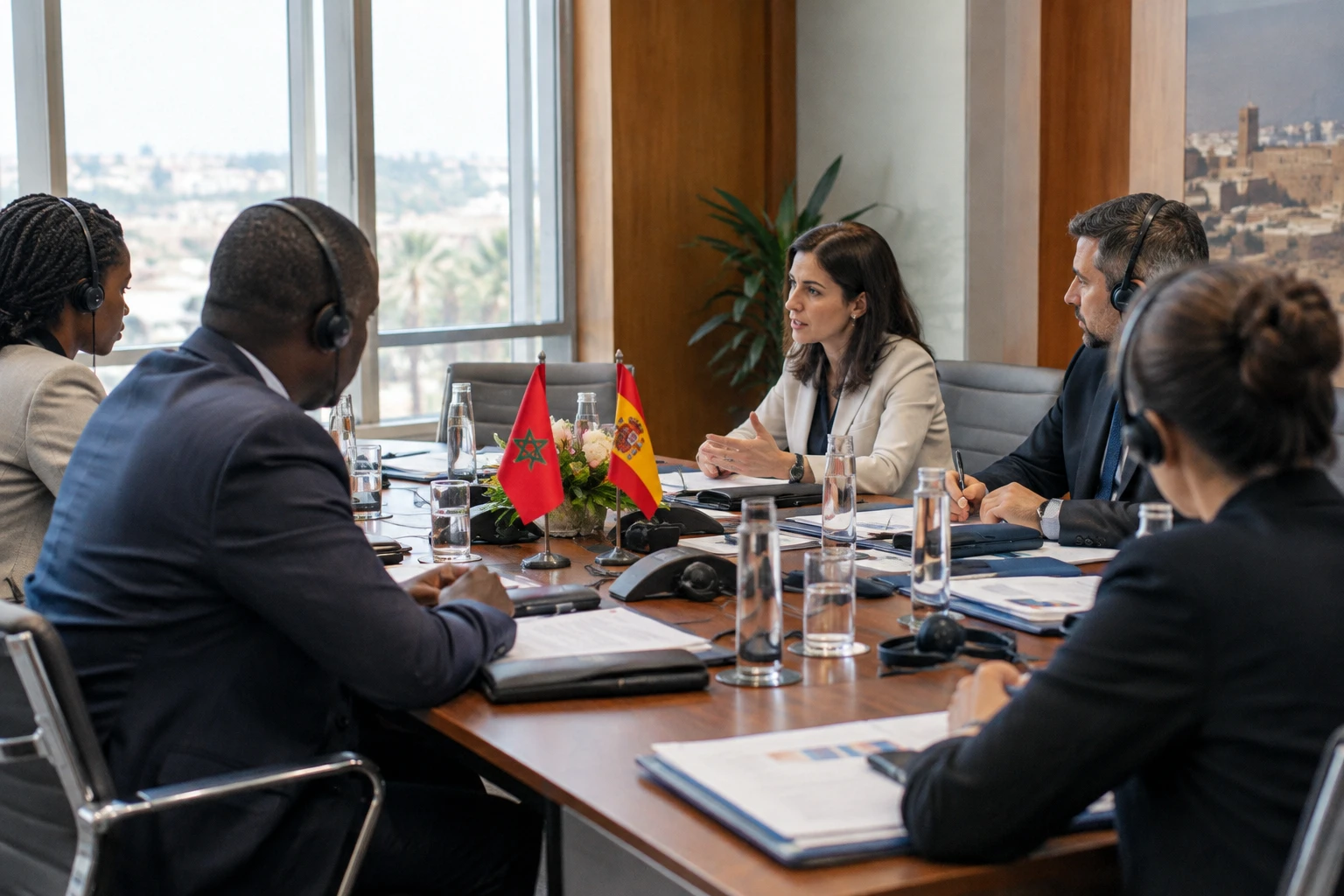
In Ceuta, a royal visit brought together two realities that rarely feature side by side in the same discourse: the assertion of Spanish sovereignty and the memory of people who died trying to reach the enclave. For Morocco, a directly affected neighbour, these words are a reminder that a long-standing dispute can resurface at the heart of a border crisis.
A border at the heart of strained bilateral relations
Ceuta and Melilla are administered by Spain and situated on the north coast of Africa. Morocco claims both cities, while Madrid considers them Spanish autonomous cities. This divergence fuels a sovereignty question that regularly weighs on relations between Rabat and Madrid.
The visit comes after the May 2021 migration crisis, when thousands of people entered Ceuta from Morocco. The episode exacerbated tensions between the two countries, which were already facing diplomatic disagreements. Border cooperation and the management of movement remain sensitive issues for both officials and residents of border areas.
Morocco is a member of the Arab Maghreb Union (AMU), a regional cooperation framework that has made limited political progress. Ceuta does not fall under this organisation: the city is administered by Spain. The dispute is therefore also part of a relationship between an African state and a European country, involving issues of borders, movement and Mediterranean cooperation.
The king addresses the enclave’s residents
On 13 October 2021, Felipe VI and Queen Letizia travelled to Ceuta. It was the first visit to the city by a Spanish monarch in nearly 20 years. Addressing local representatives, the king referred to images from 30 and 31 July and said he understood residents’ concerns following the crossings and deaths at sea.
His message on the city’s status was unequivocal: Ceuta and Melilla are part of Spain’s national and political reality, and Spain’s territorial integrity “is not negotiable”, he said. He also expressed a wish for good-neighbourly relations with Morocco, stressing that good faith must be reciprocal. These remarks express Spain’s position; they do not resolve the disagreement with Rabat.
The royal couple also paid their respects at the Sidi Embarek Muslim cemetery, where people who died during crossings in the summer are buried. The available account refers to 90 migrants buried in the enclave. This figure is attributed and is not presented here as an exhaustive count of deaths during the crisis.
Between border security and families’ grief
The visit was greeted with Spanish flags and slogans of support. The scene reflects the attachment of some residents to the Spanish state and their concerns after the crisis. It does not, by itself, represent all views among the local population or those expressed in Morocco.
For the families of people who died or went missing, the issue is more immediate than the sovereignty debate: identifying their loved ones, understanding the circumstances of their deaths and being able to pay tribute to them. The visit to the cemetery gave space to this human dimension, without erasing the political controversies surrounding the border or the difficulties faced by people attempting the crossing.
The crisis also showed how much the management of this border depends on cooperation between Madrid and Rabat. Calm bilateral relations facilitate exchanges and the work of the relevant services; a period of tension can, by contrast, complicate coordination. But crossings cannot be reduced to a diplomatic instrument: they involve people, families and communities on both sides of the border.
A dispute that extends beyond the diplomatic stage
The royal address publicly reinforces Madrid’s position and reassures residents who were waiting for a sign from the Spanish state. For Rabat, its claim to Ceuta and Melilla remains a sovereignty issue. The two positions must be distinguished: reporting the king’s statement does not amount to resolving the status contested by Morocco.
At regional level, the visit is a reminder that migration crises in the western Mediterranean have local and diplomatic consequences. Decisions taken in Madrid and Rabat affect Ceuta’s residents, Moroccan border communities and people on the move. The African Union places Morocco in North Africa, but Ceuta remains administered by Spain and is not represented as a separate member state within the continental organisation.
What happens next will depend less on the words spoken at a ceremony than on the two capitals’ ability to maintain dialogue and border cooperation while treating the people concerned with dignity. The question of sovereignty, meanwhile, remains open in political relations between Morocco and Spain.



