Algeria
 Egypt
 Morocco
 Sudan
 Tunisia
 Benin
 Burkina Faso
 Cabo Verde
 Côte d'Ivoire
 Ghana
 Guinea
 Guinea-Bissau
 Liberia
 Mali
 Mauritania
 Niger
 Nigeria
 Senegal
 Sierra Leone
 The Gambia
 Togo
 Cameroon
 Central African Republic
 Chad
 DR Congo
 Equatorial Guinea
 Gabon
 Republic of the Congo
 São Tomé and Príncipe
 Burundi
 Comoros
 Djibouti
 Eritrea
 Ethiopia
 Kenya
 Madagascar
 Malawi
 Mauritius
 Mozambique
 Rwanda
 Seychelles
 Somalia
 South Sudan
 Tanzania
 Uganda
 Angola
 Botswana
 Eswatini
 Lesotho
 Namibia
 South Africa
 Zambia
 Zimbabwe

For Pakistan, finding another oil supplier is not simply a matter of changing seller. It is also about reducing risks linked to Gulf shipping routes, disruption to which can quickly raise import costs and weigh on domestic supply. For Libya, the search opens a potential commercial avenue in Asia, but no contract has been announced so far.
A Libyan option amid shipping-route risks
The Strait of Hormuz links the Gulf to the Gulf of Oman. In 2025, around 20 million barrels of crude oil and petroleum products passed through it each day, according to the International Energy Agency. A significant share of these flows is bound for Asia. The Bab el-Mandeb Strait, between the Red Sea and the Gulf of Aden, is another strategic passage for maritime transport.
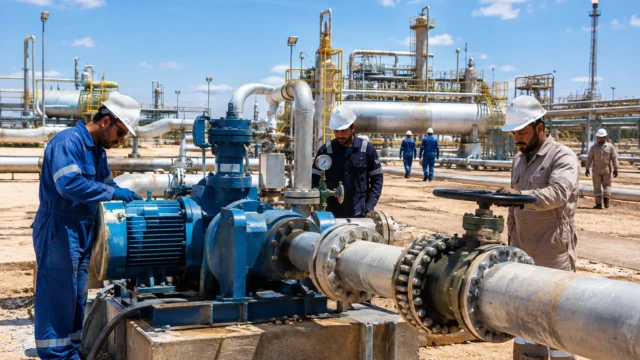
Libya offers a different geography. Its export terminals face the Mediterranean, so Libyan cargoes do not have to cross Hormuz to reach their buyers. But being far from Gulf routes is not, by itself, enough to guarantee regular deliveries or favourable terms. Transport costs, crude quality and the capacity of importing refineries also matter.
This potential outlet is part of an energy landscape in which Asian markets already buy African oil. Libya is therefore not starting from scratch, but it must turn diplomatic exchanges into concrete commercial contracts.
Ministerial talks, but no purchase deal yet
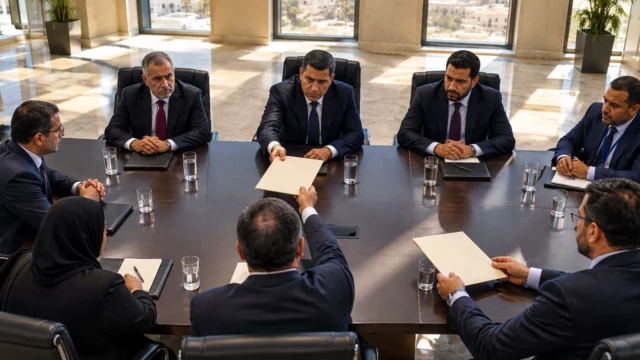
On 12 October in Riyadh, Pakistan’s petroleum minister, Ali Pervaiz Malik, met his Libyan counterpart, Khalifa Rajab Abdulsadek. Their meeting took place on the sidelines of the 17th ministerial meeting of the International Energy Forum. Malik said his government was encouraging Pakistani refiners to consider importing Libyan crude.
Abdulsadek, for his part, said he wanted to encourage Libya’s state-owned National Oil Corporation (NOC) to allocate more volumes to Pakistani companies. Pakistani authorities also mentioned co-operation on refinery modernisation. These statements, reported by Pakistani state media and confirmed by the country’s business press, signal political intent. They do not, however, amount to a supply agreement or a delivery commitment.
To date, no volumes, prices or shipping schedule have been made public. It also remains to be determined which refineries could process Libyan crude and on what commercial terms. For buyers, diversification is only worthwhile if it genuinely improves supply security without sending costs soaring.
Production does not guarantee stable exports
Libya has significant production capacity. The National Oil Corporation reported output of nearly 1.5 million barrels a day, including oil and condensates, in June 2026. For August, the Libyan news agency LANA relayed NOC figures showing 43.3 million barrels of crude produced during the month and about 7 million barrels available for export at month-end.
These figures describe production and exportable volumes at a given time. They do not establish that a specific quantity is available to Pakistan. Nor do they say what share could be allocated to it without changing existing sales, particularly to European markets.
The issue is also institutional. Libya remains marked by rivalry between competing political authorities, while control of oil revenues remains a major point of contention. The NOC is at the centre of the sector’s commercial activity, but political tensions can disrupt facilities, exports or the distribution of revenues. For partners, the reliability of a delivery therefore depends as much on commercial arrangements as on the continuity of operations in the country.
For Libyans, additional sales could bring revenue to the state. But the tangible impact would depend on how that revenue is collected and managed. Higher exports do not automatically translate into better services or living conditions, particularly in a country where political disagreements weigh on the governance of resources.
African competition already present in Asia
Pakistan’s move adds to other signs of Asian interest in African producers. In April, South Korean officials had discussed possible purchases of Libyan crude with the NOC. No transaction had been documented at the time. Meanwhile, South Korean imports of Algerian crude rose in the first nine months of 2026, according to market data reported by Algerian media outlet Echourouk.
Indonesia also buys Nigerian and Angolan crude, according to figures attributed to the national statistics agency BPS in the available reports. These exchanges show that Africa is already part of the supply mix for several Asian economies. They do not, however, mean African producers will secure a lasting increase in sales: buyers compare prices, quality, delivery times and transport risks.
On 9 October, consultancy Kpler reportedly noted renewed interest among Asian refiners in Middle Eastern crude, while Nigerian and Angolan cargoes scheduled for October remained without buyers. This finding is a reminder that a search for alternative suppliers may reflect an immediate market need without signalling a lasting shift in purchasing.
For Libya, the next indicator to watch will be whether the Riyadh discussions lead to tenders, contracts or cargoes actually being scheduled. For Pakistan, the challenge is to determine whether Libyan crude suits its refineries and offers a competitive solution. Across North Africa, the episode illustrates the potential to strengthen energy ties with Asia within the Arab Maghreb Union, although that organisation is not behind the bilateral negotiations.
Caution remains warranted: neither ministerial statements nor production levels prove that a trade flow has begun. Until a volume is contracted, Libyan crude remains an option under consideration, not an established new supply route.
Pakistani statements on energy talks with Libya · The Associated Press of Pakistan report · Production figures published by the NOC · August figures reported by LANA · IEA data on the Strait of Hormuz · Libya’s political context · South Korean imports of Algerian oil.