Algeria
 Libya
 Morocco
 Sudan
 Tunisia
 Benin
 Burkina Faso
 Cabo Verde
 Côte d'Ivoire
 Ghana
 Guinea
 Guinea-Bissau
 Liberia
 Mali
 Mauritania
 Niger
 Nigeria
 Senegal
 Sierra Leone
 The Gambia
 Togo
 Cameroon
 Central African Republic
 Chad
 DR Congo
 Equatorial Guinea
 Gabon
 Republic of the Congo
 São Tomé and Príncipe
 Burundi
 Comoros
 Djibouti
 Eritrea
 Ethiopia
 Kenya
 Madagascar
 Malawi
 Mauritius
 Mozambique
 Rwanda
 Seychelles
 Somalia
 South Sudan
 Tanzania
 Uganda
 Angola
 Botswana
 Eswatini
 Lesotho
 Namibia
 South Africa
 Zambia
 Zimbabwe
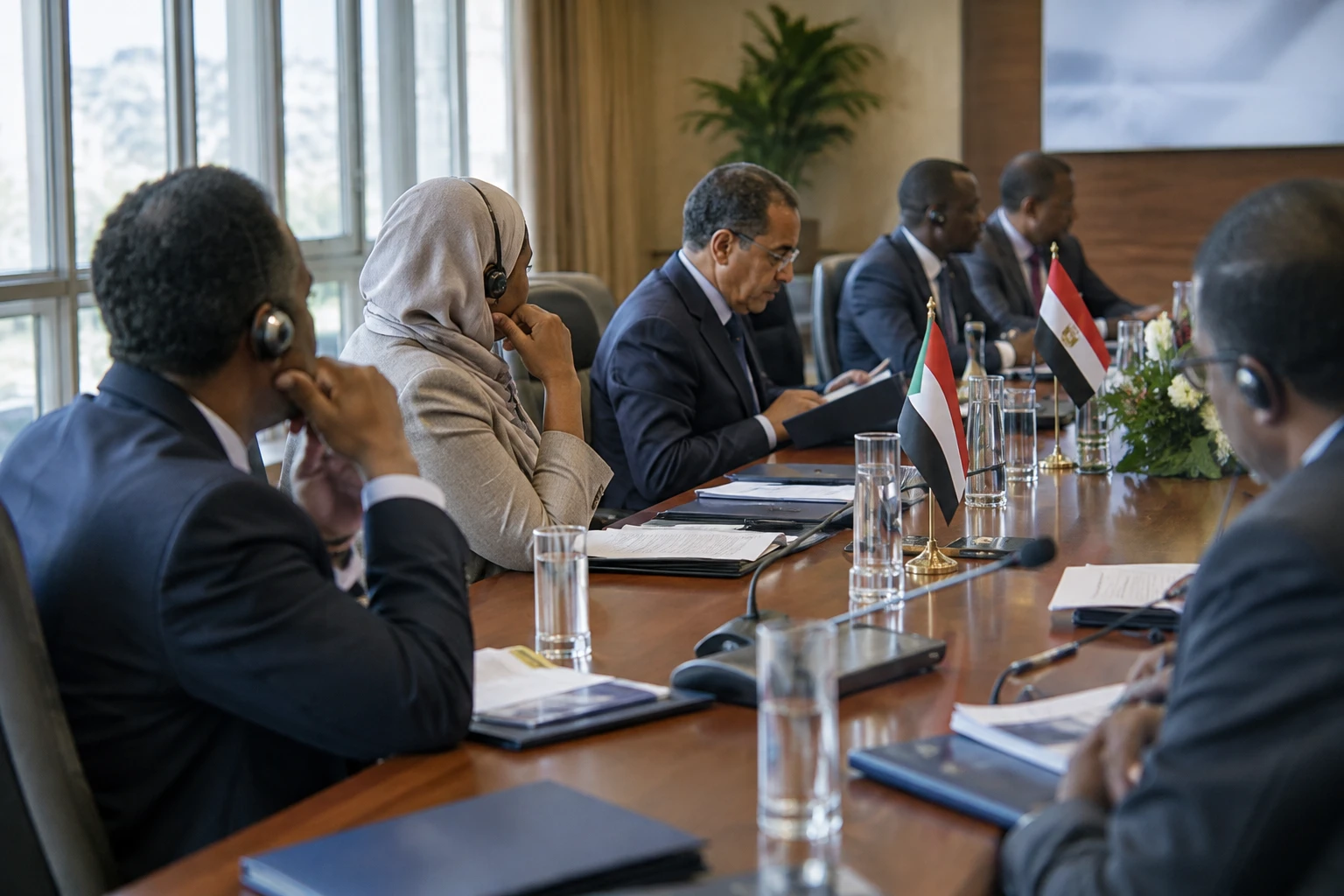
In northern Sudan, gold sustains thousands of families and also feeds hard-to-monitor networks. A reported strike near the Egyptian border has brought a practical question to the fore: who protects workers in a sector that has become vital, when borders and responsibilities remain contested ?
A heavy toll, still disputed
An air strike hit the Jabal al-Uqaydat gold-mining site on Saturday 10 October, in a mountainous area near the Sudan-Egypt border. The Sudanese group Emergency Lawyers puts the death toll at 72 miners. This estimate has not been independently established.
The available toll varies by source. The Sudan Doctors Network reported at least 13 dead and 28 injured, while warning that the number of casualties could rise. A survivor told the Associated Press that an unidentified aircraft had struck an artisanal mine. These accounts confirm that an attack was reported and that there were casualties, but they do not yet confirm the toll of 72 dead or the identity of the aircraft.
Abdel Fattah al-Burhan, head of the Sudanese army, ordered the creation of an investigative committee on Monday 12 October. It is to include representatives of the public prosecution, the judiciary and the security services. No timetable for publishing its findings has been announced.
Emergency Lawyers has attributed the strike to the Egyptian air force. Cairo, for its part, says its forces and police carried out an operation against illegal gold mining near the border. The Egyptian army says it dropped warning leaflets. It has not, however, directly responded to the allegations concerning the deaths.
On the same day, the Egyptian and Sudanese foreign ministers, Badr Abdelatty and Mohieddin Salem, spoke by phone. They reaffirmed their commitment to sovereignty, territorial integrity and respect for borders. This diplomatic statement does not resolve either the precise location of the strike or responsibility for the operation.
A border where security and gold intersect
The Jabal al-Uqaydat area lies in a sensitive border zone where mining, workers’ movements and security operations overlap. Accounts also differ over the territory involved: Egyptian authorities describe their intervention as an operation against illegal activity near their border, while Sudanese allegations describe a strike on Sudanese soil. An investigation will therefore need to establish the precise location, target and circumstances.
The tension is not new. In June, an Egyptian operation against illegal gold mining in the region was reported. Accounts cited at the time said workers had been killed, but the Egyptian army did not explicitly claim responsibility for deadly strikes. The recurrence of incidents in the area makes independent verification all the more important, rather than drawing conclusions based solely on the parties’ statements.
The case also unfolds against the war that has pitted the Sudanese army against the Rapid Support Forces (RSF), a paramilitary force, since April 2023. The conflict has upended incomes and movement across the country. In the north, artisanal gold mining provides work for people who have lost other livelihoods. But these mines are often far from state services and exposed to the risks of violence, accidents and trafficking.
An indispensable sector that is difficult to regulate
Traditional mining accounts for a major share of Sudan’s gold activity. Sudan Tribune reports that it produces about 80 % of output and that the mining sector supports nearly two million people. These estimates indicate the scale of the economic stakes, but do not mean that every miner works at the site that was hit.
This economic weight does not automatically translate into well-controlled public revenues. A United Nations experts’ report cited by the Associated Press estimated that in 2024 more than half of the gold mined in Sudan was sold outside official channels. In a wartime context, these flows can fund armed actors and reduce the resources available for public services. The benefits are therefore unevenly distributed: miners face the immediate risks, while trading networks and groups able to control sites can capture a share of the value.
Regulation is also a matter of health and workplace safety. Sudanese authorities announced measures in June 2026 to regulate traditional mines, gold markets and the use of hazardous chemicals. But enforcing these rules in remote regions amid a conflict requires institutions on the ground, safe transport routes and economic alternatives for workers.
What the investigation will need to clarify
The committee announced by al-Burhan will need, among other things, to compare witness accounts, physical evidence and available information about military operations. It will also need to establish the human toll. Until these checks are made public, the figure of 72 dead and the attribution of the strike to Egypt must remain explicitly attributed to Emergency Lawyers, rather than presented as definitively established facts.
For residents and workers in the north, the immediate concerns are safety around mining sites and access to medical care for the injured. For the two governments, the incident tests a bilateral relationship in which cooperation on borders and the fight against trafficking must contend with serious allegations. Restraint in public statements, however, is no substitute for a credible investigation or clarification of responsibility.
The implications extend beyond the two capitals. Sudan belongs to IGAD, the East African regional organisation, and the African Union, both of which advocate cooperation between states and the peaceful settlement of disputes. A transparent investigation could limit the risk of escalation and document working conditions in a wartime economy. Conversely, a contested account or one without published findings would leave tensions over the border and gold unresolved.