Algeria
 Egypt
 Libya
 Morocco
 Sudan
 Tunisia
 Benin
 Burkina Faso
 Cabo Verde
 Côte d'Ivoire
 Guinea
 Guinea-Bissau
 Liberia
 Mali
 Mauritania
 Niger
 Nigeria
 Senegal
 Sierra Leone
 The Gambia
 Togo
 Cameroon
 Central African Republic
 Chad
 DR Congo
 Equatorial Guinea
 Gabon
 Republic of the Congo
 São Tomé and Príncipe
 Burundi
 Comoros
 Djibouti
 Eritrea
 Ethiopia
 Kenya
 Madagascar
 Malawi
 Mauritius
 Mozambique
 Rwanda
 Seychelles
 Somalia
 South Sudan
 Tanzania
 Uganda
 Angola
 Botswana
 Eswatini
 Lesotho
 Namibia
 South Africa
 Zambia
 Zimbabwe
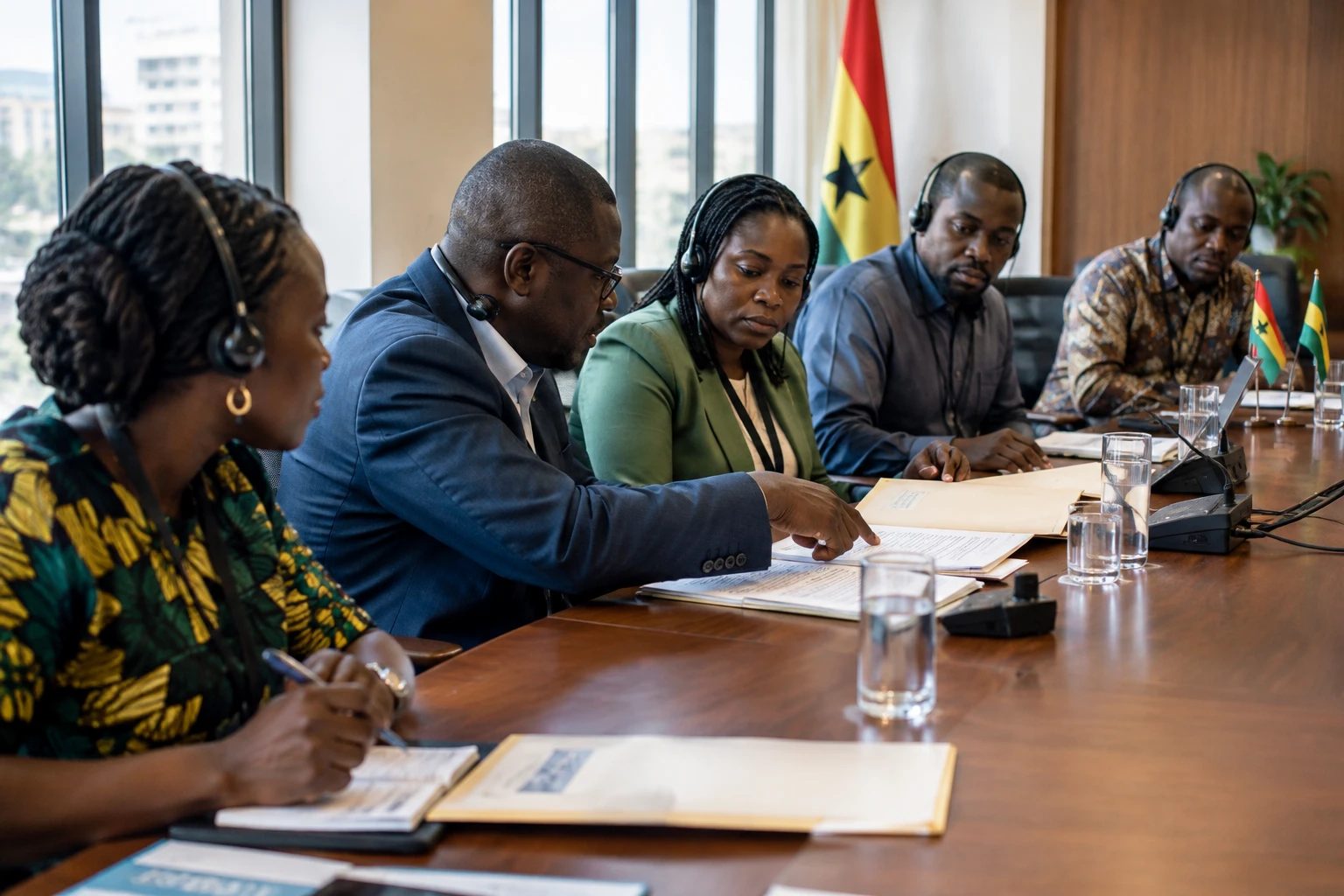
In Ghana’s mining regions, a tailings leak or extraction outside a permit does not stop at the boundaries of a mine. Water quality, farmland and the incomes of neighbouring communities are also at stake. Accra therefore wants to replace infrequent inspections with more regular monitoring, while increasing the state’s share of gold revenues.
Inspections targeting several operators
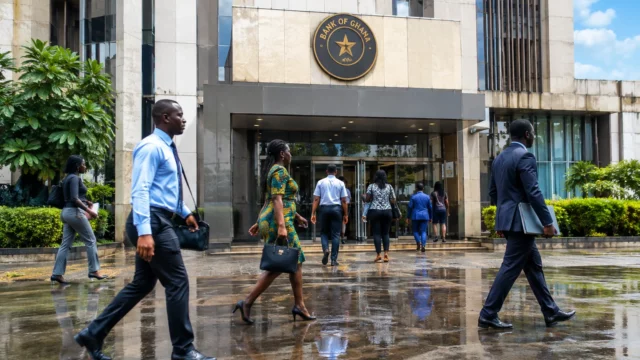
In late September 2026, Ghana’s Environmental Protection Agency (EPA) issued a notice of intended closure to Cardinal Namdini Mining, a subsidiary of China’s Shandong Gold group. This is not a final closure order: the company can respond before the regulator decides what action to take.
The notice concerns, among other things, a tailings pipeline that may have become detached, according to Michael Ayamga, the EPA’s deputy director of operations. The resulting leak may not have been reported quickly enough. At the time of the reported statements, the authority had not made public the volume spilled or any possible environmental damage. These matters therefore remain to be established.
The regulator has also suspended the activities of Earl International Group, which is also Chinese-owned, over a compliance issue linked to illegal mining activities. A company representative said the concerns had been addressed and that operations were authorised to resume the following Monday, under a permit. This account is not equivalent to an independent finding on the alleged conduct.
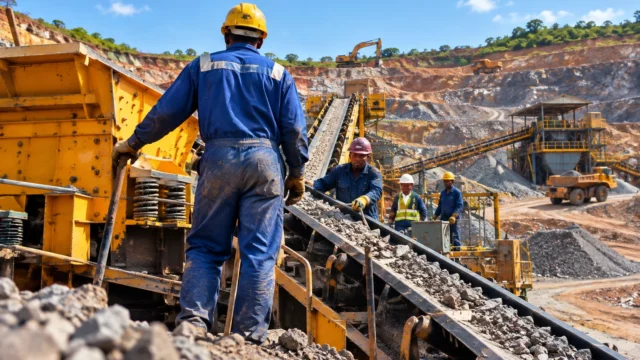
Inspections also involve groups of other nationalities. The EPA is reviewing an inspection report on the Tarkwa mine, operated by South Africa’s Gold Fields. No findings have been made public. The company said it had not received detailed results. The regulator also said it had fined AngloGold Ashanti’s Iduapriem mine the previous year for environmental breaches, without specifying their nature.
National wealth, local benefits under debate
Ghana has become an African gold-mining heavyweight. In 2024, the country produced about 4.8 million ounces, according to the Ghana Chamber of Mines, which ranked it first on the continent that year. This output includes both industrial and artisanal operations, which raise different oversight issues and generate different benefits.
But being the top producer does not, in itself, show what share of the value stays in the country or who benefits from it. Public revenues come in part from royalties and taxes. Employment, purchases from Ghanaian suppliers and company spending also matter. In communities near mine sites, the effects are also measured in access to water, the condition of the land and livelihood opportunities.
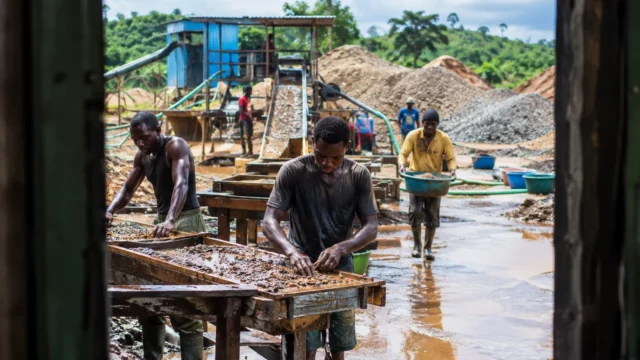
Ghanaian authorities have launched several reforms to gain greater influence over the sector. In 2025, the Minerals Commission began a review of mining policy and the legal framework. Proposals under discussion include greater local participation and better consideration of social and environmental impacts. The government has also backed forms of co-operative mining, particularly to regulate small-scale mining.
These policy directions respond to a real tension. Artisanal mining and illegal mining are not the same, even if their oversight sometimes overlaps. Shutting down unauthorised activity can curb damage and revenue losses. It can also deprive workers of income if no accessible and viable legal route is offered to them. For industrial mines, compliance requirements must also be applied consistently, regardless of the shareholder’s nationality.
From occasional inspections to continuous monitoring
The EPA says it wants to move from occasional inspections to continuous monitoring. The change matters most if inspections can detect a leak quickly, verify operators’ reports and make findings public. A notice opens a procedure; it does not, on its own, prove that damage has been caused. Likewise, the absence of public findings on Tarkwa does not justify assuming that a breach occurred.
This approach requires resources: inspection teams, reliable testing and monitoring of sites over time. It also requires information to be accessible to affected communities. Without data on incidents, their severity and corrective measures, residents remain dependent on the accounts given by companies or the authorities. Yet the consequences of a leak can be felt far beyond a mine site, particularly if waterways or cultivated land are affected.
Vigilance must extend beyond multinationals. In Ghana, artisanal mining and “galamsey” — a local term generally referring to illegal small-scale mining — occupy an important place in public debate. Authorities must tackle illicit activity while distinguishing between operators and making legalisation procedures workable. This is a national challenge, but it also sheds light on regional debates about formalising gold mining and tracing resources.
A test for West African mining governance
Within ECOWAS, the Economic Community of West African States, Ghana shares with its neighbours challenges involving cross-border mineral flows, investment and environmental protection. More credible inspections can help reduce areas of opacity, but their impact will depend on effective enforcement and co-operation between administrations.
What happens next will depend on the EPA’s decisions: Cardinal Namdini’s response to the notice, findings on Tarkwa and the action taken in the Earl International case. It will also be important to see how mining reform is reflected in rules, inspections and local benefits. For Ghanaians, the challenge is twofold: to preserve resources and ensure their exploitation provides sustainable funding for the country, without shifting environmental costs on to communities living near mines.
The Ghana Chamber of Mines reports that in 2024 its producing members spent $5.5 billion on local purchases, or 73.7% of their mining revenues. This indicator covers the Chamber’s members, not the entire sector or the distribution of this spending between regions. It nevertheless underscores that the issue is not limited to the amount of royalties: it also concerns jobs, skills and businesses able to take their place in the value chain.