Algeria
 Egypt
 Libya
 Morocco
 Sudan
 Tunisia
 Benin
 Burkina Faso
 Cabo Verde
 Côte d'Ivoire
 Ghana
 Guinea
 Guinea-Bissau
 Liberia
 Mali
 Mauritania
 Niger
 Nigeria
 Senegal
 Sierra Leone
 The Gambia
 Togo
 Cameroon
 Central African Republic
 Chad
 DR Congo
 Equatorial Guinea
 Gabon
 Republic of the Congo
 São Tomé and Príncipe
 Burundi
 Comoros
 Djibouti
 Eritrea
 Ethiopia
 Kenya
 Madagascar
 Malawi
 Mauritius
 Mozambique
 Rwanda
 Seychelles
 Somalia
 South Sudan
 Tanzania
 Uganda
 Botswana
 Eswatini
 Lesotho
 Namibia
 South Africa
 Zambia
 Zimbabwe
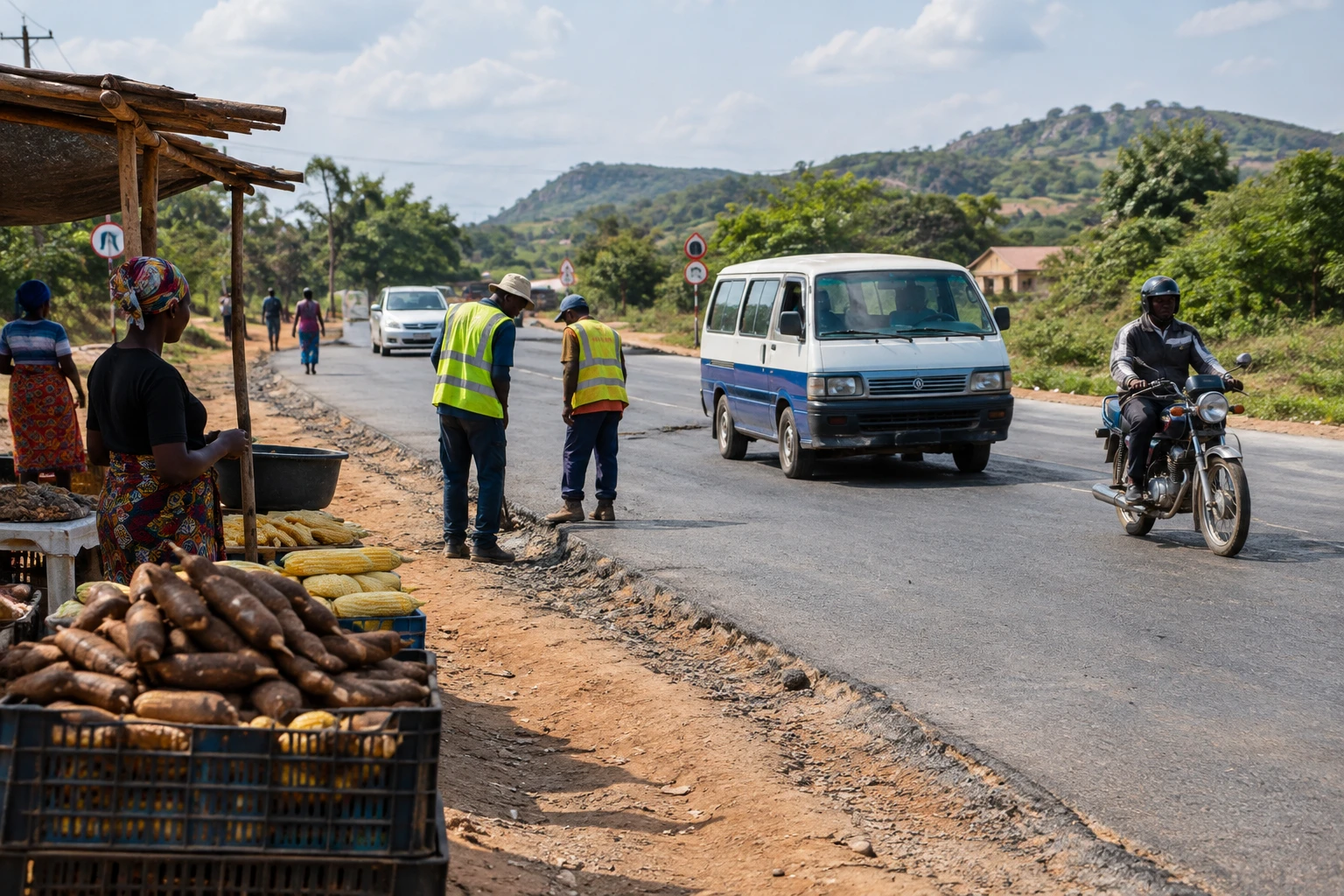
For farmers in Malanje, a passable road can matter as much as the harvest itself. Without reliable access to markets, transport costs rise and it becomes harder to get products to buyers. Five road projects announced in northern Angola are intended to address this practical constraint.
Connecting municipalities around Malanje
On 5 October 2026, Angola’s Ministry of Public Works announced the launch of works in Malanje province. The ceremony marking the handover of the projects took place in Cahombo. The projects cover five sections, with a total announced length of 255 kilometres, between the EN-230, Kiwaba Nzoji, Cambo Camana, Mbanji ya Ngola, Dala Samba and Marimba.
Some of these roads are to receive an asphalt surface for the first time. The provincial government also refers to road construction and rehabilitation, without specifying in its statement the length of each section or the full works schedule. The ministry says the work will benefit the municipalities of Malanje, Kiwaba Nzoji, Cahombo, Mbange Angola and Marimba.
The authorities expect the works to create about 1,100 jobs. This is an official estimate, not a tally of jobs already filled. Likewise, figures of more than 211 billion kwanzas and a duration of 24 months, which appear in some project presentations, have not been confirmed by the official statements consulted. They therefore cannot be presented here as established facts.
A matter of agriculture and everyday life
The province produces cassava, maize, rice, cotton and groundnuts, among other crops, according to information associated with the project. Livestock farming and forestry also contribute to the local economy. More reliable roads could help producers transport their goods, but the impact will depend on connections to markets, warehouses and other forms of transport.
The potential benefits will not be the same for everyone. Transport operators could save time and reduce wear on their vehicles. Farmers in connected areas could find it easier to reach buyers. By contrast, residents of communities that remain outside the network may see less improvement in their everyday journeys.
A road project alone does not guarantee lower prices or higher agricultural incomes. Transport costs also depend on fuel, the condition of secondary roads, the rainy season and the number of intermediaries. The quality of drainage, bridges and maintenance after handover will therefore matter as much as the asphalt itself.
One link in the Malanje corridor
Malanje is part of a broader strategy to connect the country’s interior with economic outlets. The Malanje corridor links Luanda eastwards, passing through Malanje province and Saurimo, as far as Dundo, near the border with the Democratic Republic of the Congo. The EN-230 is already included in transport projects along this route, which combines port access, rail and roads.
This approach aims to diversify an economy long dependent on hydrocarbons and facilitate the movement of domestic production. It complements major projects such as the Lobito rail corridor, which is geared towards trade with neighbouring countries. But infrastructure generates local benefits only if businesses, logistics services and communities can make practical use of it.
In southern Africa, Angola is a member of the Southern African Development Community (SADC), which brings together states committed to regional co-operation and integration. Connecting inland provinces is therefore also a cross-border issue: making trade with neighbouring countries more fluid while addressing the needs of residents and producers within the country.
Monitoring the works will be crucial
The next measure will be the actual progress of the five sections: whether work gets under way, milestones are met, construction is of good quality and access is maintained during the works. The authorities have announced improved mobility and the movement of agricultural produce. These outcomes remain to be measured once the roads open, particularly for villages far from the main routes.
The ministry also refers to urban investments and housing projects in the province. Coordinating them with the roads could strengthen links between neighbourhoods, municipalities and production areas. For Angolans, the issue is less the number of kilometres announced than whether these routes can be used all year round at an affordable cost.
In Luanda and across the provinces, the challenge is now to turn public investment into lasting services. In Malanje, that will depend on completing the projects, as well as providing a maintenance budget, quality inspections and public data on schedules and spending. Only under these conditions can the new links support the local economy and contribute to the regional network.