Algeria
 Egypt
 Libya
 Morocco
 Sudan
 Tunisia
 Benin
 Burkina Faso
 Cabo Verde
 Ghana
 Guinea
 Guinea-Bissau
 Liberia
 Mali
 Mauritania
 Niger
 Nigeria
 Senegal
 Sierra Leone
 The Gambia
 Togo
 Cameroon
 Central African Republic
 Chad
 DR Congo
 Equatorial Guinea
 Gabon
 Republic of the Congo
 São Tomé and Príncipe
 Burundi
 Comoros
 Djibouti
 Eritrea
 Ethiopia
 Kenya
 Madagascar
 Malawi
 Mauritius
 Mozambique
 Rwanda
 Seychelles
 Somalia
 South Sudan
 Tanzania
 Uganda
 Angola
 Botswana
 Eswatini
 Lesotho
 Namibia
 South Africa
 Zambia
 Zimbabwe
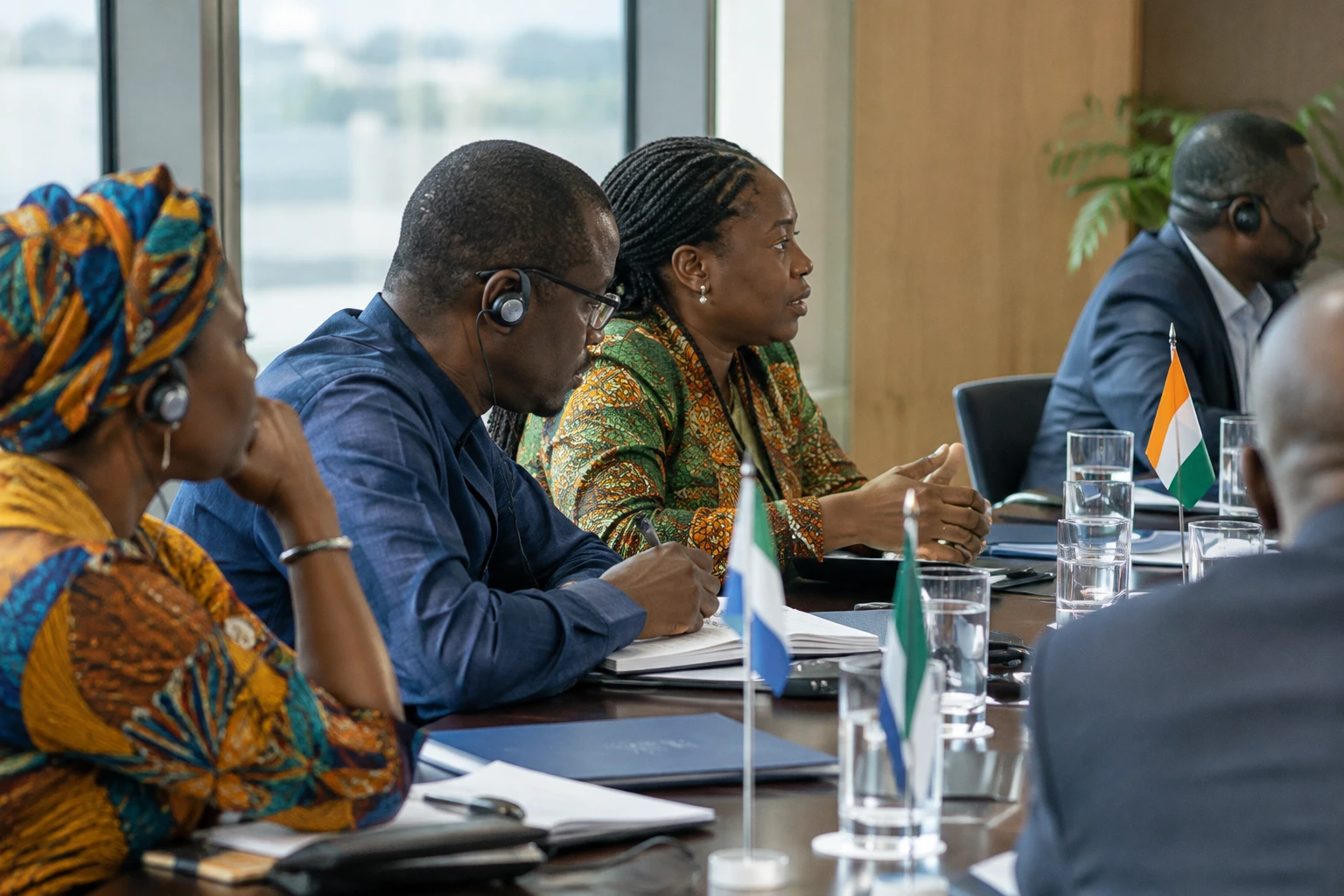
Can a political project become a forum for listening beyond the activists behind it? That is the PPA-CI’s stated aim as it seeks to take its proposals across the country and hear residents’ concerns through to the end of 2027.
A political project seeks to gauge the country’s mood
The African Peoples’ Party–Côte d’Ivoire (PPA-CI) launched its “Social Pact” on Saturday 10 October 2026 at a rally in Gonzagueville, in the Port-Bouët commune of Abidjan. Laurent Gbagbo, the party’s president, was absent. His representative, Sébastien Dano Djédjé, led the launch, according to several reports in Ivorian media.
Presented by the PPA-CI as a response to social divisions, the initiative draws on seven themes from the programme Laurent Gbagbo developed for the 2025 presidential election. The cost of living, youth employment and national reconciliation are among the concerns identified. The party says the project is aimed at all Ivoirians, not just its own members.
The announced approach relies on ambassadors tasked with presenting the different themes and gathering proposals in local communities. The process is due to continue until December 2027. The PPA-CI then plans to bring the contributions together in a white paper, which would be submitted to a Social Pact convention. For now, this is a timetable announced by the party, not a public mechanism with an institutional mandate.
A return to debate after a closed electoral cycle
The launch comes amid a political period shaped by the 2025 elections. Laurent Gbagbo was unable to stand in the presidential election: his candidacy was not among those approved by the Constitutional Council. The Independent Electoral Commission announced the provisional results of the vote held on 25 October 2025. With its candidate excluded, the PPA-CI is now seeking to maintain a national presence by means other than electoral competition.
This context gives the Pact a possible dual purpose. The party presents it as an exercise in listening and formulating public policy. At the same time, analysts see it as a way to remobilise its activists and remain visible between elections. These interpretations are not mutually exclusive: their relative weight will depend on the diversity of those consulted and how their proposals are reported back.
The challenge is tangible. Gathering grievances does not guarantee that they will be representative or translated into workable measures. The concerns of a young person looking for work in Abidjan, a rural producer facing transport costs or an informal-sector worker cannot be reduced to the same priorities. The process’s credibility will therefore also depend on its ability to hear voices beyond major cities and party structures.
Political tensions in the background
The ceremony also served to project unity within the PPA-CI, as several of its officials face legal proceedings. The party referred in particular to the cases involving Justin Koné Katinan and to Sébastien Dano Djédjé’s summons to appear before the anti-terrorism unit on Monday 12 October. Dano Djédjé’s summons was reported by Ivorian media; the available information before that date did not specify the reasons.
The PPA-CI denounces what it calls pressure on its officials. A government member cited in the original material disputes this interpretation, saying those concerned are subject to ordinary law. Without court documents detailing the charges and the stage of proceedings, it is important to distinguish between the party’s allegations, the government’s reported position and publicly established judicial facts. The existence of proceedings alone does not settle the political debate about their context.
This tension has a direct effect on political activism. Some participants fear that summonses and prosecutions could restrict opposition expression; the authorities, for their part, invoke the application of the law. Respect for political freedoms and the transparency of proceedings will shape confidence in institutions well beyond the PPA-CI.
The test: turning consultations into verifiable proposals
Côte d’Ivoire remains a central player in West Africa and a member of ECOWAS, the regional organisation for political and economic co-operation. Ivorian debates on political participation and easing electoral tensions therefore resonate in a region where institutions are regularly put to the test. But the Pact’s continental ambition will depend first on tangible results at home: open consultations, costed proposals and answers on their feasibility.
Another challenge lies in building support. This project alone does not give the PPA-CI the parliamentary or government power to implement its proposals. Its white paper could contribute to public debate, but its impact will depend on how it is received by other parties, local authorities, social organisations and decision-makers. The next steps to watch are the announced grassroots consultations and then publication of the document promised for 2027.
For Ivoirians, the measure of the Pact will not be the number of meetings held, but the space genuinely given to their priorities and the precision of the responses proposed. For the PPA-CI, it is also an organisational test: to prove that an initiative launched by a party can open up to society without becoming merely a remobilisation drive.