Algeria
 Egypt
 Libya
 Morocco
 Sudan
 Tunisia
 Benin
 Burkina Faso
 Cabo Verde
 Côte d'Ivoire
 Ghana
 Guinea
 Guinea-Bissau
 Liberia
 Mali
 Niger
 Nigeria
 Senegal
 Sierra Leone
 The Gambia
 Togo
 Cameroon
 Central African Republic
 Chad
 DR Congo
 Equatorial Guinea
 Gabon
 Republic of the Congo
 São Tomé and Príncipe
 Burundi
 Comoros
 Djibouti
 Eritrea
 Ethiopia
 Kenya
 Madagascar
 Malawi
 Mauritius
 Mozambique
 Rwanda
 Seychelles
 Somalia
 South Sudan
 Tanzania
 Uganda
 Angola
 Botswana
 Eswatini
 Lesotho
 Namibia
 South Africa
 Zambia
 Zimbabwe
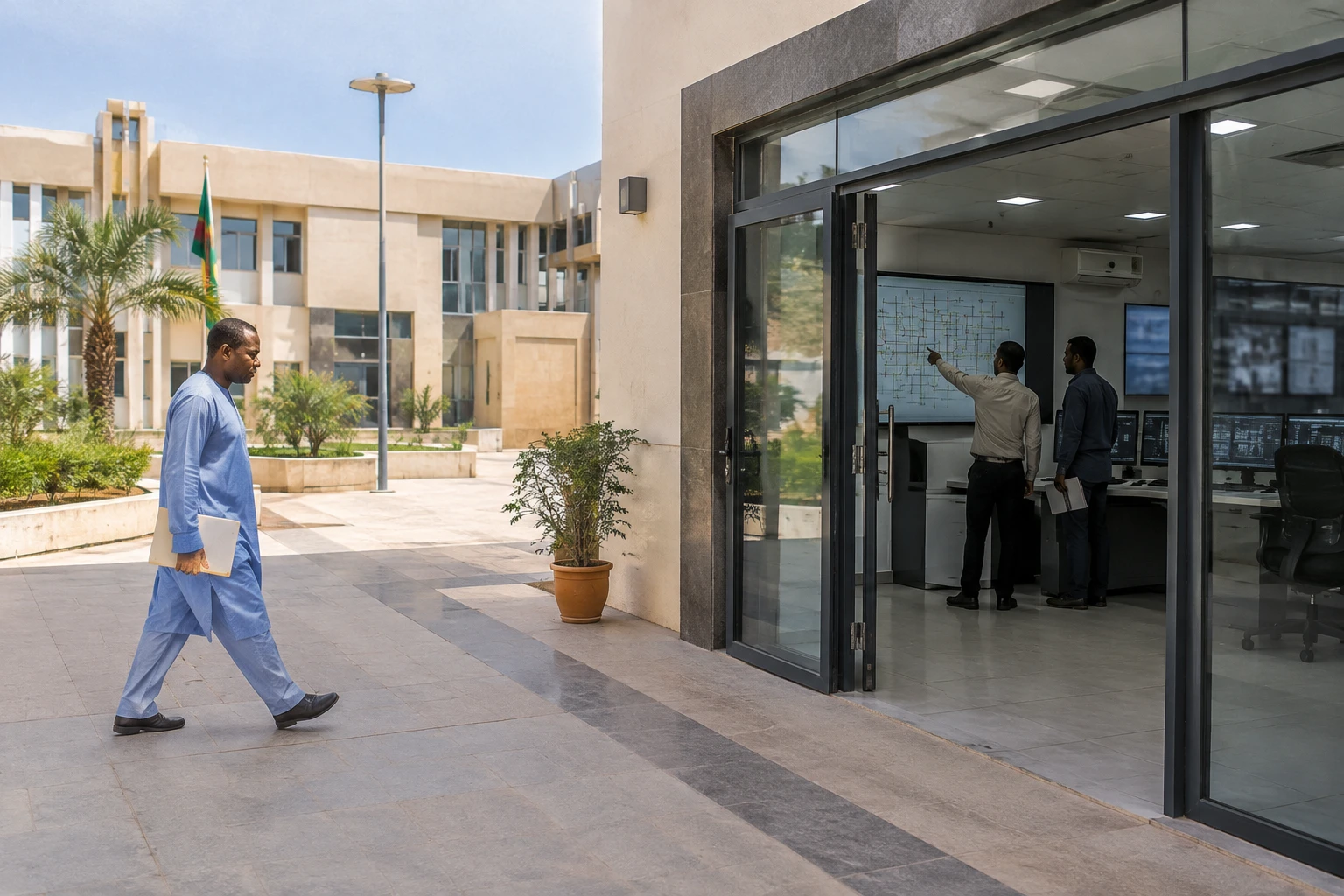
In Nouakchott, a few days after two fires disrupted strategic electricity installations, the formation of the new government has sent an initial political signal: the minister responsible for energy is leaving his post. But changing the office-holder alone does not resolve the central question for residents and businesses: how can a grid failure be prevented from once again causing widespread power cuts?
A reshuffle after publication of an inquiry report
President Mohamed Ould Cheikh El Ghazouani reappointed El Moctar Ould Djay as Prime Minister on Friday 9 October 2026. The following day, Saturday 10 October, the presidency announced the composition of the new team, which has 29 members, including the minister delegate responsible for decentralisation. The official list confirms Mohamed Ould Khaled’s departure from the Ministry of Energy and Petroleum.
The change comes after publication of the report by the independent commission tasked with examining fires at two substations belonging to the Mauritanian Electricity Company (SOMELEC), located in Nouakchott-Nord and Nouakchott-Ouest. The fires occurred on 18 and 21 August, according to coverage of the follow-up meeting by the Mauritanian News Agency (AMI). The report was made public on 8 October.
The document describes technical, administrative and contractual irregularities in the implementation of an emergency electricity programme. A detailed account in the Mauritanian press cites, in particular, the award of a contract to a company deemed unqualified, changes to specifications and the commissioning of installations despite technical reservations. These findings implicate several players and bodies in the sector; they therefore go beyond the minister’s political responsibility.
The presidency has given the Energy and Petroleum portfolio to Mohamed Ould Abdel Vetah, who has held the post before. The inquiry report must now be translated into concrete measures. The Prime Minister’s Office said the head of state had called for its recommendations to be fully implemented.
Changes to key and economic portfolios
The reshuffle extends beyond the electricity sector. Ba Ousmane takes over Defence, while El Moctar Ould Ahmed Bouceif has been appointed to the Interior, the Promotion of Decentralisation and Local Development portfolio. Changes have also been made at the ministries of Finance, Health, Agriculture, Mines and Culture.
The new team includes eight women, according to tallies reported when it was announced. Aïssata Lam takes the Fisheries, Maritime Infrastructure and Ports portfolio, a sector important for coastal employment, public revenue and exports. She takes up the post as Nouakchott and the European Union negotiate the future of their fisheries partnership.
The current protocol governing European vessels’ access to Mauritanian waters expires on 14 November 2026, according to the European Commission. The agreement provides for a European financial contribution and fishing opportunities for several fleets. The negotiations matter to the authorities and European operators, but also to Mauritanian stakeholders: artisanal fishers, coastal communities, processing companies and port workers. The terms of access to resources and the local benefits will therefore be issues to watch.
Power failures are a daily concern beyond the capital
The fires showed how much households, businesses and public services depend on a reliable grid. Power cuts directly affect economic activity and domestic life; their impact can be greater for small businesses, which have fewer resources to cushion an interruption. Areas of Nouakchott directly connected to the damaged substations faced the immediate consequences, while investment and maintenance decisions also affect networks in the country’s interior.
The case highlights a governance issue: accountability is measured not only by appointments. It also depends on transparent procurement, technical checks before commissioning and SOMELEC’s ability to prevent incidents. Publication of the report provides a basis for that scrutiny. Its recommendations’ implementation, in turn, will show whether practices really change.
Regionally, Mauritania belongs to the Arab Maghreb Union, while its economic and energy links with its West African neighbours make infrastructure continuity particularly important. This regional position should not, however, be confused with membership of ECOWAS: Mauritania left the organisation in 2000. At continental level, the issue reflects a challenge shared by many countries: securing equipment, expanding capacity and ensuring a sufficiently reliable service for both populations and productive activities.
The next decisions will be decisive
The cabinet’s composition renews several posts, but the first test will be implementation. The administrative follow-up to the report, improvements to Nouakchott’s installations and the checks applied to electricity projects will need to be monitored. For the new minister, the challenge is to restore confidence in the management of the sector without reducing the matter to the departure of his predecessor.
At the same time, negotiations with the European Union will need to advance before the fisheries protocol expires on 14 November. These two issues bring the new government back to the same expectation: turning announcements into verifiable decisions whose effects are felt both in the capital and in the country’s interior regions.
Official composition of the new Mauritanian government, published by AMI · Publication of the inquiry report on the fires at the electrical substations · Detailed findings of the inquiry, reported by Madar · Dates and provisions of the fisheries protocol between the European Union and Mauritania