Algeria
 Egypt
 Libya
 Morocco
 Sudan
 Tunisia
 Benin
 Burkina Faso
 Cabo Verde
 Côte d'Ivoire
 Ghana
 Guinea
 Guinea-Bissau
 Liberia
 Mali
 Mauritania
 Niger
 Nigeria
 Senegal
 Sierra Leone
 The Gambia
 Togo
 Cameroon
 Central African Republic
 Chad
 DR Congo
 Equatorial Guinea
 Gabon
 Republic of the Congo
 São Tomé and Príncipe
 Burundi
 Comoros
 Djibouti
 Eritrea
 Ethiopia
 Madagascar
 Malawi
 Mauritius
 Mozambique
 Rwanda
 Seychelles
 Somalia
 South Sudan
 Tanzania
 Uganda
 Angola
 Botswana
 Eswatini
 Lesotho
 Namibia
 South Africa
 Zambia
 Zimbabwe
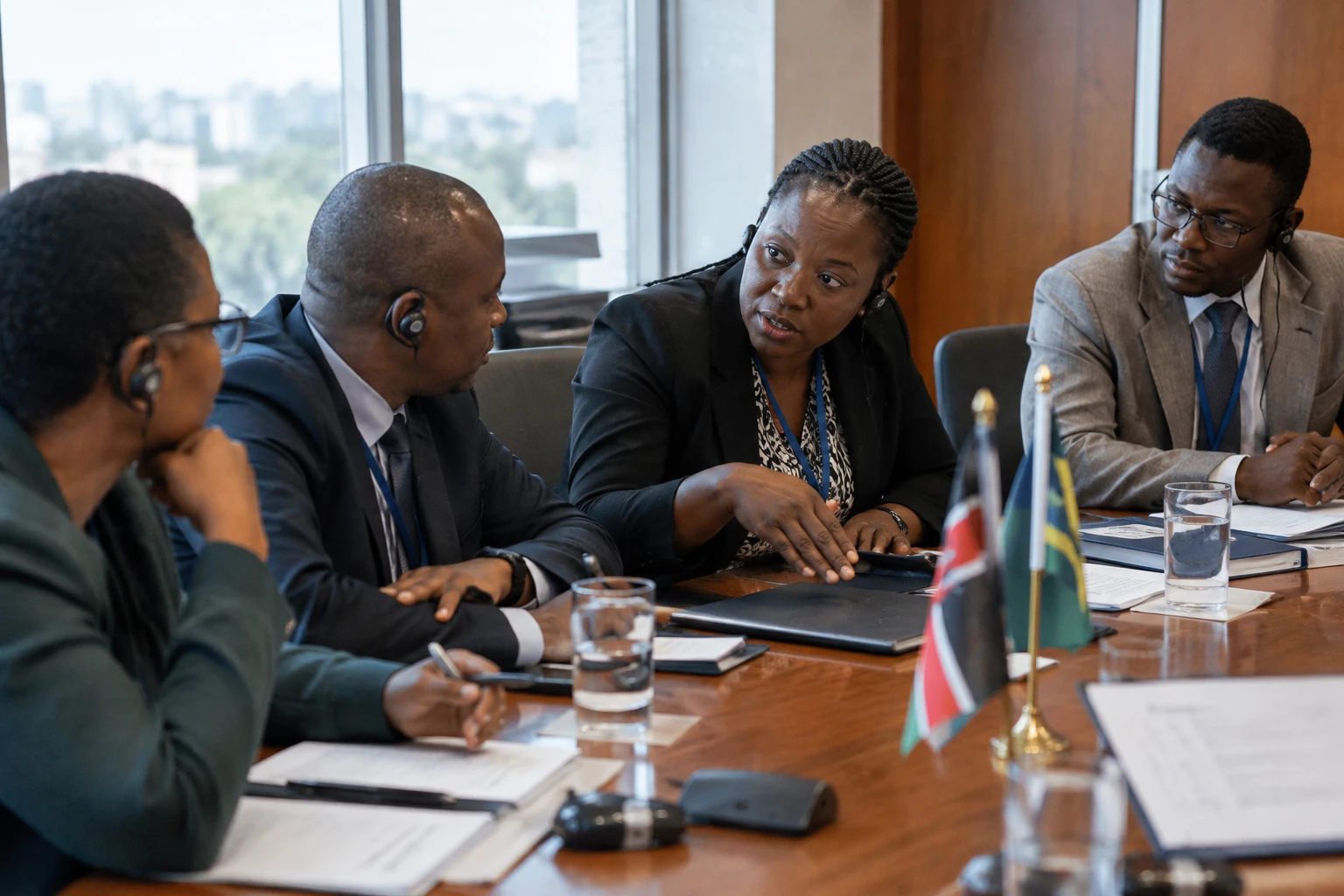
In Kenya, too little rain can cost far more than a harvest. For farming families in Nyeri, uncertainty affects incomes, school fees and psychological health. Health professionals there report distress linked to repeated losses, without establishing that the weather alone causes a mental disorder.
In Nyeri, the seasons no longer provide the same cues
In Nyeri County, in central Kenya, coffee, tea, food crops and livestock sustain many households. Climate hazards therefore affect several activities at once. The county’s climate plan identifies irregular rainfall, droughts, animal diseases and declining agricultural production among the risks to livelihoods.
This pressure does not affect farmers alone. When harvests decline, cooperatives, traders and agricultural workers may also lose income. Women, who are often active in the coffee and tea sectors and shoulder much of the work related to water and household food, are particularly exposed to the everyday consequences of these shocks.
In this region, farmers have to contend with less predictable rainy seasons. Variability in the timing of rainfall complicates decisions about when to sow and how to maintain plantations. To track changes in rainfall, the Kenya Meteorological Department publishes monthly and seasonal forecasts, designed in particular to support agricultural planning.
A mounting toll from agricultural losses
Josephine Kihu has been growing coffee for around 30 years. She says there is no longer always enough rain for her young plants. A drizzle, she observes, is no substitute for sustained rainfall: she then has to hire someone to water the coffee trees. This extra expense arises before she even knows whether the harvest will bring in money.
In Kiawara, in Kieni sub-county, Charles Ndung’u raises livestock and also grows beans. He had prepared his land after forecasts indicated that the rains were coming, and then sowed his seeds. He is now waiting to see whether they will germinate. “If the crops don’t grow, it will be even more stressful. We have no money,” he says.
Clinical psychologist Kahindo Gacago, who practises in Nyeri, says that around one-third of his annual caseload consists of farmers facing mental health difficulties that he associates with repeated agricultural losses. This proportion describes his patients, not all farmers in the county: it is not a measure of prevalence across Kenya.
He describes chronic stress, fuelled by the need to constantly revisit production decisions and by the feeling of no longer having control over an essential factor such as rainfall. Testimonies and clinical observations point to real distress, but are not enough to demonstrate a simple, direct medical relationship between climate change and mental illness.
The response also depends on local services
The financial consequences can spread from the fields to the household. A failed harvest reduces the money available to buy inputs, pay workers or cover children’s schooling. For households that depend on selling a few animals or their crops, losing a season can therefore undermine both their livelihood and essential spending.
Responses cannot be limited to distributing seeds or advising farmers to switch crops. They also require affordable access to water, irrigation, credit and weather information, as well as agricultural support tailored to local constraints. Research conducted in Nyeri County highlights how a lack of capital, unreliable water supplies and difficulties accessing services can hamper adaptation.
The county’s climate action plan already recognises that changing rainfall patterns and droughts threaten agriculture, livestock and income from agricultural products. The challenge now is to link these measures with mental health services. In rural areas, identifying distress and referring people to a professional can matter as much as strengthening agricultural prevention measures.
A Kenyan issue with regional reach
Kenya is a member of the East African Community (EAC), which brings together several neighbouring countries and works, among other things, on economic cooperation and regional issues. The hazards affecting Kenya’s agricultural systems are part of an East African context in which rural households depend heavily on seasons and water resources. But solutions must remain adapted to the realities of each county and sector.
At national level, the next step is to bring forecasts, investment in water and local services together. The Kenya Meteorological Department says its bulletins are designed to help relevant sectors anticipate risks. For farmers, their usefulness also depends on whether they can access them, whether they are translated into practical advice and whether farmers have the means to act on that information.
In Nyeri, climate uncertainty is felt as much in the fields as in household decisions. The question is not simply whether it will rain: it is also whether farmers can absorb a poor season without losing their incomes, their bearings and access to care.