Algeria
 Egypt
 Libya
 Morocco
 Sudan
 Tunisia
 Benin
 Burkina Faso
 Cabo Verde
 Côte d'Ivoire
 Ghana
 Guinea
 Guinea-Bissau
 Liberia
 Mali
 Mauritania
 Niger
 Nigeria
 Senegal
 Sierra Leone
 The Gambia
 Togo
 Cameroon
 Central African Republic
 Chad
 DR Congo
 Equatorial Guinea
 Gabon
 Republic of the Congo
 São Tomé and Príncipe
 Burundi
 Comoros
 Djibouti
 Eritrea
 Ethiopia
 Kenya
 Malawi
 Mauritius
 Mozambique
 Rwanda
 Seychelles
 Somalia
 South Sudan
 Tanzania
 Uganda
 Angola
 Botswana
 Eswatini
 Lesotho
 Namibia
 South Africa
 Zambia
 Zimbabwe

In Nosy Be, a land dispute does not always end in court. Threats targeting five lawyers are a reminder that, beyond the contested plots, access to independent legal representation and confidence in institutions are also at stake.
On this island in north-western Madagascar, land lies at the intersection of local interests, investment projects and an economy in which tourism matters. Court rulings can therefore have tangible consequences for families who occupy or cultivate land, as well as for economic players seeking to develop it.
Threats after court rulings
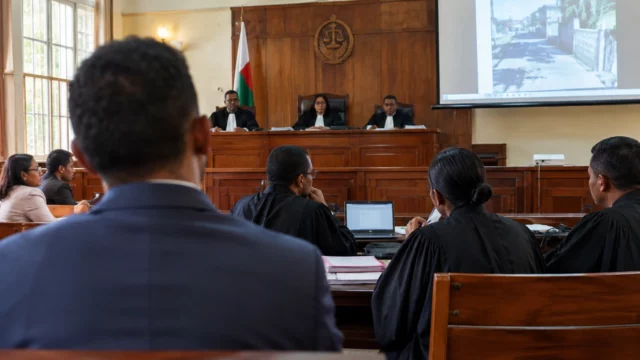
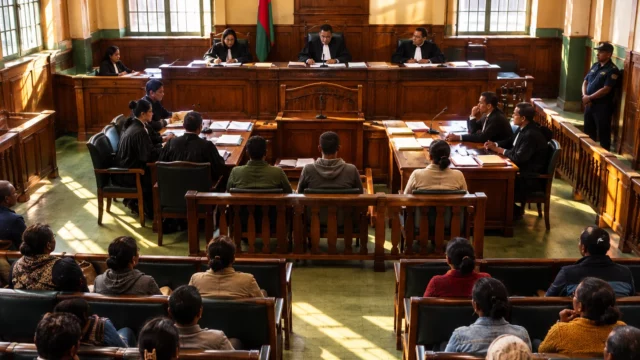
In late September 2026, the Madagascar Bar Association denounced threats and intimidation targeting five lawyers practising in Nosy Be. The incidents, reported in particular on social media, are said to be linked to rulings in land disputes. The publicly available information does not establish the identity of those responsible or the details of each case.
Bar president Ferdinand Ranary Rakotoarisoa stressed that challenging a ruling must be done through the legal avenues provided by law, not through threats against the parties’ lawyers. The Bar Association also warned that the posts could endanger lawyers’ safety and independence, as well as the free exercise of the rights of the defence. Two Madagascan media outlets reported this position around the same time.
This distinction is essential: a court ruling can be challenged, but intimidating a lawyer threatens the very possibility of doing so. When legal professionals fear reprisals, people involved in proceedings — particularly those with fewer resources — may give up asserting their rights.
In Nosy Be, land is also a question of resources
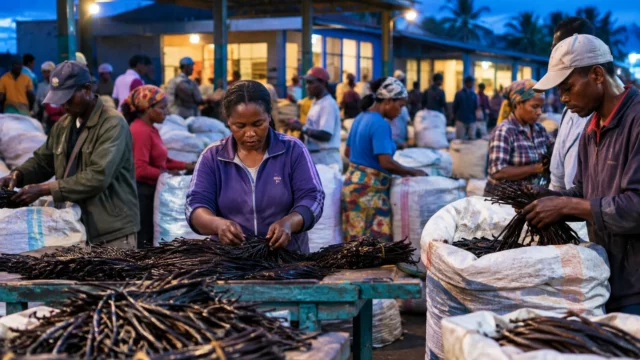
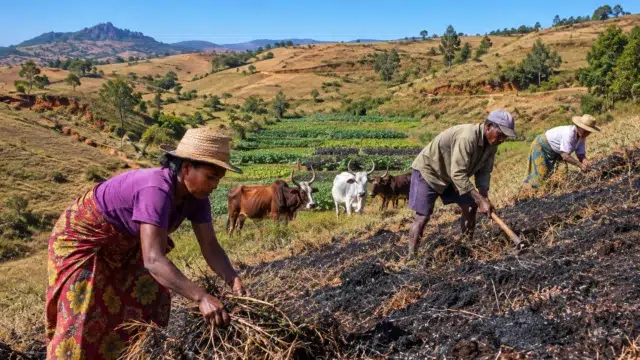
Nosy Be is an important tourist destination for Madagascar. But economic activity and development projects do not erase the issues surrounding land that is already inhabited, cultivated or passed down within families. The point of friction often lies in proof of ownership: some people have a title or certificate, while others rely on long-standing occupation or local agreements that are harder to have recognised in legal proceedings.
Mamy Rakotondrainibe, president of the Tany Collective, describes a situation in which small-scale farmers and landowners without official land documents are particularly exposed. She is calling for a specialised court, with investigators and judges dedicated to land disputes. The proposal highlights a practical problem: in complex cases, the ability to gather documents, pay for legal advice and pursue proceedings can weigh as heavily as the right being claimed.
The issue is not limited to opposition between residents and foreign investors. Madagascan actors can also be involved in land deals, on their own behalf or in partnership with others. It is therefore important to identify responsibility in each case rather than reduce disputes to a conflict between “locals” and “foreigners”.
The case of Nosy Sakatia, an island neighbouring Nosy Be, illustrates how sensitive these issues are. In December 2025, Madagascan media reported the authorities’ decision to end a contested land lease and begin a process to regularise residents’ rights. This does not prove that the current cases involve the same project. It does, however, show that administrative decisions on land can become a lasting public issue.
Confidence in justice, a local concern
The threats come amid fragile confidence in the justice system and land administration. Madagascar’s Independent Anti-Corruption Bureau receives complaints about the functioning of public services. Its 2025 annual report provides data on these reports, but a complaint alone does not constitute proof of an act of corruption. It is therefore important not to turn a perception or complaint into an established finding about every service or case.
This qualification does not diminish what is at stake. When procedures appear opaque or inaccessible, an adverse ruling can be seen as proof that the system protects some interests better than others. Judicial and land authorities are consequently under pressure to ensure transparent procedures, access to documents and the safety of those involved.
The effects are unequal. Investors and formal operators can draw on legal teams and administrative documents. Farmers, residents and small landowners may have fewer resources to produce evidence or sustain lengthy proceedings. In Antananarivo, national institutions can set rules and make decisions. But on the island, their credibility is measured by how rights and legal remedies are understood and applied in everyday life.
A test for the rule of law and the region
Madagascar is a member of the Southern African Development Community (SADC), a regional organisation for political and economic cooperation. Threats against lawyers are primarily the responsibility of Madagascar’s institutions. They also raise a broader question: whether states can ensure that disputes over resources and land are settled through accessible procedures rather than pressure.
In the short term, several issues warrant attention: the effective protection of the five lawyers, the legal action taken over the threats, and whether the parties can pursue their appeals without intimidation. The call for a specialised court also raises a public policy question: should a new body be created, or should the resources and expertise of existing courts and land services be strengthened? The authorities have not, according to the information cross-checked here, announced a response to this proposal.
The stakes therefore go beyond the cases in Nosy Be. For residents, it is a matter of being able to defend their land rights without risking reprisals. For legal professionals, it is a matter of working without pressure. And for the Madagascan state, it is a matter of showing that challenges to rulings are dealt with through institutions, with effective legal remedies and facts examined case by case.