
 Algeria
 Egypt
 Libya
 Morocco
 Sudan
 Tunisia
 Benin
 Cabo Verde
 Côte d'Ivoire
 Ghana
 Guinea
 Guinea-Bissau
 Liberia
 Mali
 Mauritania
 Niger
 Nigeria
 Senegal
 Sierra Leone
 The Gambia
 Togo
 Cameroon
 Central African Republic
 Chad
 DR Congo
 Equatorial Guinea
 Gabon
 Republic of the Congo
 São Tomé and Príncipe
 Burundi
 Comoros
 Djibouti
 Eritrea
 Ethiopia
 Kenya
 Madagascar
 Malawi
 Mauritius
 Mozambique
 Rwanda
 Seychelles
 Somalia
 South Sudan
 Tanzania
 Uganda
 Angola
 Botswana
 Eswatini
 Lesotho
 Namibia
 South Africa
 Zambia
 Zimbabwe
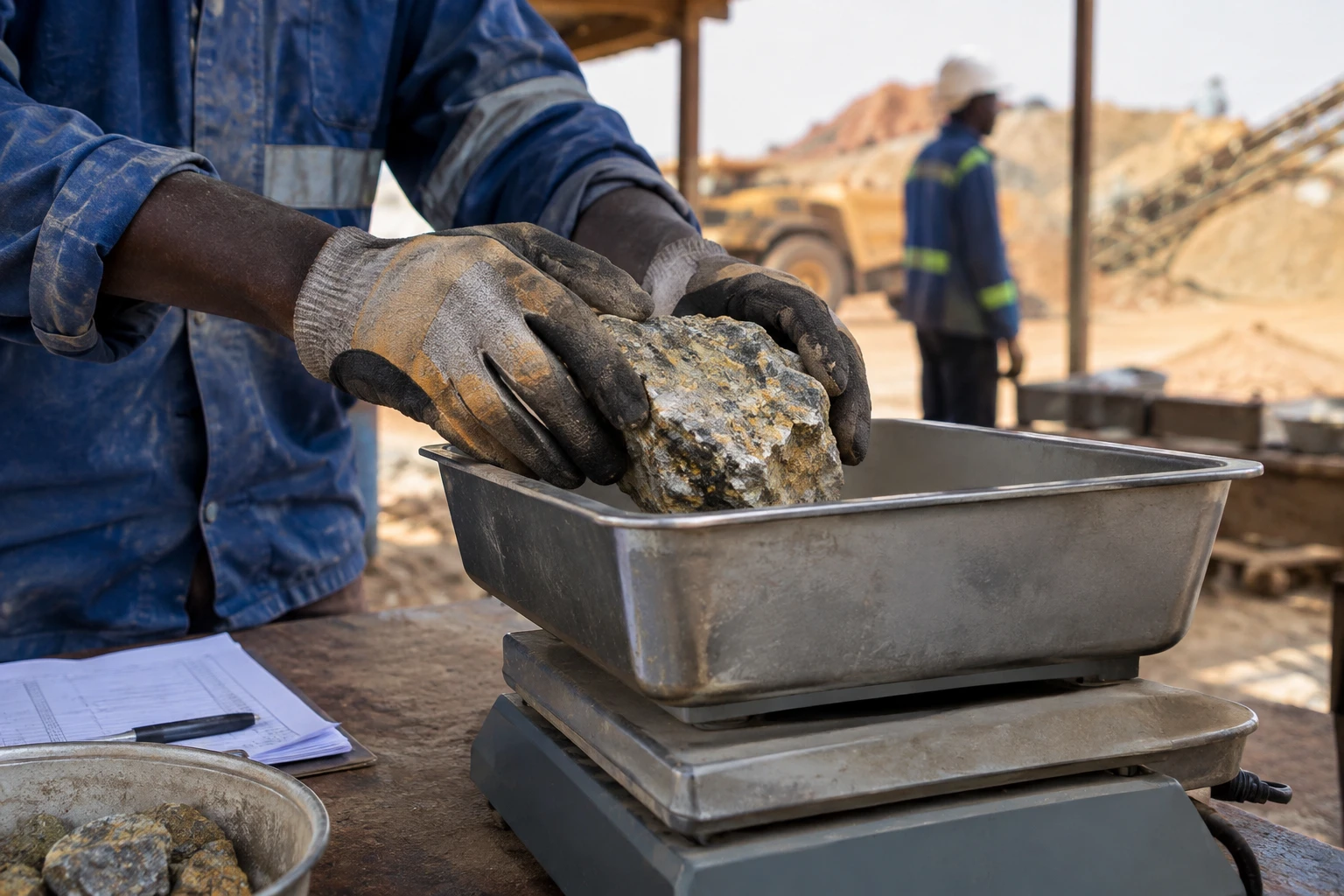
In Burkina Faso, the ramp-up at Kiaka is giving West African Resources (WAF) a new dimension. But producing more depends on more than the availability of ore: the ground must also be prepared, notably with explosives. This constraint did not prevent the company from reporting a quarterly record, while leaving questions over the reliability of supplies unresolved.
Two mines, sharply higher production
For the quarter ended September 2026, WAF says it produced 127,950 ounces of gold, or about four tonnes. The group also reports sales of 135,245 ounces at an average realised price of $4,240 an ounce. Since January, its production has reached 360,857 ounces, or about 11.2 tonnes. These figures are set out in its third-quarter 2026 production update.
The company has maintained its annual target of 430,000 to 490,000 ounces, or about 13.4 to 15.2 tonnes. This is a company forecast, not an achieved result. WAF says it is on track to meet it. The final outcome will still depend on the mines’ performance and the ability to sustain operations through to the end of the year.
Kiaka, which began production in June 2025, is driving this growth. The site complements Sanbrado, the group’s older operation. In the first quarter of 2026, the two mines had already produced 107,728 ounces, according to WAF figures reported by Burkinabè outlet L’Économiste du Faso. The record in the following quarter confirms the increase in production scale, even if results at each site may vary.
Explosives, a critical link in mining operations
In an open-pit mine, explosives are used to break up rock before it is extracted. When deliveries fall short, teams may have to reorganise work and prioritise areas that can be accessed without blasting. The removal of waste rock — rock that does not contain the sought-after ore — may then slow down. Yet this work opens up access to future mining areas.
Information released about WAF’s operations reported improved deliveries in the third quarter, thanks to the regular supplier and a second supplier. It nevertheless noted that availability remained insufficient. The quarterly production figures and annual target are corroborated by WAF’s update. However, details on volumes delivered, previous restrictions and the expected authorisation for the Kiaka facility do not appear in this summary announcement; they should therefore be regarded as information reported by the company, rather than as data independently confirmed here.
WAF has built a facility at Kiaka to manufacture and store explosives on site. Its commissioning could reduce dependence on external deliveries, but it requires authorisation from the Burkinabè authorities. The case illustrates a reality often less visible than production volumes: a mine’s performance also depends on logistics, permits and supporting infrastructure.
A strategic sector under greater national oversight
Gold plays an important role in Burkina Faso’s economy and is subject to increased public scrutiny. In the first half of 2026, the ministry responsible for mining announced that about 55 tonnes of gold had passed through official channels, including nearly 26 tonnes from industrial mines and about 29 tonnes collected from artisanal and semi-mechanised operations. These figures, reported by Burkinabè outlet Espoir Info, provide a national picture but do not relate solely to production from large-scale mines.
The debate also concerns the share of value that stays in the country. The Burkinabè state holds a stake in Kiaka and has taken steps to increase it, according to information published in April by L’Économiste du Faso. At the same time, the Ministry of Mines monitors mining companies’ local procurement plans through its official local content platform. The issue concerns public revenues, as well as suppliers, jobs and economic activity around the sites.
This policy is part of a regional trend. Several West African states are seeking to strengthen their control over mineral resources, process more of them locally and increase national participation. Burkina Faso inaugurated its first gold refinery in Ouagadougou in September 2026, a project presented by the authorities as a way to develop local processing. The announcement was also reported by the Associated Press.
The next test: sustaining the pace while keeping benefits in focus
For WAF, the final months of 2026 will need to show that the third-quarter record can translate into annual production in line with its forecasts. The company has also reported the start of underground mining at M5 South. Future reports will provide further information on costs, sales and each site’s performance; the current update is not enough to establish the quarter’s overall profitability.
For Burkina Faso, the stakes go beyond the results of a mining group. High production can support exports and revenues, but the benefits will also depend on public levies, local procurement, employment and the rules governing operations. People living near the mines and local businesses do not automatically benefit from higher volumes: the mechanisms for sharing and oversight matter.
The next steps will therefore depend on several concrete decisions: explosives supplies, authorisation for the Kiaka facility and the ability of Burkinabè institutions to monitor the sector’s economic commitments. WAF’s trajectory will also be watched in a West Africa where governments are gradually redefining the terms on which resources are exploited. For now, the annual target remains the company’s own forecast; whether it is achieved, and what benefits it brings nationally, remains to be assessed.



