Algeria
 Egypt
 Libya
 Morocco
 Sudan
 Tunisia
 Benin
 Burkina Faso
 Cabo Verde
 Côte d'Ivoire
 Ghana
 Guinea
 Liberia
 Mali
 Mauritania
 Niger
 Nigeria
 Senegal
 Sierra Leone
 The Gambia
 Togo
 Cameroon
 Central African Republic
 Chad
 DR Congo
 Equatorial Guinea
 Gabon
 Republic of the Congo
 São Tomé and Príncipe
 Burundi
 Comoros
 Djibouti
 Eritrea
 Ethiopia
 Kenya
 Madagascar
 Malawi
 Mauritius
 Mozambique
 Rwanda
 Seychelles
 Somalia
 South Sudan
 Tanzania
 Uganda
 Angola
 Botswana
 Eswatini
 Lesotho
 Namibia
 South Africa
 Zambia
 Zimbabwe
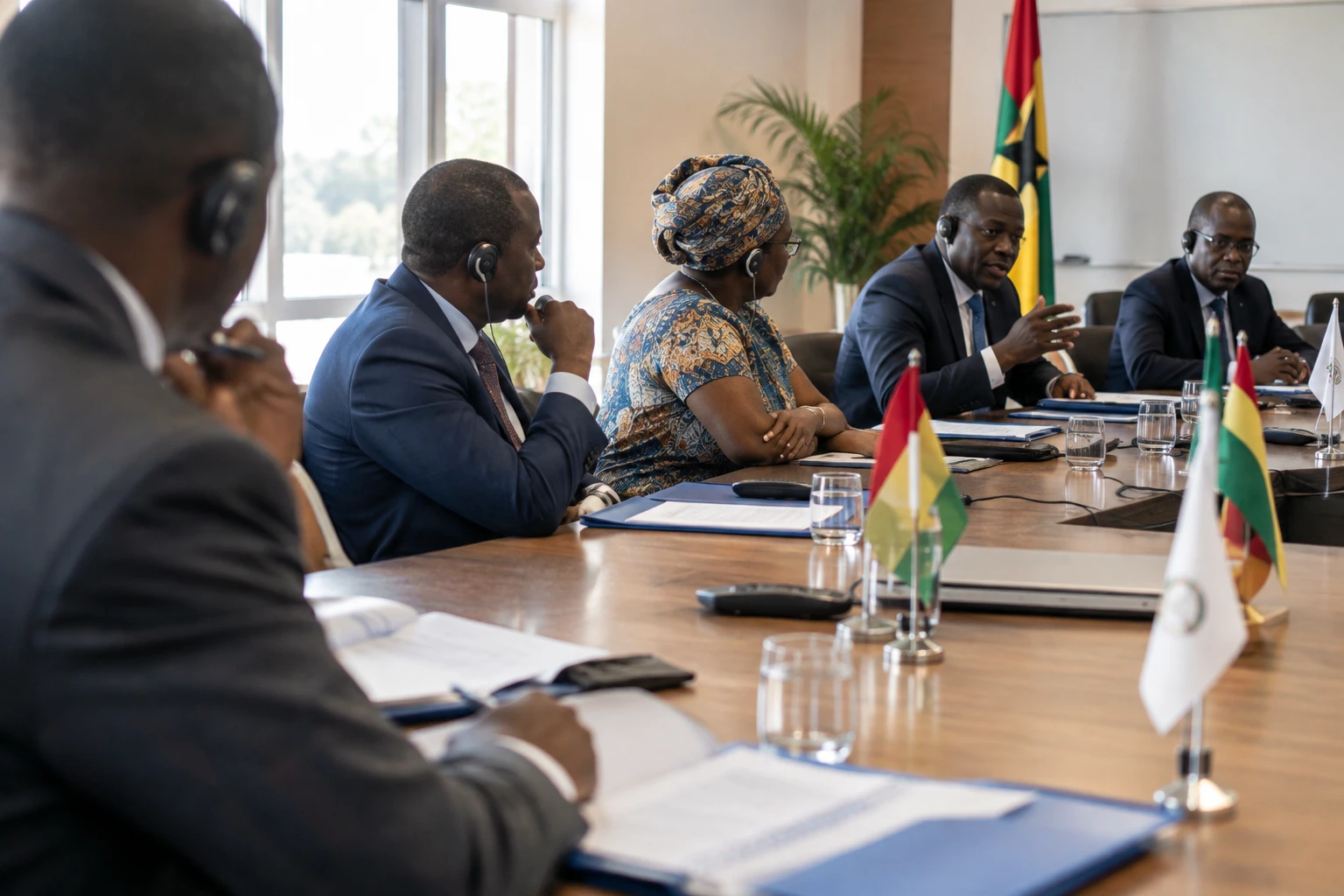
In Bissau, the 6 December deadline was meant to mark the return of civilians to power. But less than two months before the vote, transition officials and the National Electoral Commission (CNE) say the conditions are not in place. The date remains official; the ability to meet it is now openly in doubt.
A timetable undermined by the state of the parties
On 8 October, CNE vice-president Felisberta Moura Vaz said it would not be technically possible to hold presidential and legislative elections on 6 December. She had met the head of the transition, General Horta N’Tam. She nevertheless clarified that only the president of the transition could announce a delay.
Prime Minister Ilídio Vieira Té also said the conditions were not in place. According to him, several parties have not renewed their leadership bodies and their mandates have expired. He said no party was “in an ideal position to go to the elections”. These remarks were reported separately by the Senegalese Press Agency and AFP, via TV5MONDE.
This political and technical assessment does not yet amount to a formal decision to postpone the vote. It does, however, make it difficult to maintain the timetable without an explanation of preparations: renewal of party leaderships, candidate registration and logistical arrangements. So far, the authorities have not announced a new date.
A transition born of an interrupted vote
The current crisis dates back to 26 November 2025. Three days earlier, Guinea-Bissau’s people had voted in presidential and legislative elections. The process was interrupted before official results were announced, as incumbent president Umaro Sissoco Embaló and his opponent Fernando Dias da Costa both claimed victory. The military took power and suspended the institutions.
ECOWAS — the West African regional organisation — and the African Union had condemned the coup and called for the restoration of constitutional order. Guinea-Bissau thus joined a region where several military transitions have tested mediation mechanisms and the return to civilian rule. But for the people of Guinea-Bissau, the immediate issue is national: securing credible electoral rules and the ability of parties to compete.
The junta had set 6 December 2026 as the date for the next elections. Since then, the political framework has changed. The constitutional referendum held on 30 August approved a revision that strengthens the presidency and reduces Parliament’s influence, according to available reports. The historic PAIGC party had called for a boycott, denouncing restrictions on civil liberties. This disagreement over the rules of the game now weighs on confidence in the coming vote.
Guarantees matter as much as the date
The potential delay also comes amid tensions over Umaro Sissoco Embaló’s return. The former president, in exile in Morocco, had said he intended to return on 4 October and stand in the elections. The military authorities blocked his return, citing a lack of security and public order guarantees. This is the junta’s justification; on its own, it does not make it possible to assess the actual conditions for a return or the political intentions of those involved.
At the same time, Horta N’Tam asked members of the presidential guard said to be close to Embaló to hand over their weapons. Officials have also been replaced within the government apparatus. These decisions may form part of a security reorganisation. Their timing, combined with the former president’s exclusion from the country and electoral uncertainty, nevertheless raises questions about the neutrality of the transitional institutions.
Institutional balance is another issue. The strengthening of presidential powers by referendum has been challenged by opposition actors, while, according to the prime minister, political parties still need to renew their structures. Without guarantees on electoral administration, freedom to organise and candidates’ access, a new timetable would therefore not be enough to restore confidence.
A delay would not affect everyone in the same way. For transition leaders, it would push back the deadline for handing over power. For parties, it would prolong uncertainty over candidates and the rules of competition. For citizens, particularly those outside the capital, the priority would be to know when and under what conditions their vote can count. The information available does not make it possible to assess the economic or social effects of a delay more precisely.
Regional mediation faces a new deadline
ECOWAS has given Senegal a mediating role in the crisis. A Senegalese mission visited Bissau in August, but the constitutional referendum followed a few weeks later. This sequence highlights the difficulty of turning mediation into concrete guarantees. Former African leaders, diplomats, academics and civil society members have called on the regional organisation to support a credible political timetable, backed by guarantees for civil liberties and pluralism.
The next decision rests with the president of the transition: maintain 6 December despite the difficulties announced, or officially postpone the vote. In either case, credibility will depend on accompanying measures: a precise date, dialogue with the parties and guarantees that the electoral administration is independent. A delay without a clear deadline would prolong the transition without addressing the central doubt: who controls the process, and how will civilians be able to return to power?
For Guinea-Bissau and the region, the test is therefore not limited to holding a vote. It is a question of whether a transition born of an interrupted election can produce rules accepted by its competitors. ECOWAS and the African Union have already called for a return to constitutional order; they must now judge actions, the timetable and the guarantees, rather than announcements alone.
Further reading: AFP’s report on the CNE and prime minister’s statements, the Senegalese Press Agency report published by SenePlus and the joint statement by ECOWAS, the African Union and the West African Elders Forum.